
Friends,
Today is Sine Die, the final day of the 2026 Session of the Georgia General Assembly. So what do we have left to do?
Plenty, it turns out. For one, we still have not passed the state budget for fiscal year 2027, which is the only constitutional duty of the legislature. Secondly, many priority bills from both parties are still inching towards midnight on Sine Die, the final day of the legislative session.
As this is the second year of a two year term, any bills that don’t get passed by Thursday will be dead for the term, making stakes extraordinarily high for the lawmakers who have gotten this far. For this reason this is the most tense day of session, as bills live or die by the clock, and months, if not years, of work hang in the balance.
Are you ready for this? Then let’s go.
WHAT HAVE WE VOTED ON SO FAR?
Georgia Early Literacy Act of 2026: PASSED
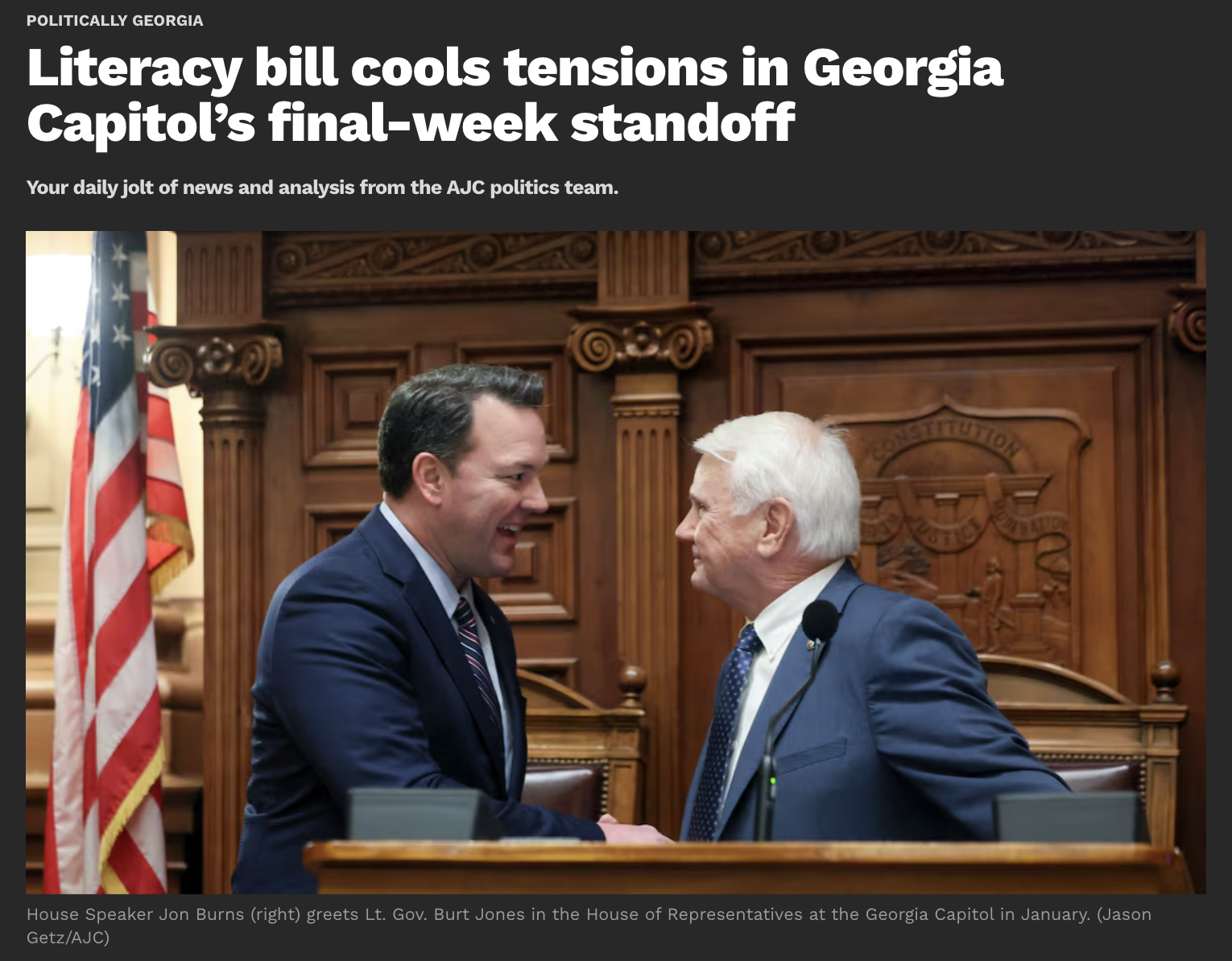
(Via the Atlanta Journal-Constitution, click here to read full article)
The Speaker of the House’s top priority bill this year (HB 1193) deals with early childhood literacy. It would provide 1,313 literacy coaches, plus other support to help ensure Georgia children are reading at grade level by third grade. The state’s final 2027 budget is expected to include more than $70 million for the initiative.
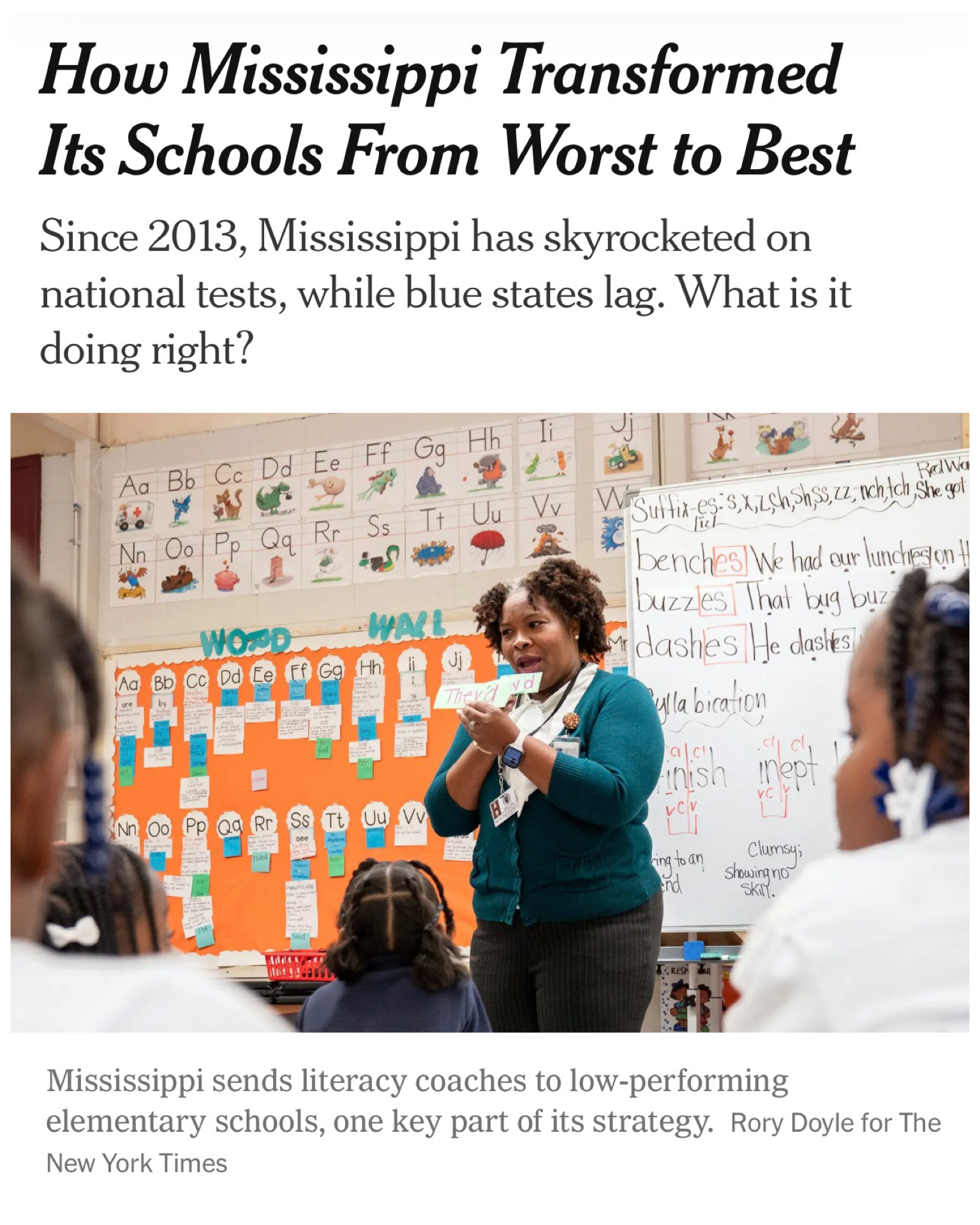
(Via the New York Times, click here for a free link to the full article)
Mississippi’s success in this area is often cited as an inspiration for this bill. Over the past decade, Mississippi has transformed its literacy rates, moving from 49th in 4th-grade reading in 2013 to the top 10-20 nationally by 2023–2024. Driven by the 2013 Literacy-Based Promotion Act, the state focused on intense, evidence-based phonics training, literacy coaching, and strict third-grade reading requirements. When adjusted for poverty, Mississippi now ranks first in the nation for 4th-grade reading.
As sometimes happens at the end of session, when the Senate and the House are pushing their own, sometimes separate priorities, and one chamber’s vote becomes leverage to apply pressure on the other chamber. Note that HB 1193 passed out of the House on February 24th, more than a month ago, and has moved slowly through the Senate since. I did have some concern that this bill would be held hostage by the Senate as part of the type of larger power play we’ve seen in years past.
However, this priority to help Georgia’s students was too important not to support, and I’m delighted to note that the House and Senate unanimously approved HB 1193 the evening of Legislative Day 39, one day shy of Sine Die. I was delighted to vote YES.
Protecting Confederate Monuments: FAILED
(Via the Georgia Recorder, click here to read full article)
At this point in the session our most important currency is time, and how we spend that time is an important statement of our priorities.
It’s therefore shocking to me that on the second to last day of the legislative session, Georgia Republican chose to spend an hour and a half debating a bill that would have allowed anyone to sue over the removal of Confederate monuments.
Via the Georgia Recorder:
“‘I’m not going to talk about history,’ [bill sponsor Rep. Alan] Powell said. ‘I’m not going to talk about the Confederacy. I’m not going to talk about slavery. I’m not going to talk about a lot of things because this bill encompasses all monuments. It makes no difference whether it was a monument that was put up by the widows of the men and citizens that died during that terrible war. It makes no difference if we’re talking about the monuments from our friends that served in Vietnam.’
In fact much of Tuesday night’s roughly 90-minute debate did center around the Confederacy.
Dozens of statues honoring Confederate generals and troops were built in prominent places around Georgia during the Jim Crow era, and critics see the monuments as celebrations of the Confederacy’s white supremacist ideology.
Recent years have seen attempts to remove or relocate Confederate statues and rename buildings and military installations named after prominent white supremacists in Georgia and elsewhere. These efforts have sparked pushback from conservatives, who liken them to efforts to erase the past.”
What I’d say to that, of course, is that those conservatives seem to have no problem erasing other parts of our past.
(Watch full afternoon House floor session for Legislative Day 39 here)
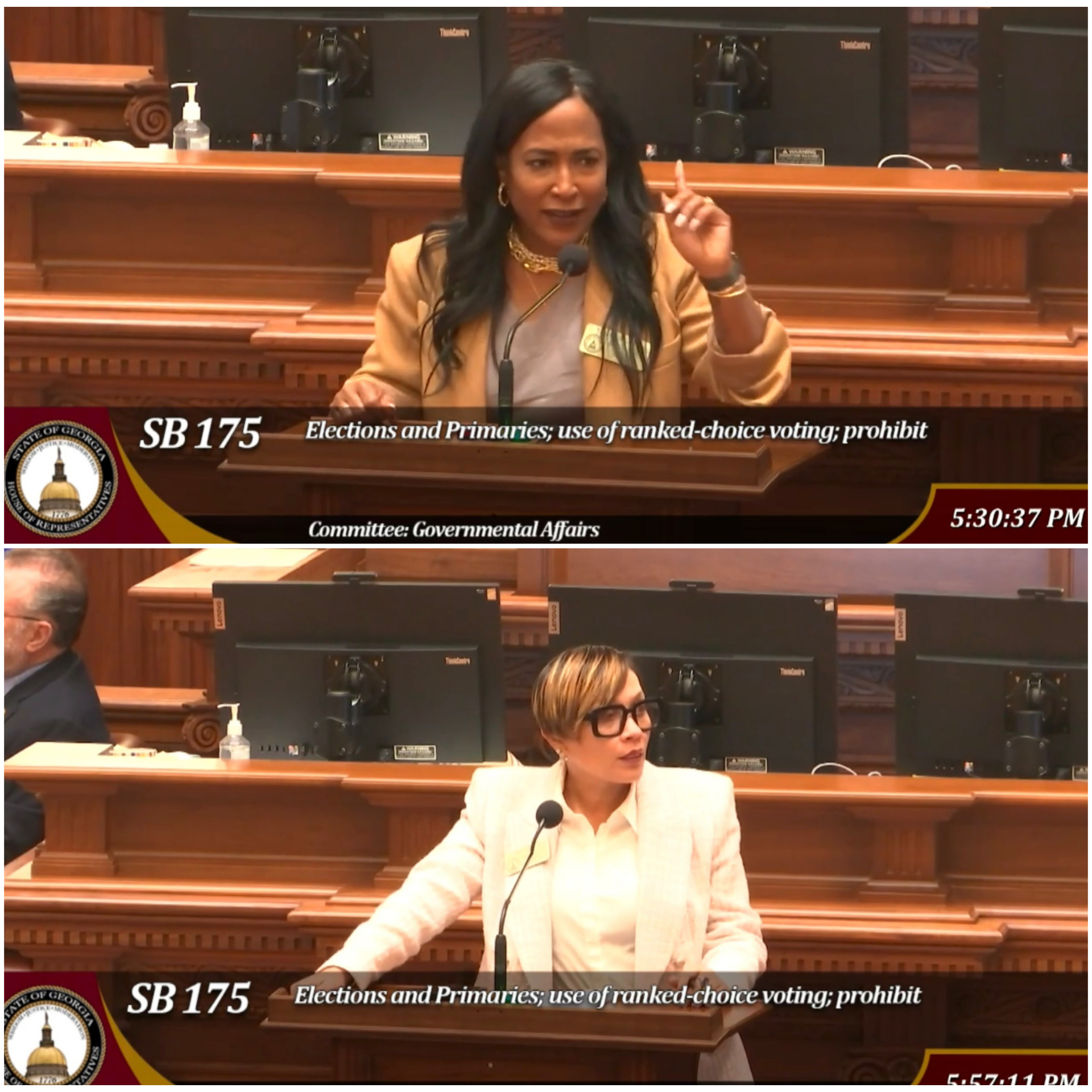
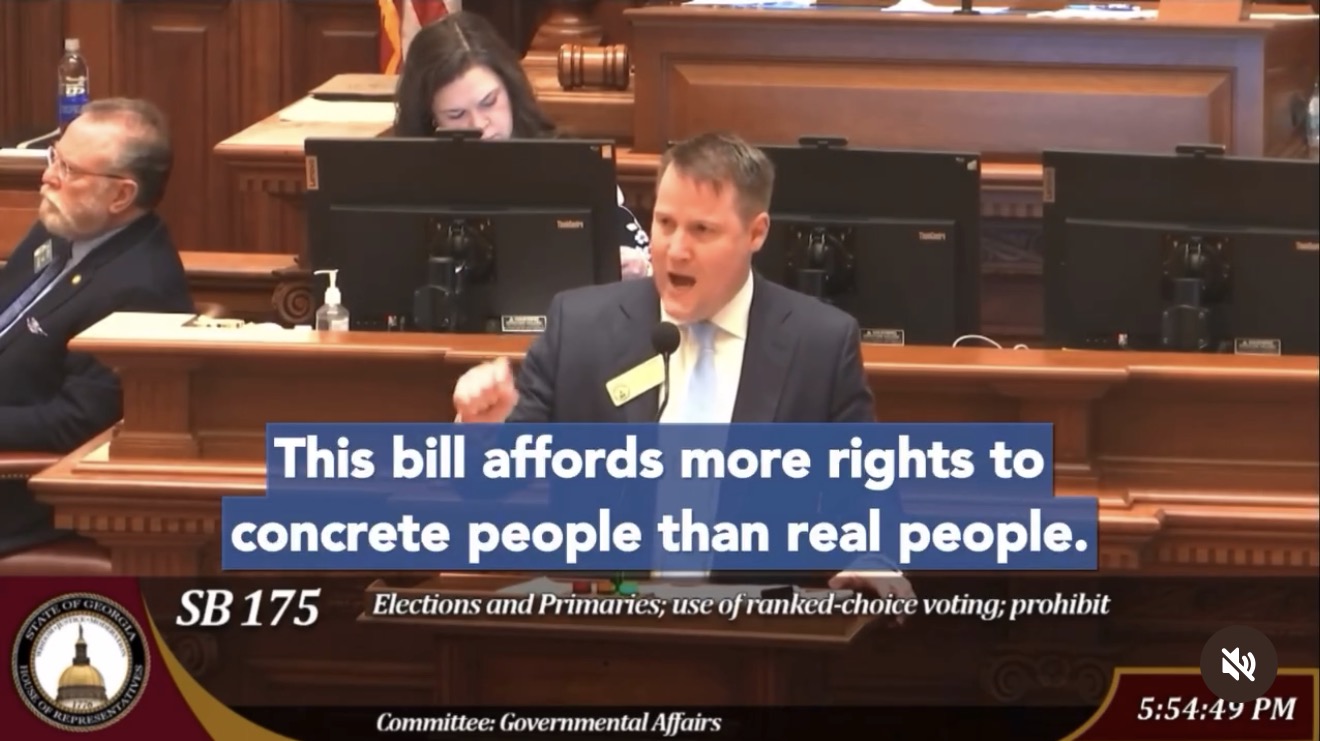
The remarks from my fellow Democrats against this bill are worth watching. In particular I recommend the powerful remarks made by Democratic Caucus Chair Rep. Tanya Miller, and Rep. Inga Willis. I also think the speech from Rep. Scott Holcomb was extremely effective for many reasons, one of which is that I have not in my time in the legislature ever seen him get this angry. I was proud to vote NO with the rest of my caucus.
(Click here to watch full remarks)
I noted before when we discussed HB 1324, the bill removing restrictions on owning gun silencers, that the majority party rarely brings up bills without a fair certainty that they will pass. (In a Republican majority legislature, that simply means the confidence that nearly all their own members will vote yes.) So it was all the more notable that, for the second time this session, a misguided Republican priority bill went down in flames on the floor, with several key Republican members conspicuously absent from the vote.
It may not be as satisfying as having the power of the majority. But the face of the Georgia legislature is changing. Republican margins are shrinking, and more and more Republicans recognize that simply voting with their party is no longer a viable option if they want to keep their seats. And the prospect of Democrats finally flipping the House is real.
Targeting metro Atlanta local elections: PASSED
(Via the Atlanta Journal-Constitution, click here to read full article)
Via the Atlanta Journal-Constitution:
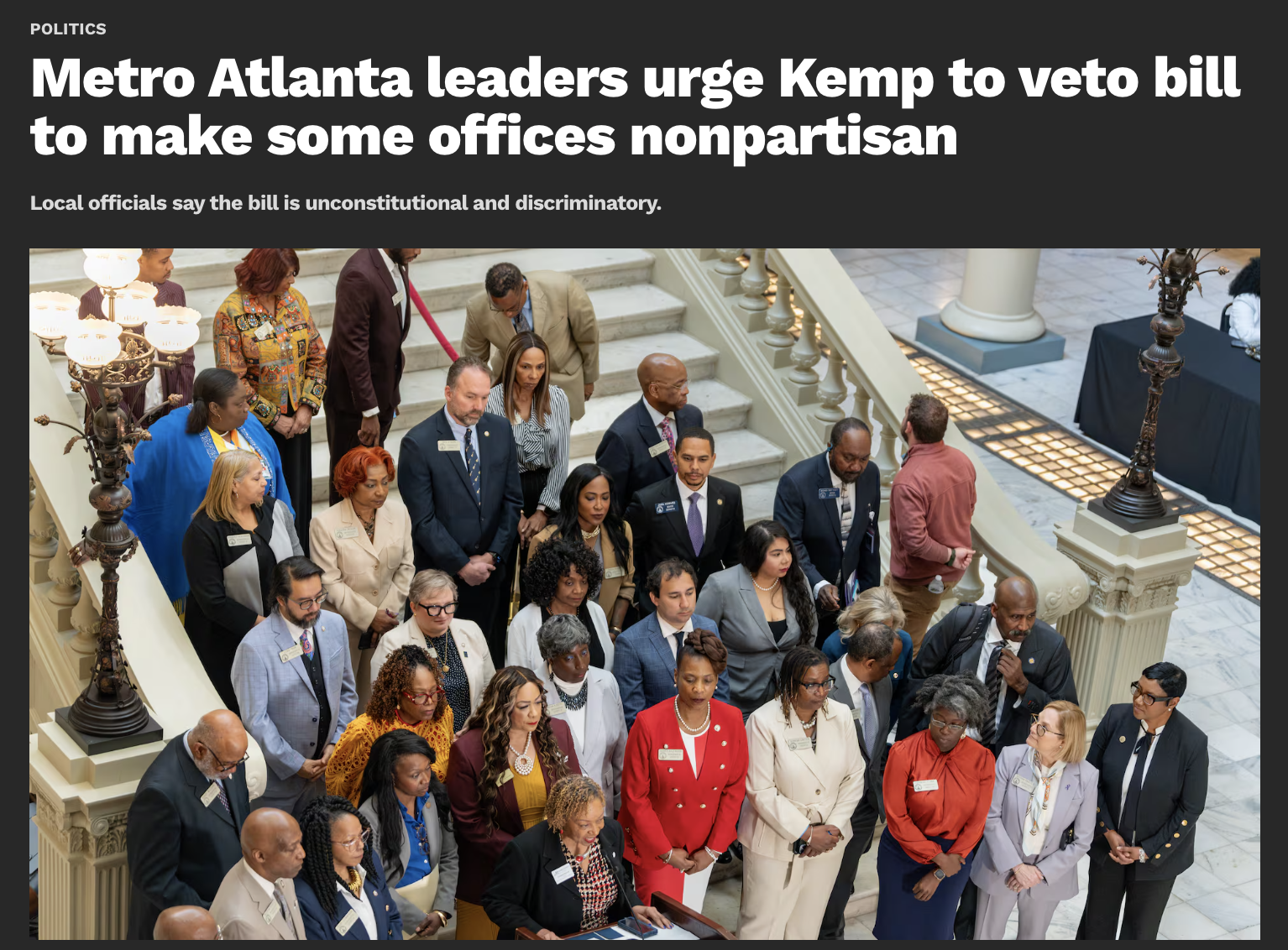
“Local leaders across metro Atlanta on Tuesday excoriated a Republican-passed bill that would make most local races in Georgia’s most populous — and most Democratic — counties nonpartisan.
If Republican Gov. Brian Kemp signs House Bill 369 into law, voters in Clayton, Cobb, DeKalb, Fulton and Gwinnett counties would elect most candidates for local offices without a ‘Democrat’ or ‘Republican’ by their names. The bill would apply to district attorneys, county commissioners and tax commissioners. It exempts sheriffs and the DeKalb County Commission.
Officials are urging Kemp to veto the measure, arguing it would create one set of rules for elections within metro Atlanta and another for the rest of the state. A group of district attorneys are already preparing a lawsuit to challenge the bill if Kemp signs it.”
So personally, my take is that the Republican narrative around this policy is disingenuous. (One early clue was that they were unable to pass this as a standalone bill and instead gutted and substituted this election language into HB 369, a bill which was originally drafted to regulate food trucks.)
The ostensible goal is to take the partisanship out of these local races. That might sound good to many, as the nature of extreme partisanship has become inarguably corrosive to our political process. However, if that goal were the true intent of this legislation, the bill would apply to all 159 counties in Georgia, not just these five in metro Atlanta. It is therefore difficult to see how this bill does not target Democratic voters candidates in the deepest blue regions of the state.
I voted NO on this bill, and hope Governor Kemp will veto it.
Regulating ketamine clinics: PASSED
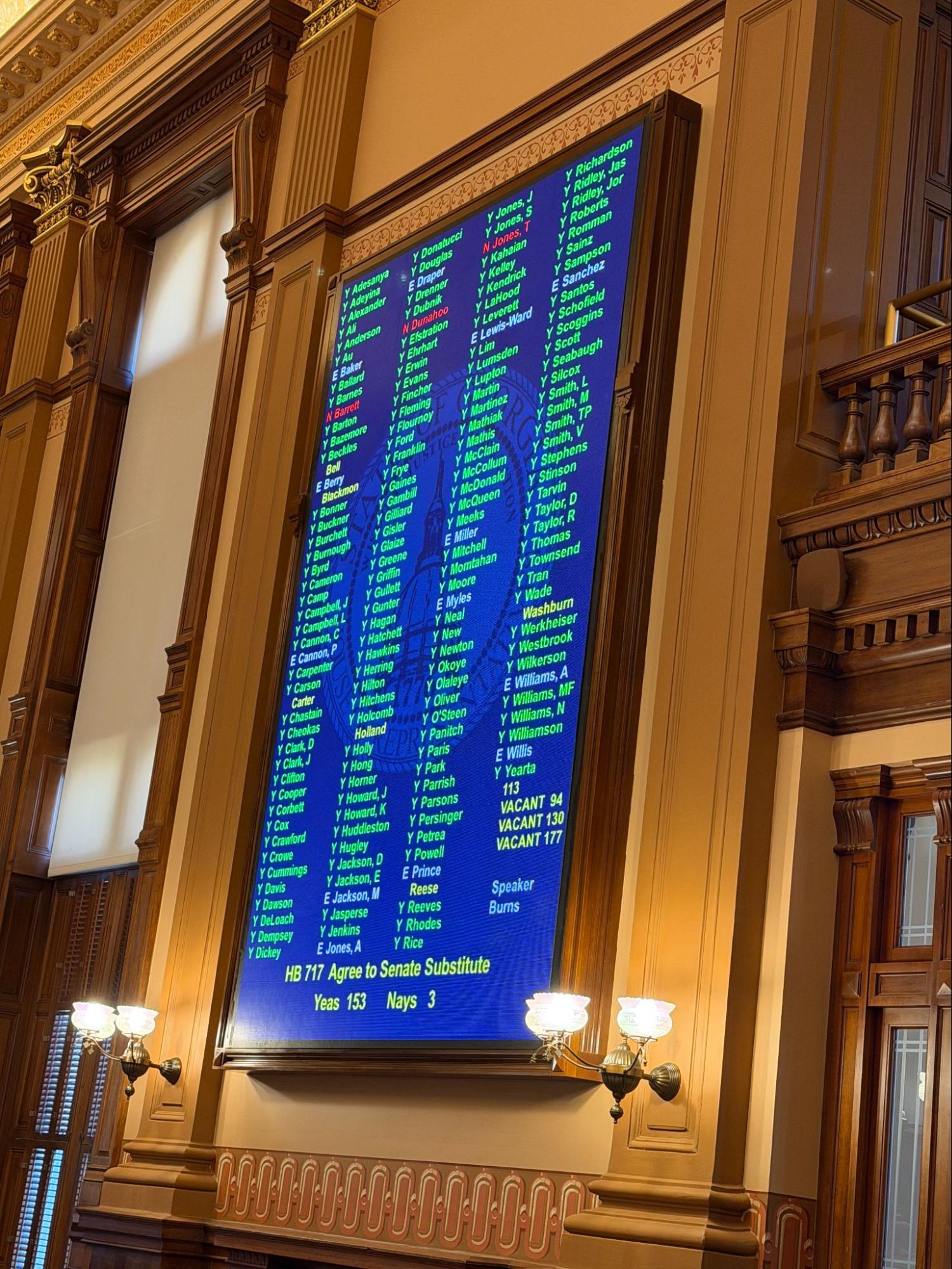
After two years and much work and negotiation, HB 717, the bill to regulate outpatient ketamine infusion clinics passed nearly unanimously out of both chambers of the Georgia State Legislature the second to last week of session. It now heads to the Governor’s desk for his signature or veto.
Thank you to all the partners who worked together on this compromise bill ensuring to keep our patients safe from unregulated outpatient ketamine clinics!
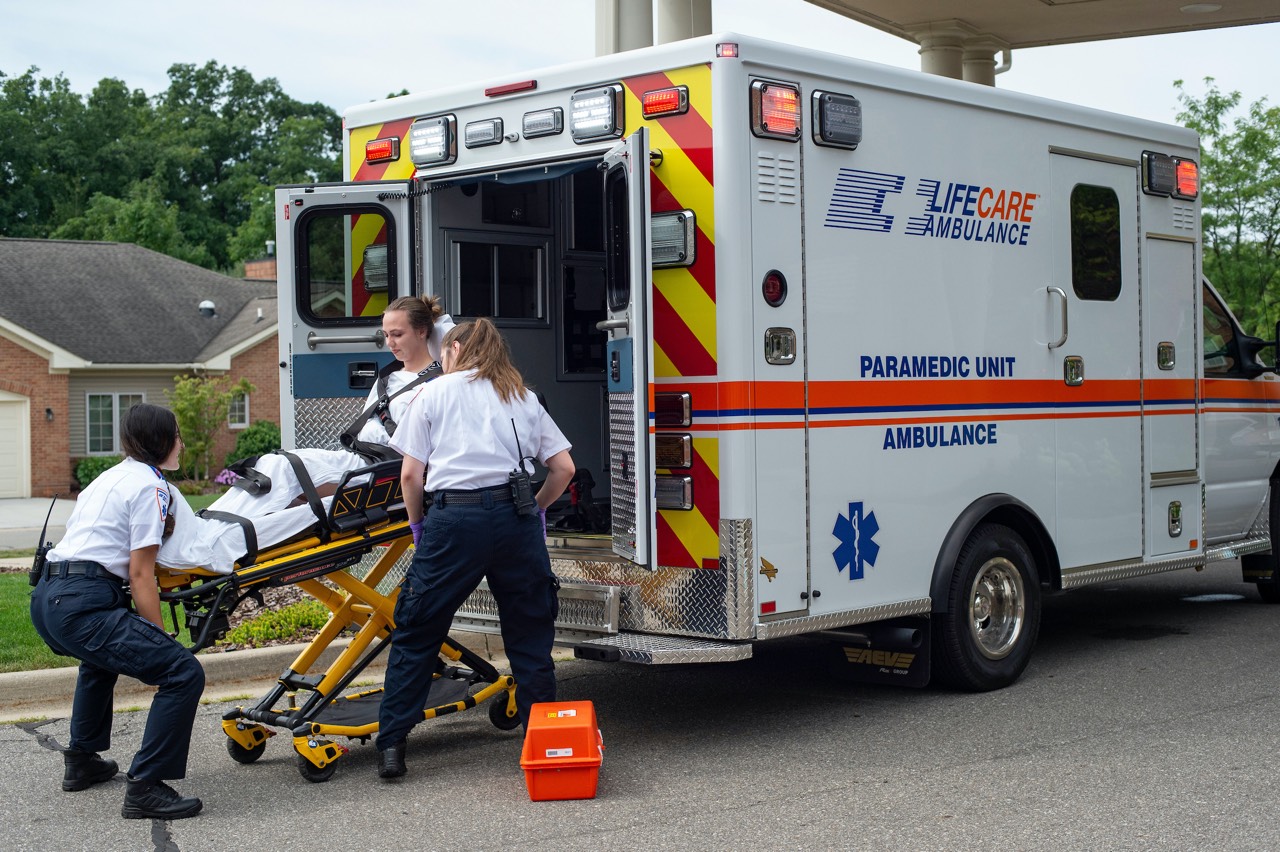
Eliminating surprise medical billing for ground ambulance transports: PASSED
(Image source: Emergent Health Partners)
For the past four years, our office has been working on the issue of surprise medical bills incurred from ground ambulance transports deemed “out of network” but insurance companies.
I think if you ask around, you will see that nearly everyone has a story of a friend or relative–if they were not the patient themselves–who received a several thousand dollar ambulance bill because the transport that was sent to pick them up was not covered by their insurance company. This is not a reasonable expectation for people who pay monthly premiums to be covered by health insurance in the first place, and it has to stop.
This week, the Georgia state legislature together decided to do just that.
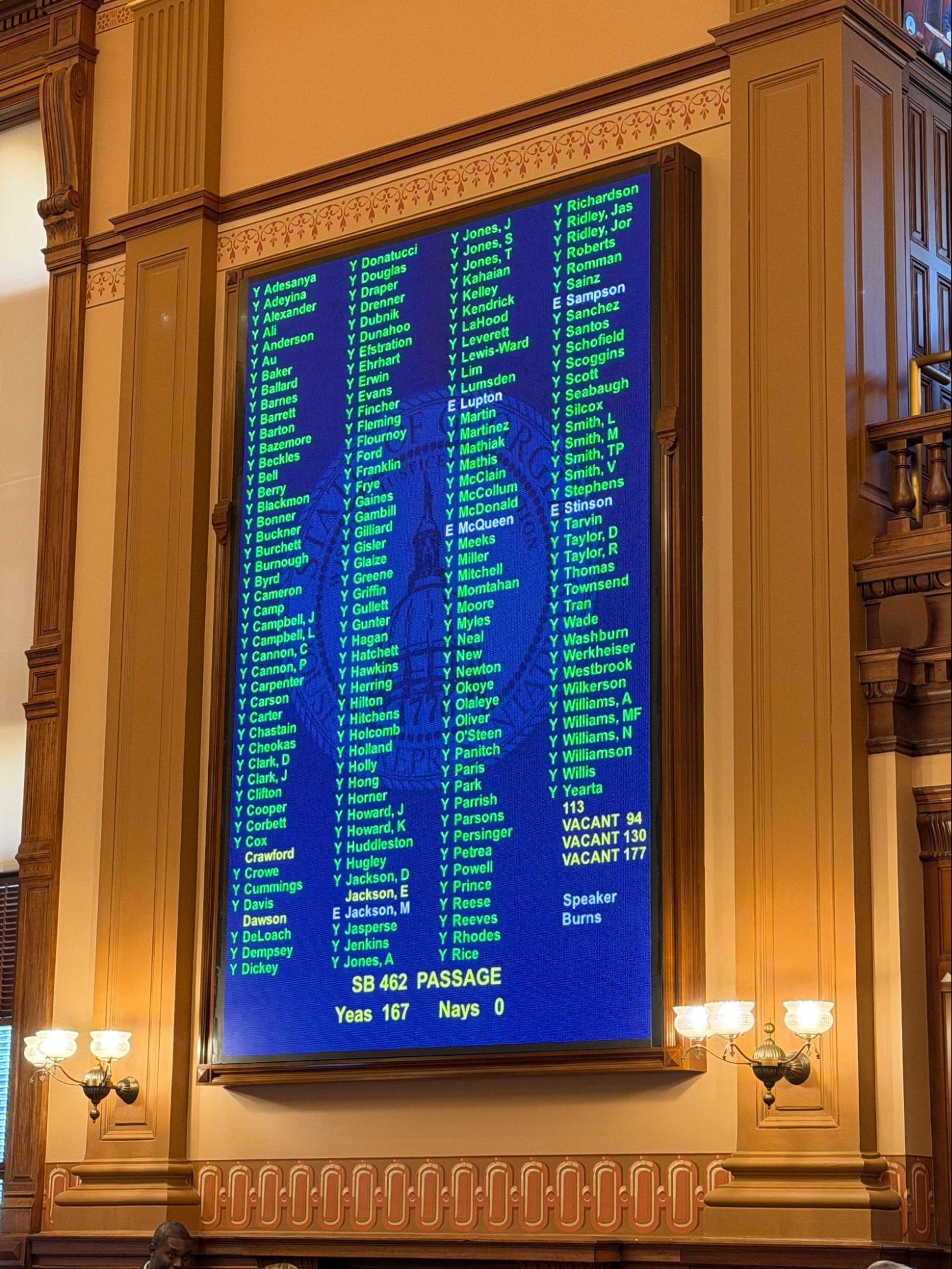
There were two mirror versions of this legislature filed this year from the House and the Senate, and in the last week of the term, SB 462 passed out of the House. It will now have to go back to the Senate for an “agree” vote (as some changes were made from the version the Senate passed out in February), but after that, it should head to the Governor’s office for his signature or veto.
WHAT REMAINS ON THE TABLE
The FY 2027 Budget
We spend much of our time during the legislative session discussing different bills and policies, but the only required duty of the Georgia General Assembly every year is to pass a balanced budget.
We’re cutting it a little close this year.
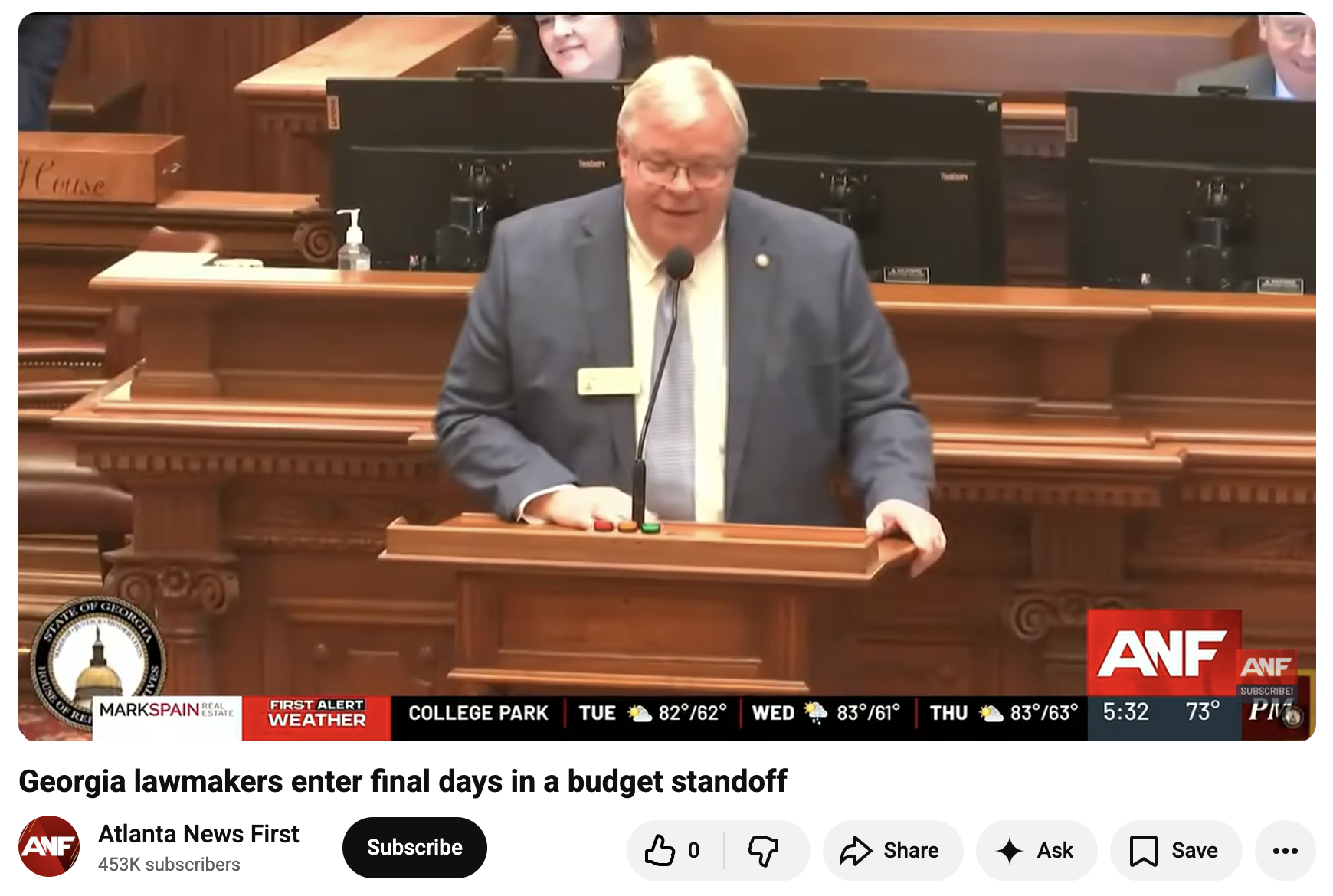
(Via Atlanta News First, click here to watch full clip)
The Senate passed out its version of the $38.5 billion dollar state budget last week. Its version had some notable changes from the version the House passed out. Among those differences, per The Current:
- The Senate reduced the House’s increase in funding for the state’s public colleges and universities by just over $110 million, increased the amount for private K-12 school vouchers by $31 million and added $100 million to the state employee pension system.
- The Senate agreed with the importance of the House’s focus on literacy but amended the way that new program would be funded. Instead of building money to hire 1,313 literacy coaches for K-3 classrooms into the public school funding formula, the Senate chose a $70 million grant.
- The Senate cut the $11 million the House had allocated to hire staff to confirm all food stamp enrollees are eligible. Georgia has one of the highest “error” rates in the country, which can mean loss of federal funding. Lawmakers in both chambers want to reduce that rate, but the Senate chose to accept an offer from the company Equifax to do the work for free.
On Tuesday, the House disagreed with the Senate’s changes and the Senate insisted on its version of the budget. This sends the budget to a conference committee, in which a small subgroup of members from each chamber negotiate, iron out the differences, and hopefully produce a compromise to vote on by midnight on Sine Die. Fingers crossed.
Election Ballot QR Codes
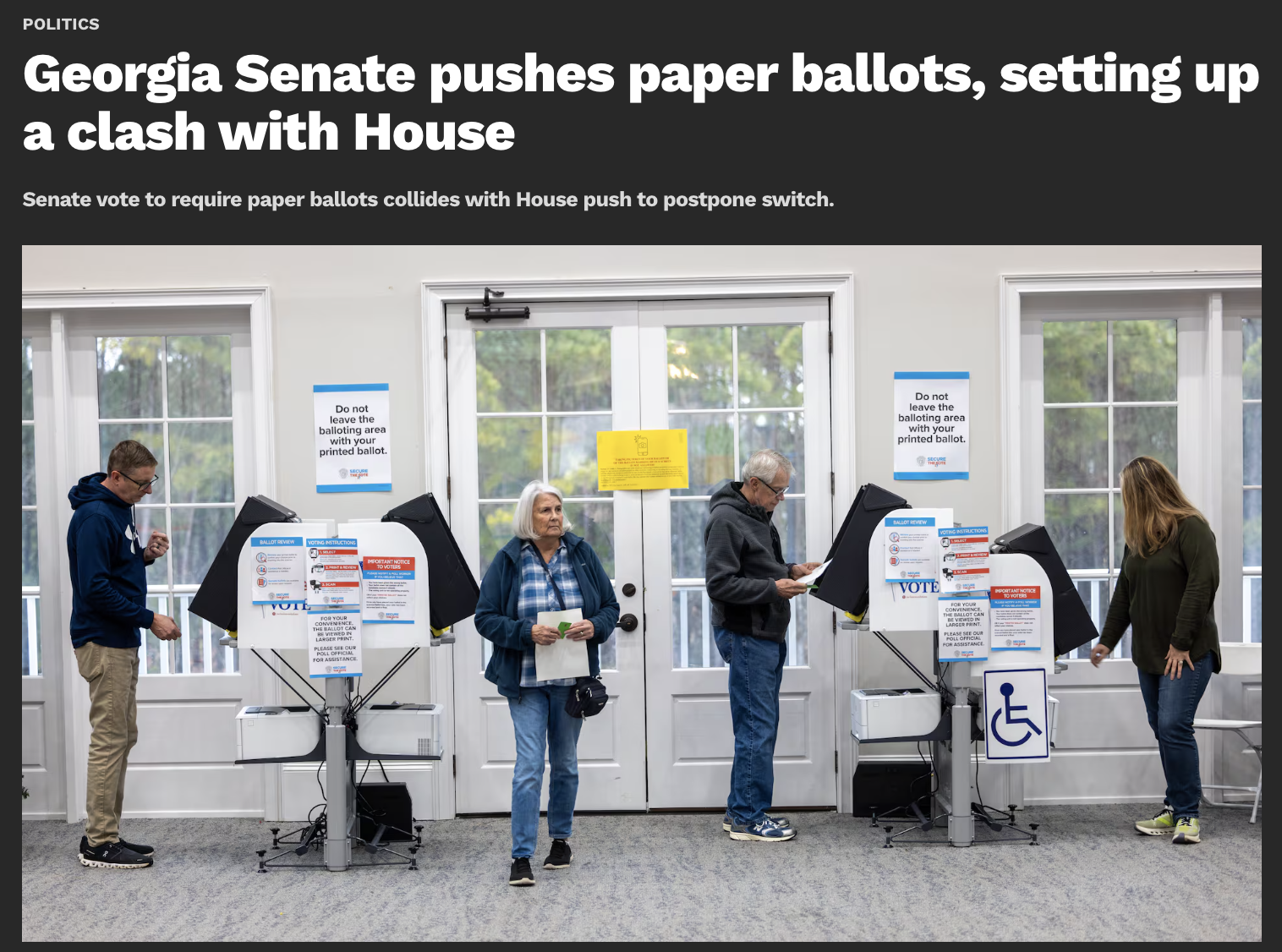
(Via AJC, click here to read full article)
The state purchased the current voting system in 2019 for a 10-year contract with a $107 million price tag. At the time lawmakers voted on legislation requiring touchscreens, nearly all Republicans supported the measure, while most Democrats opposed it.
The Georgia Senate is pushing to require hand-marked paper ballots by the midterms, eschewing the current ballot making systems utilizing QR codes used in in-person voting for state elections since the state purchased the current voting system (a 10-year contract costing $107 million price tag) in 2019 .
At the time lawmakers voted on legislation requiring touchscreens, nearly all Republicans supported the measure, while most Democrats opposed it. Of course, since then, the 2020 election took place, and a generation of election conspiracies took root.
Utterly convinced that, beyond all evidence, Donald Trump had actually won the presidential election, and that among other factors, electronic ballot marking devices were to blame for his loss, MAGA Republicans have been railing against reality for the past six years.
In the final days of the legislative session, Georgia Senate Republicans doubled down on such conspiracy theories, fomenting confusion as competing elections proposals advance during the frenetic closing days of the 40-day session.
Per the Georgia Recorder:
“On Friday, the Senate approved House Bill 960, which includes a controversial proposal to institute hand-marked paper ballots statewide ahead of the general election in November. A previous version of the bill failed earlier on the floor of the Senate, but a revised measure passed in a 32-21 vote along party lines.
But the House is pushing its own election overhaul proposal, Senate Bill 214. The bill would postpone the deadline for removing QR codes from ballots to 2028 and direct the state to begin the process of procuring a new election system this upcoming February. The House has yet to bring it to the floor for a vote, and the Senate will need to agree to its changes before the bill can be sent to the governor’s desk.”
It is clear to me that huge changes to our voting system this close to the midterm elections would engender chaos at the polls. That may, in fact be the point. It is my hope that we will not see this bill come up for a vote in the House, but it it is put in front of us, I will be voting NO.
16 YEAR ANNIVERSARY OF THE PASSAGE OF THE AFFORDABLE CARE ACT
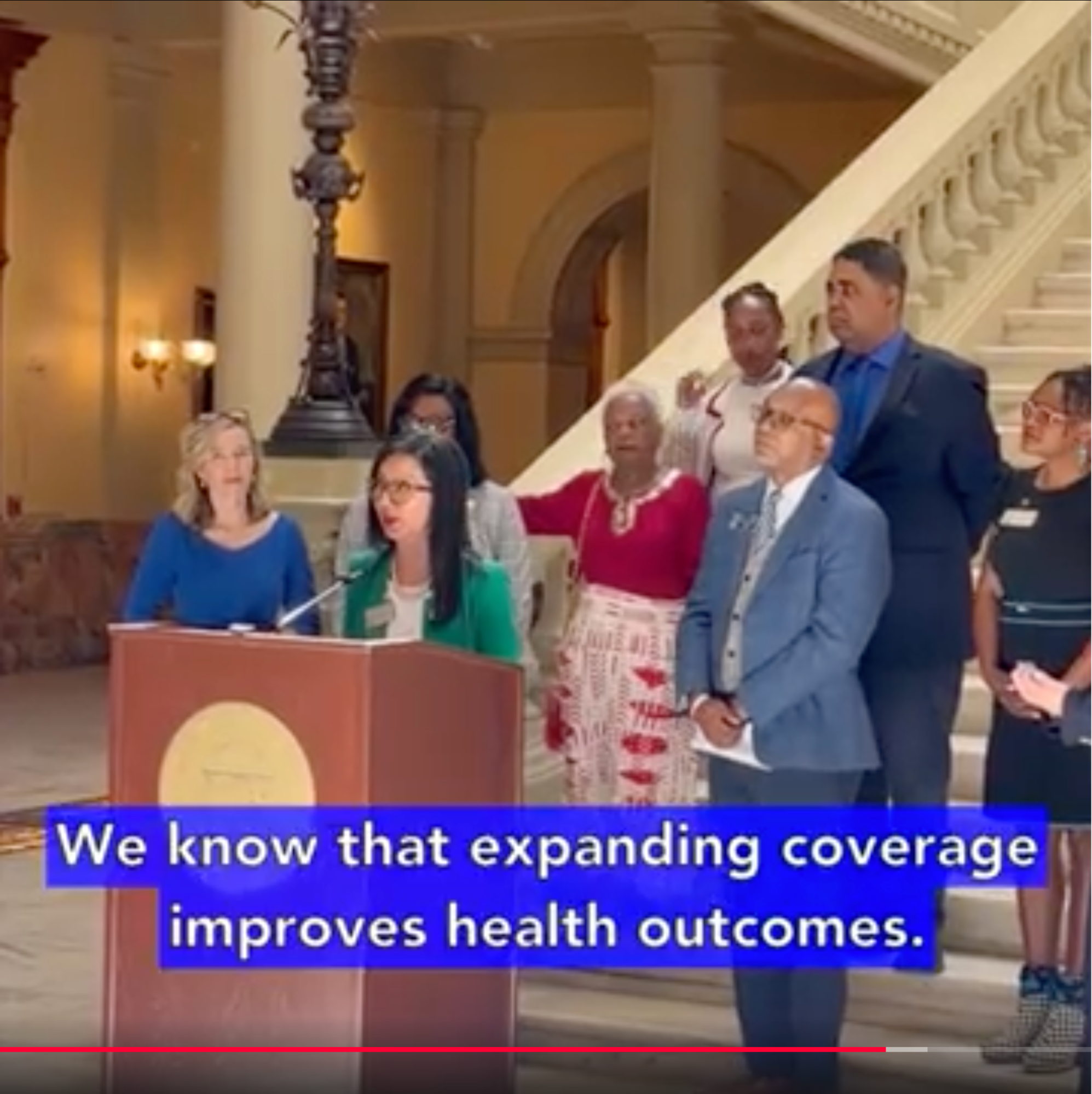
Last week I was pleased to join Protect Our Care – Georgia for a press conference at the Capitol recognizing the 16th anniversary of the passage of the Affordable Care Act. In my remarks, I noted:
“Health care is not an abstract policy debate. It is immediate. It is personal. And it is often the difference between stability and crisis for the families we serve.
Sixteen years ago, the Affordable Care Act was passed with a simple but transformative goal: to make it possible for people to get the care they need without fear of financial ruin.
And for millions of Georgians, it has done exactly that.
But if there is one thing I have learned, both in medicine and in public policy, it is that progress is never guaranteed. It requires time, upkeep, and constant vigilance.
Because for every step forward, there are always forces pushing us back.
And right now, we are living through one of those moments.”
As the only MD/MPH in the Georgia General Assembly, I feel my purpose and my calling are clear. I will continue to work on making safe, quality healthcare more affordable for Georgians, residents of a state with among the highest uninsurance rates in the nation.
And as part of that goal involves electoral chance, I will keep working on getting the people we need to do this work elected to all levels of government in this state.
THE GEORGIA DIAGNOSIS

Available on Apple, Spotify, or YouTube
Team Au is in pre-production for Season 2 of our podcast THE GEORGIA DIAGNOSIS, and we want to hear from you!
Whose stories do you want to hear, and what fascinating voices would you love to have included? Fill out our podcast survey here. Thank you for listening to and sharing our first season, and for helping us make Season 2 even better!
Catch up on Season 1 of THE GEORGIA DIAGNOSIS on Apple, Spotify, or YouTube.
TEAM AU IN ACTION
Consul General of India
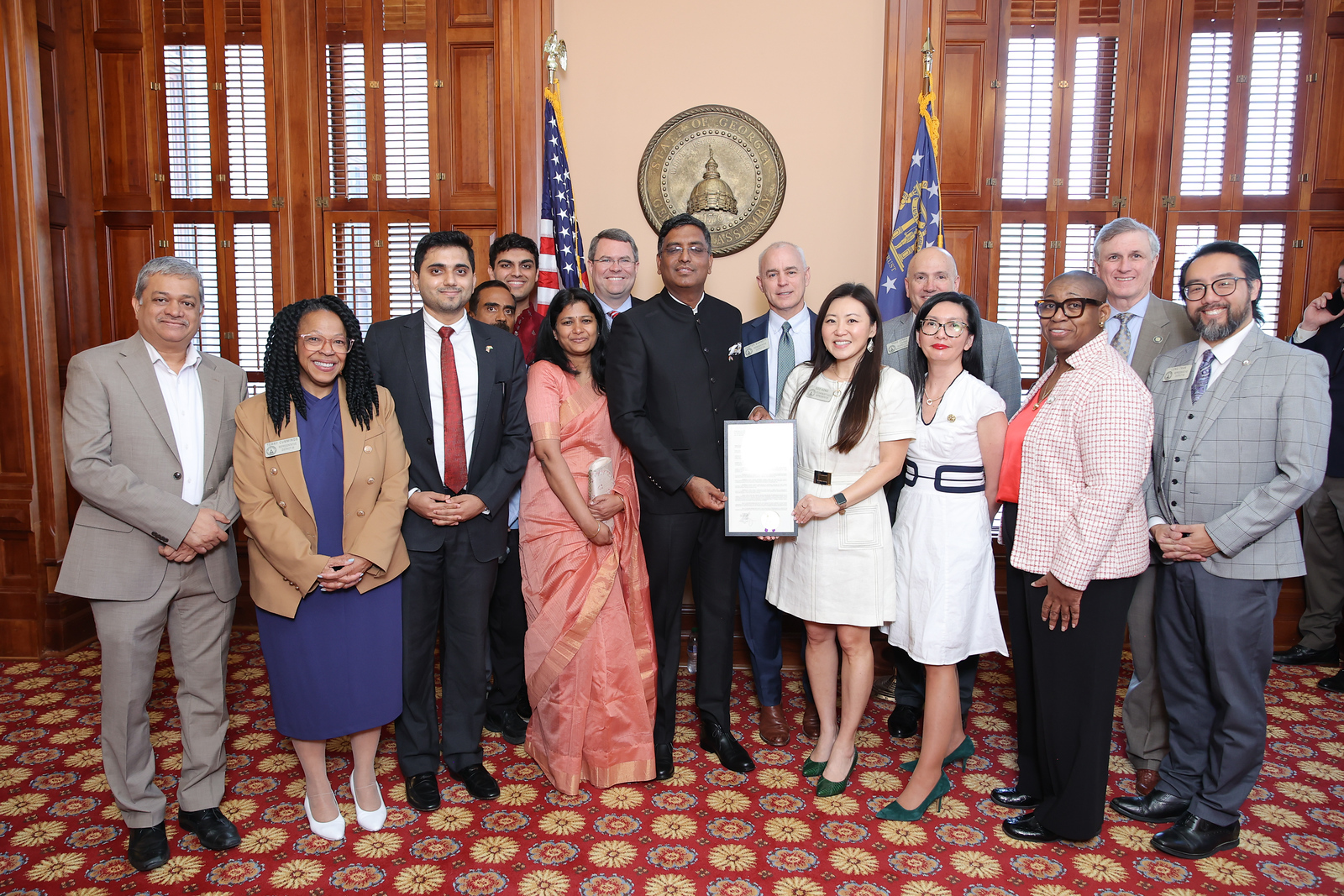
It was great to be able to welcome Indian Consul General Shri Ramesh Babu Lakshmanan to the Capitol last week! As the House Representative for HD 50 I’m proud to represent one of the largest Indian communities in Georgia!
* * *
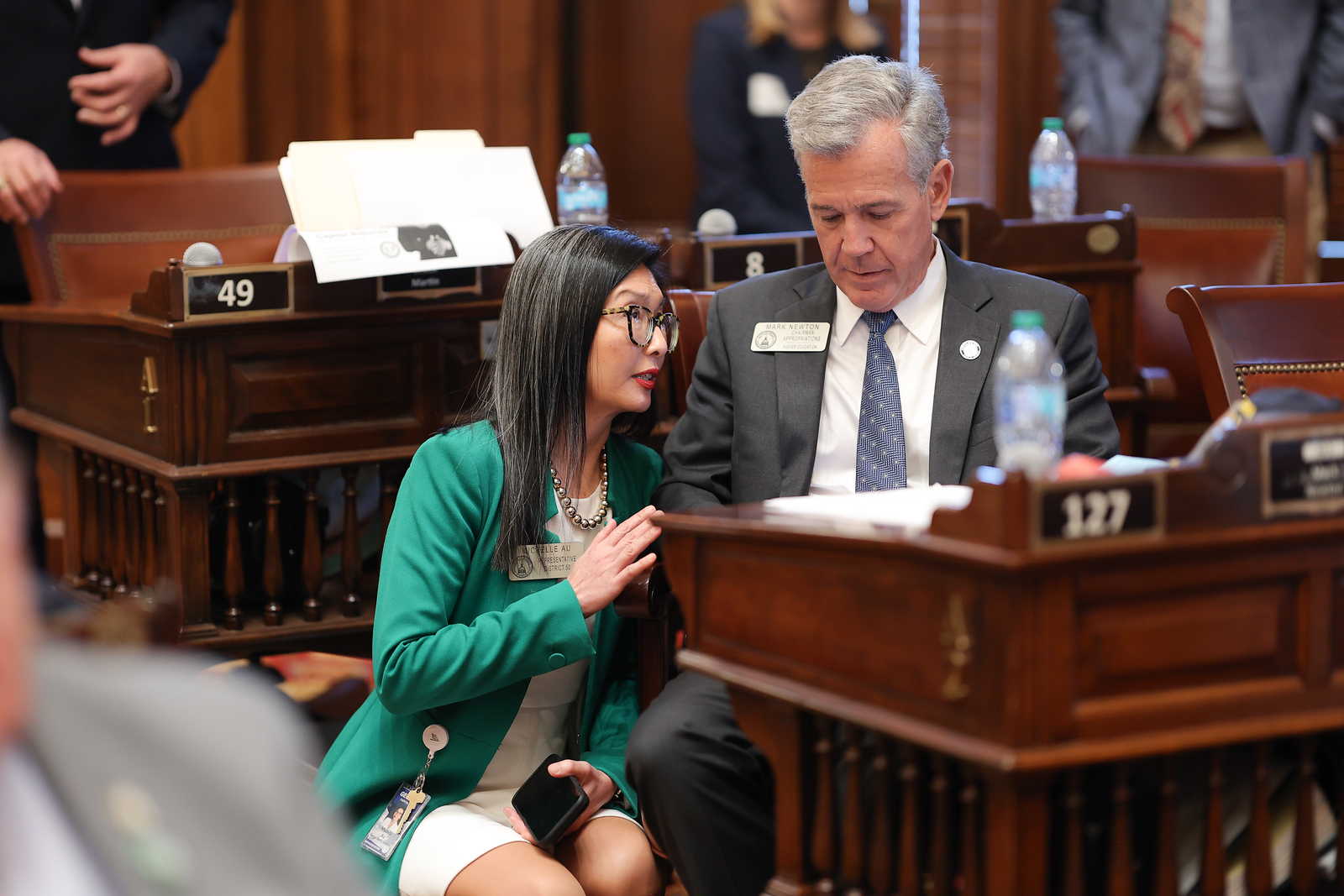
It has never been more important to pay attention to the work of state legislatures. Thank you as ever for your support so that we can keep doing this most important work together.
As always, please do not hesitate to reach out to our office should you need any assistance, or if you have any concerns you’d like me to address on your behalf.
It is my honor to be your voice in the Georgia House of Representatives.
In service,