Friends,
Crossover Day 2026 was at the end of last week, the last day of the session on which a bill can pass out of its originating chamber and move onto the other chamber to have a chance of being signed into law this year.
There were a few surprises (the return of sports betting), some meaty issues brought up in a rush (a new property tax bill), some wins and losses (gun safety, SNAP benefit eligibility), and as always, a lot of politicking.
As usual, we’re going to get into it all. Are you ready to dive in?
RUSHING THROUGH PROPERTY TAX LEGISLATION
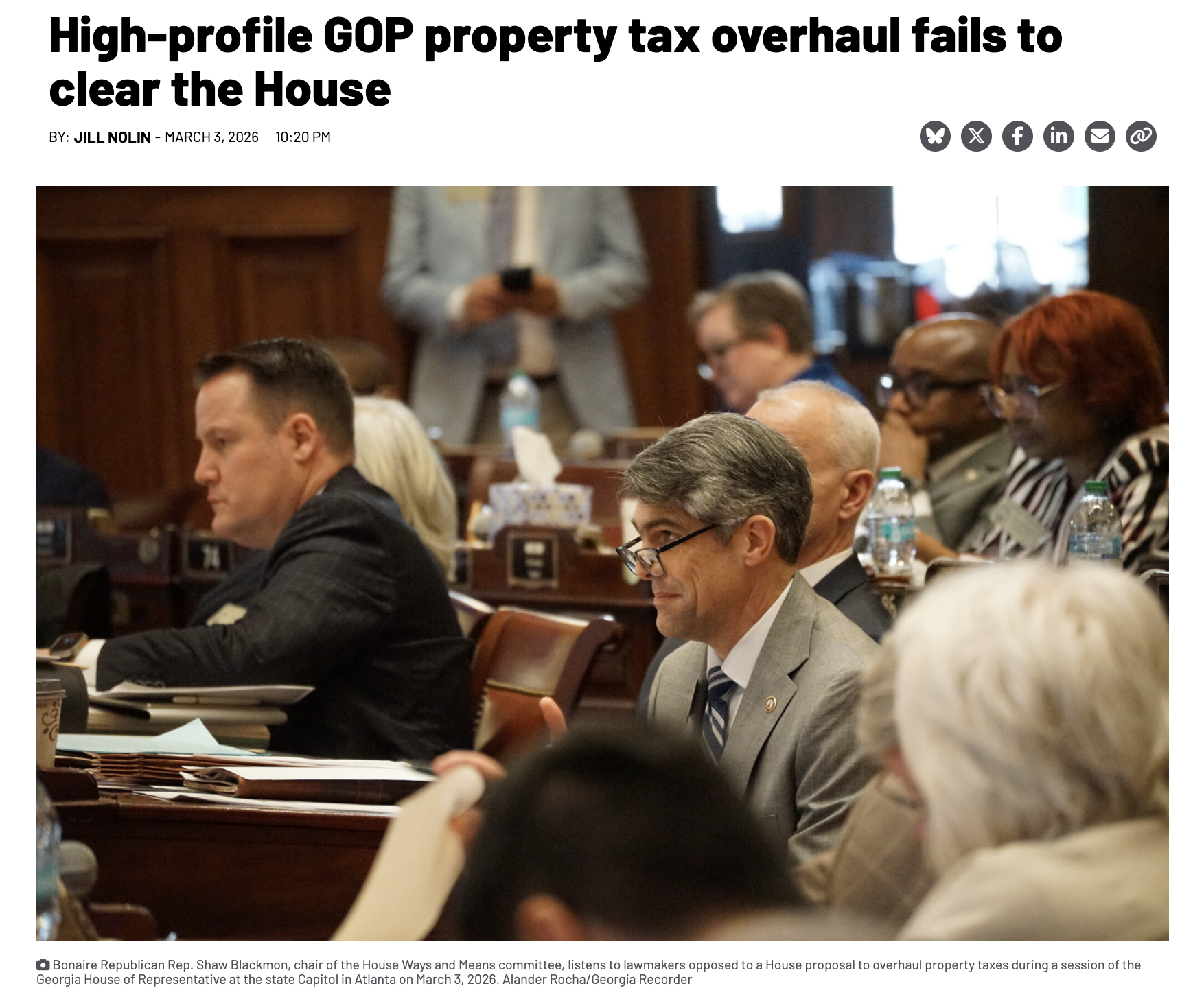
(Via Georgia Recorder, click here to read full article)
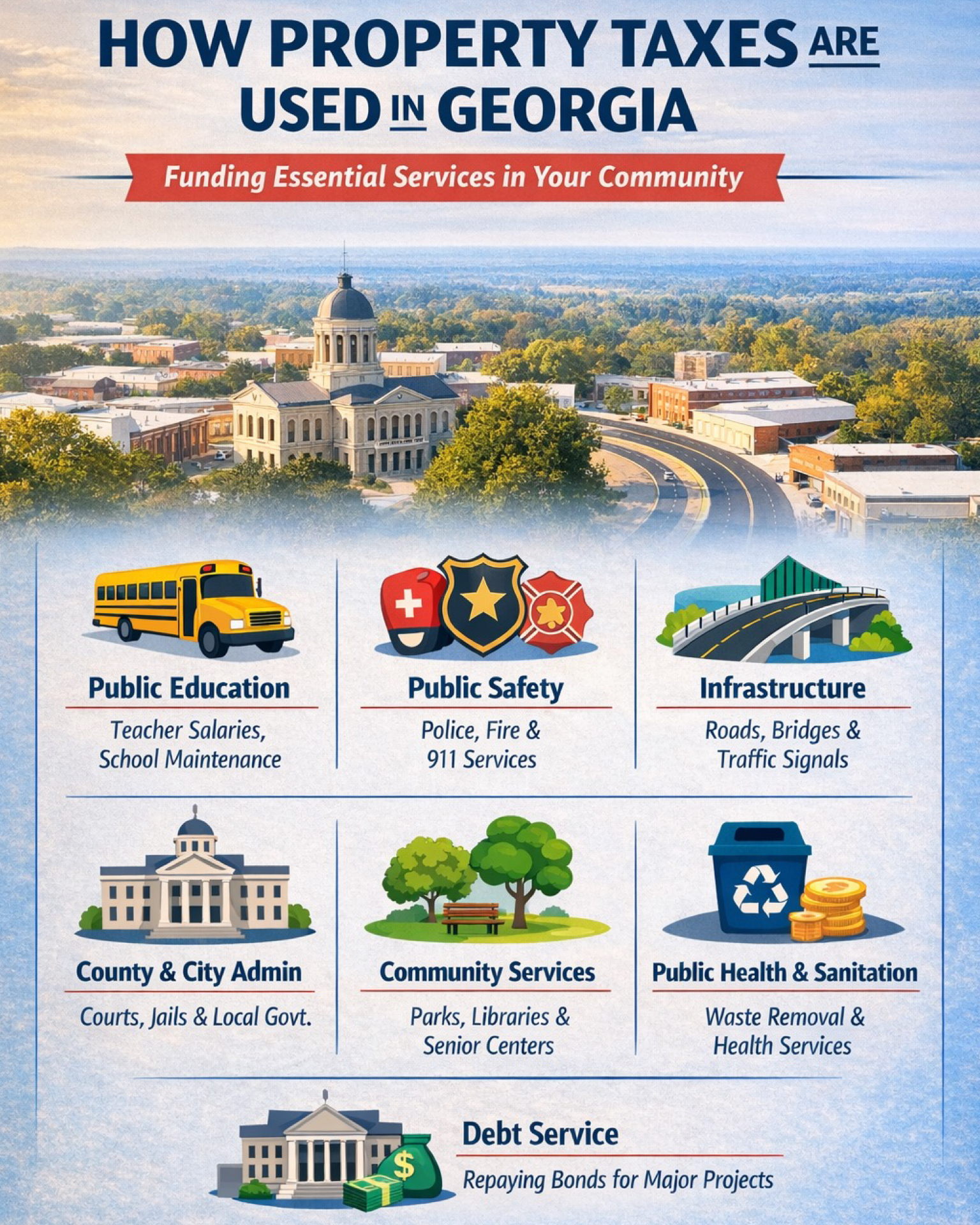
As we’ve discussed in previous newsletters, the House Republicans’ top priority this session was their bill to phase out property taxes on primary residences by 2032 through a 100% homestead exemption. This plan, which would have required passage of a constitutional amendment (and therefor a 2/3rds affirmative vote in both chambers), failed earlier this session, largely because of objections from county and local governments, who noted property tax elimination would create upwards of a $5 billion funding gap for schools and local services while ultimately shifting the cost burden back to Georgians via higher sales taxes or new fees.
Elected representatives serve as your fiduciaries when making decisions that affect the finances of the state and our communities. As such, bills resulting in large changes in revenue or spending need to be carefully considered. We need to project the costs, do a fiscal analysis, have conversations with stakeholders and community partners, and above all move strategically and deliberately.
So you can imagine how surprised I was when, the evening of Crossover Day, we were shown for the first time a new version of a property tax bill less than an hour before that bill was brought to the floor for a vote.
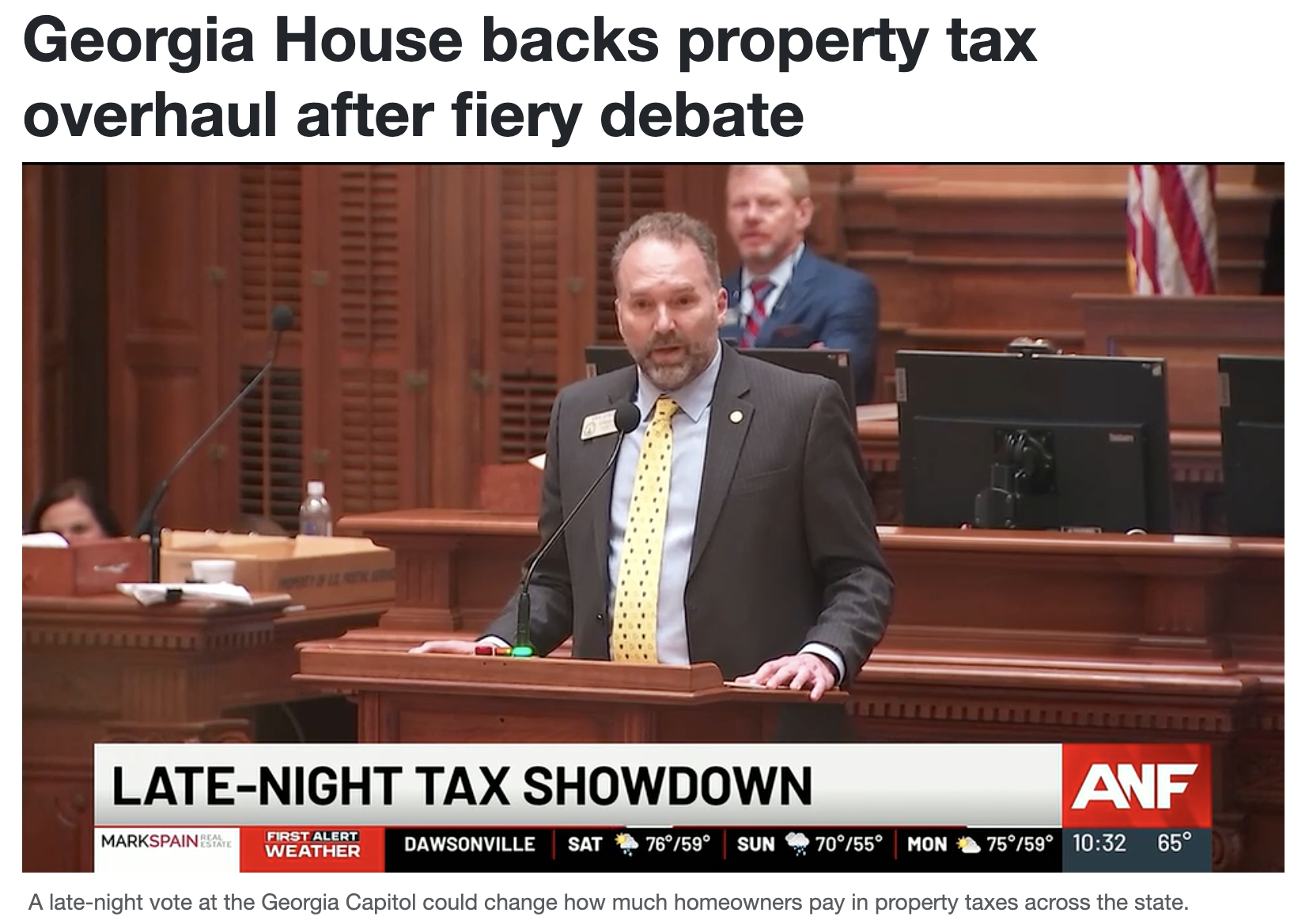
(Via Atlanta News First: Click here to watch full video)
I am very open to discussing substantive property tax reform, and agree that Georgians deserve tax relief. I was pleased to vote in favor of property tax relief in the amended FY 2026 budget, as well as for HB 1001, which accelerates a planned cut to the state’s income tax rate to 4.99% , down from the current rate of $5.19%, three years ahead of schedule.
That said, each and every bill deserves to be carefully drafted, read, debated, and considered. Rushing through a tax bill with the potential to impose massive financial impact on our districts is poor practice and bad government.
I may well have been open to the newest version of HB 1114, and will continue to read and study the many, many changes that have been made to the last iteration of the Republican property tax bill, which failed on the floor. But voting on massive bills unveiled less than an hour before a floor vote is not how you should want your legislature to operate, no matter how appealing the premise, and no matter how contentious the election year.
I look forward to continued conversation on this issue, and will continue to do my level best to be a steady, responsible representative of the residents and interests of Georgia’s 50th House District.
WHAT BILLS CROSSED OVER?
(Via WABE, click here to read full article)
The Georgia House was working until about 1:00am on Crossover Day (and night…into the wee hours of the morning) giving as many bills as possible their last chance to survive for the session. But Crossover isn’t just about passing good bills, it’s about killing bad bills and watching your priorities fail or flourish or wither on the Rules calendar as time runs out.
Here are some highlights of the bills we dealt with in the House on Crossover.
HB 1324: Repeal on owning firearm silencers
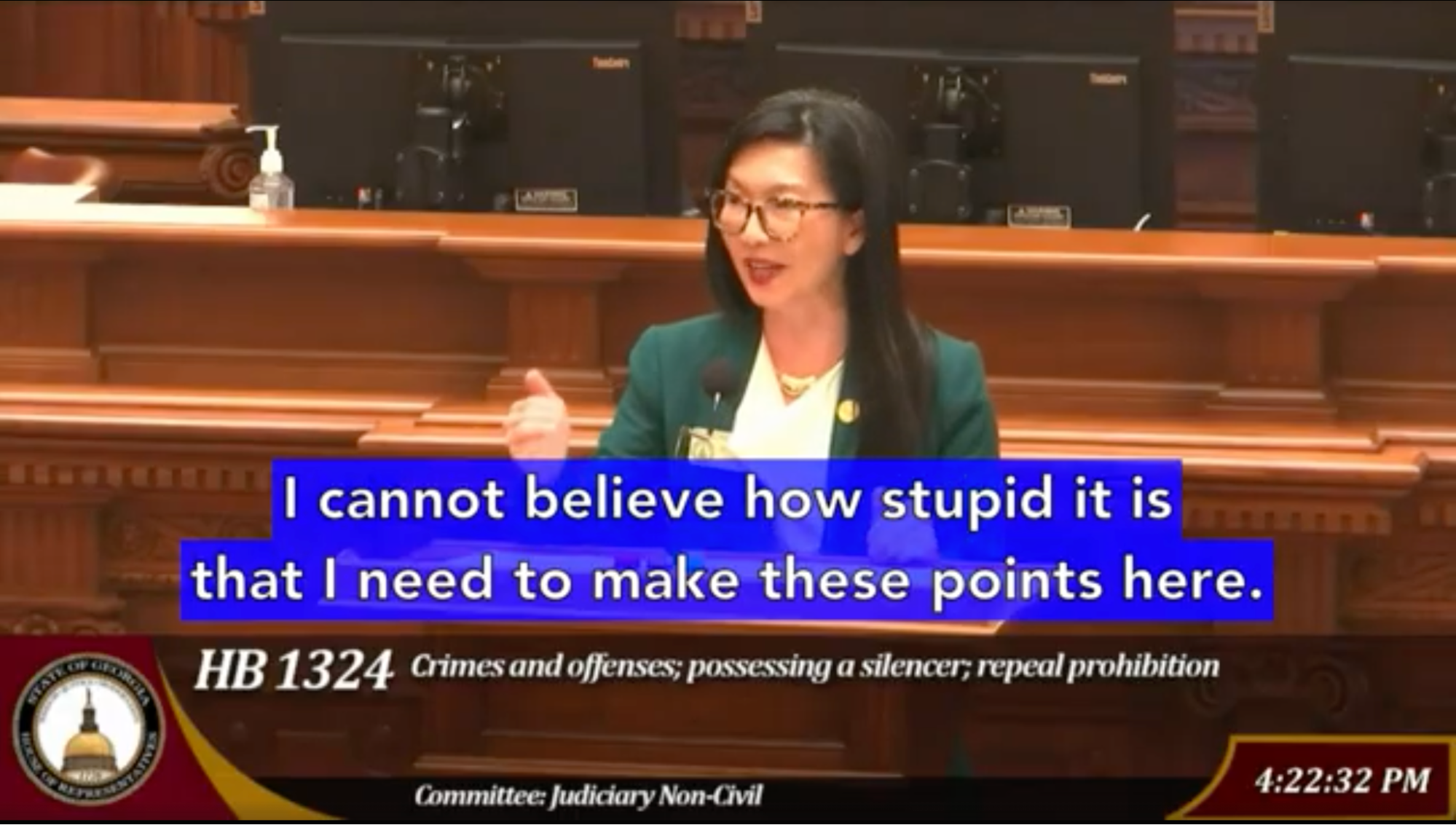
(Click here to watch full video of HB 1324 floor remarks)
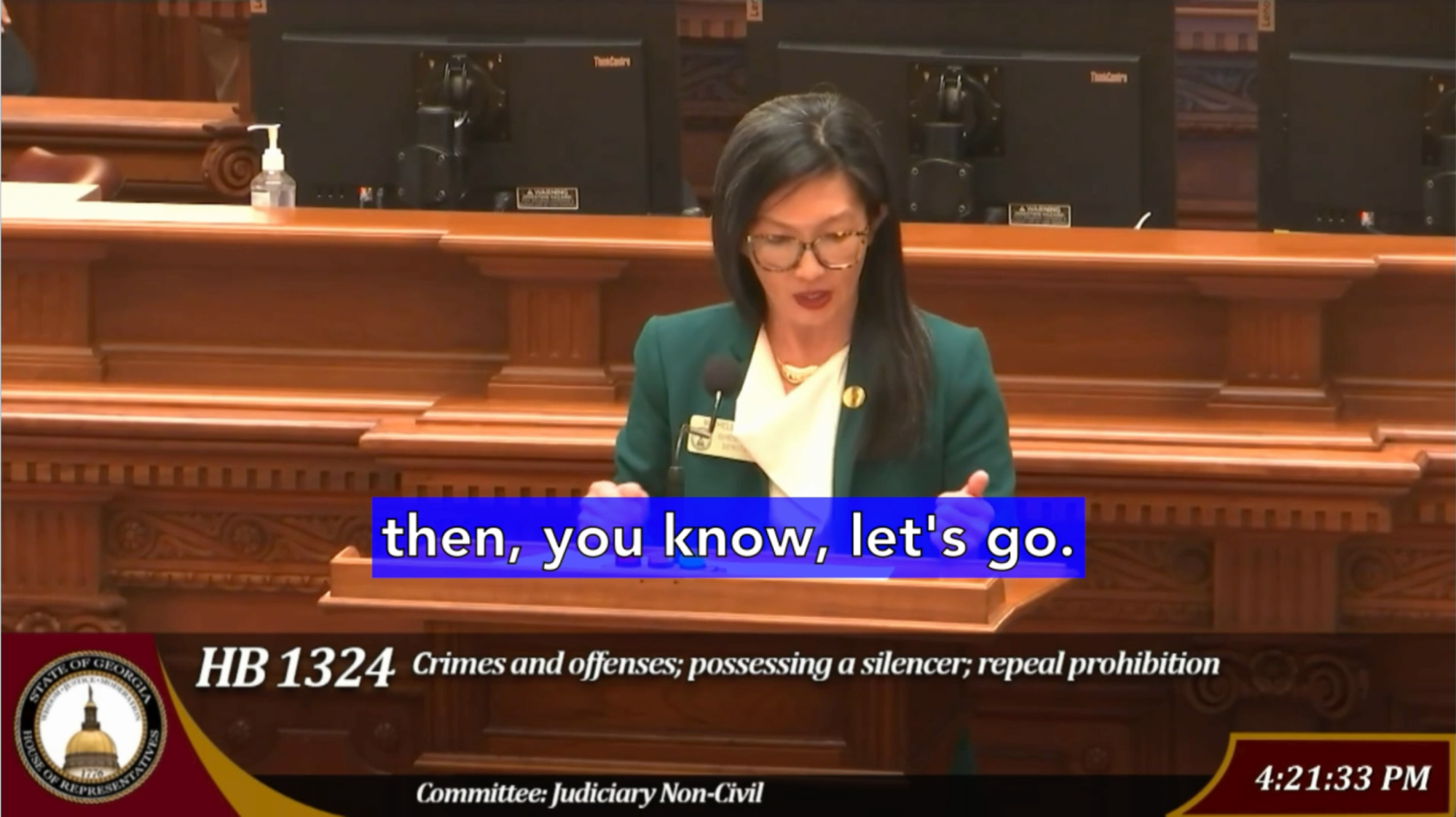
HB 1324 aimed to remove state-level prohibitions on possessing firearm silencers and to repeal penalties for their use. I spoke against this bill as part of the House floor debate.
“We talk a lot in this chamber about public safety. We talk a lot about giving our law enforcement the resources they need to keep our communities safe. So it should be easy for all of us to recognize why this is a bad bill on all both fronts.
A gunshot is loud by design. But that sound is not just noise — it is a critical warning sign. It alerts people nearby that something is wrong. It prompts witnesses to call 911, and prompts bystanders to run away. It helps police identify the location of a threat so that they can respond quickly.
When a silencer is added, that warning is dramatically reduced.
Again, I can’t believe how stupid it is that I need to make these points.
With a silencer, gunfire becomes harder to recognize, harder to locate, and easier for someone with violent intent to use without immediate detection. For first responders, this delay can be the difference between life and death. In active shooter situations, every moment counts, and the ability to hear and locate gunfire is essential.
Silencers undermine that ability.”
Republicans almost never bring bills to the floor they don’t think will pass.
There was a time not very long ago that this bill would have passed easily. But on Friday, HB 1324 failed to receive the 91 vote majority needed to pass, with many Republicans walking off the floor rather than voting in favor.
I take this as a sign that the culture around gun safety is changing, even here in Georgia. It’s a sign that our efforts, our advocacy, and our persistence, is working.
Change happens slowly, and then all at once.
Keep going.
HB 717: Regulating Ketamine Infusion Clinics
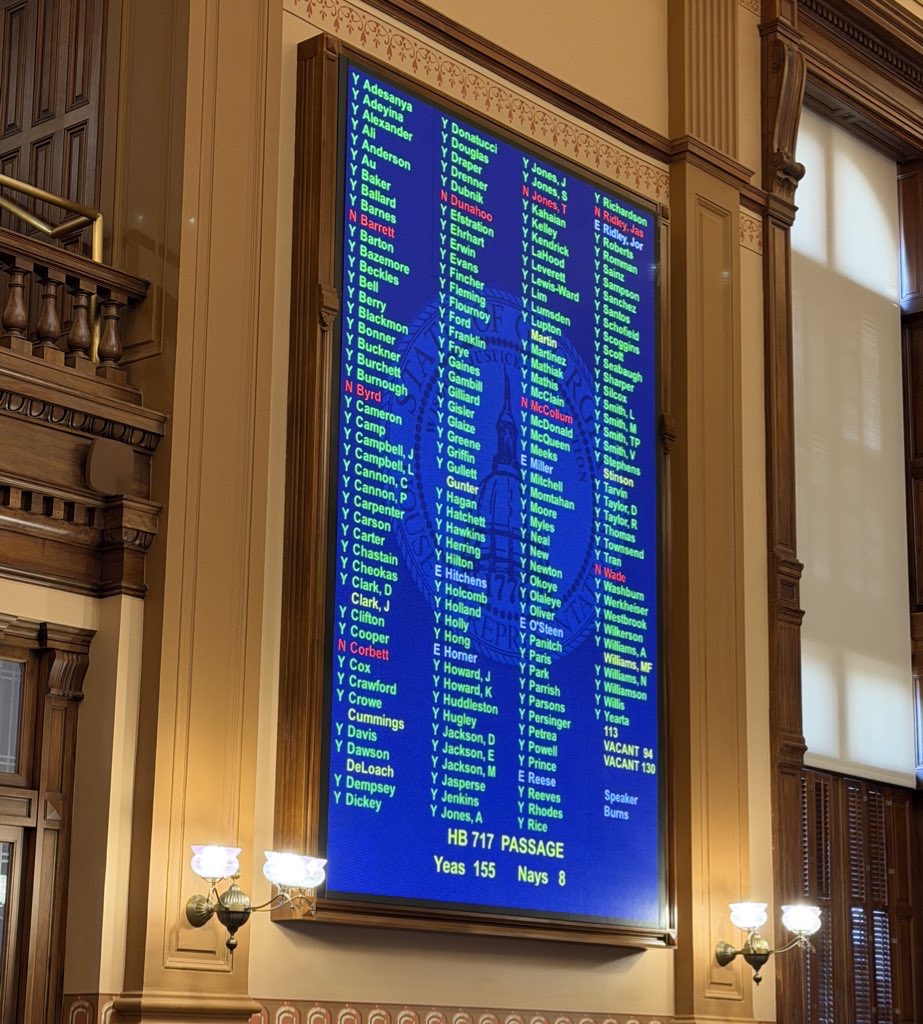
HB 717, which aims to place basic regulatory and patient safety guidelines on the operation of freestanding ketamine clinics, ultimately passed overwhelmingly out of the House.
HB 717 initially hit some friction on its first floor vote (largely centered around business and ownership structure, despite the fact that the primary focus of the bill was on ensuring safe, high quality patient care). However, after some negotiation with stakeholders and crafting compromise language satisfactory to all parties, the bill passed off the House floor and has now made its way over to the Senate.
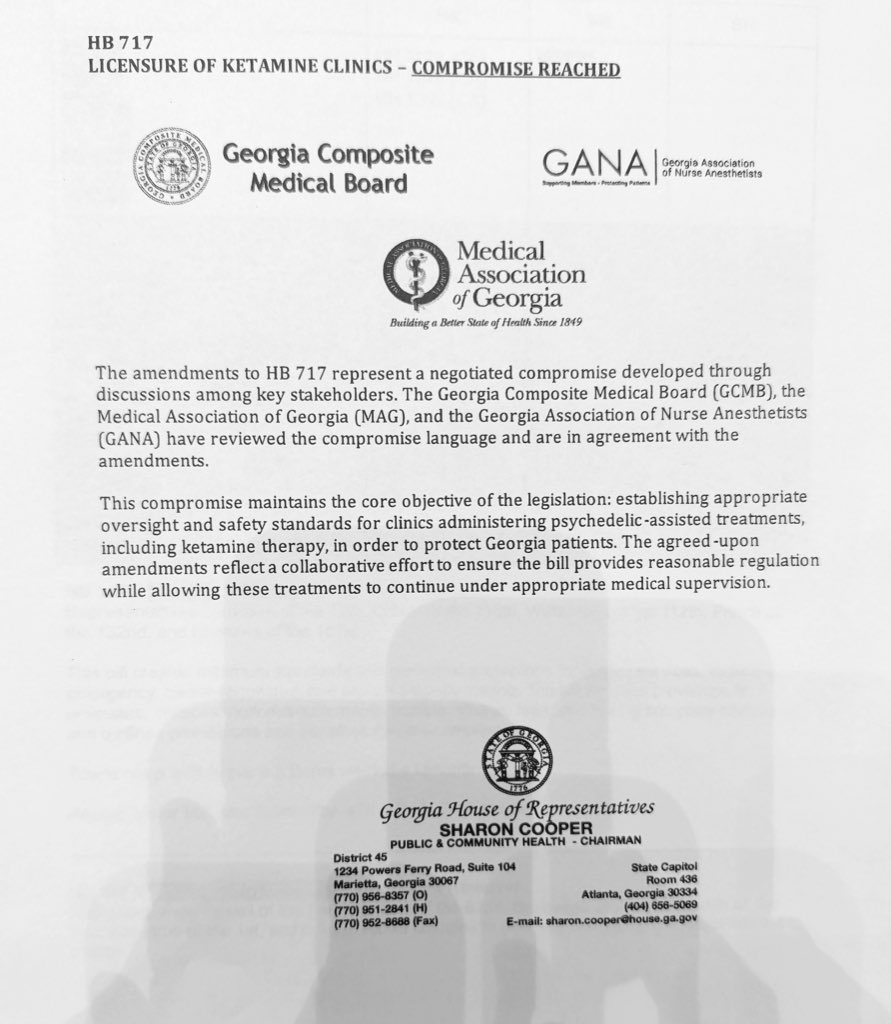
I am deeply grateful to the primary sponsor of this bill Chair Sharon Cooper for working on this compromise language and always prioritizing patient safety as a guiding principle. I expect there may be some headwinds in the Senate for this bill, but hope our partners on the other side of the building can keep focus on this guiding principle as well.
Onward!
HB 947: Placing restrictions on SNAP benefits
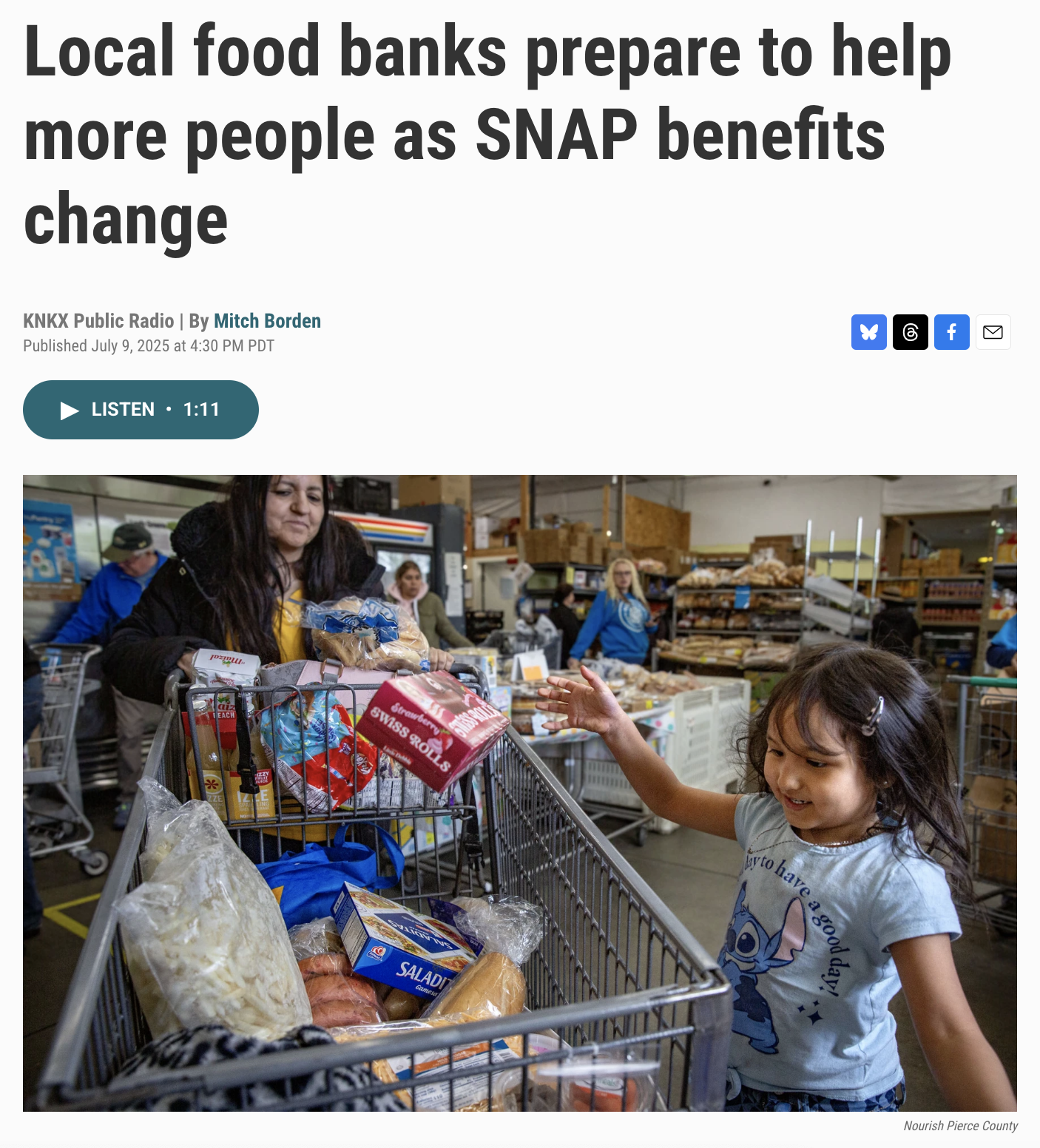
(Via KNKX Public Radio, click here to read full article)
HB 947 seeks to tighten Supplemental Nutrition Assistance Program (SNAP) rules by restricting certain food purchases and adding new eligibility and verification requirements. It passed out of the House by substitute 95 to 66 after midnight on Crossover Day.
About 1.77 million Georgians—roughly 15.6% of people in the state—receive SNAP, and changes to eligibility, certification, and allowable purchases could alter access to benefits and day-to-day grocery choices for large numbers of households.
The bill also mirrors broader national debates over work requirements, categorical eligibility, purports to address state error rates in SNAP administration, despite recent analyses projecting that pushing the draconian rules at the federal level could reduce access for millions to food benefits.
HB 947 requires verification of all eligibility criteria within 30 days, prohibits issuing a second month of benefits before verifications are complete, and calls for data-matching with agencies such as the Departments of Public Health and Corrections. Additionally, the bill would also regulate Disaster SNAP (D-SNAP, which provides temporary food assistance to low-income households affected by a Presidentially declared disaster), set reporting requirements, provide private rights of action, and include an automatic repeal provision.
I was proud to vote NO on this bill, which I find galling. There are many reasons for families to experience food insecurity, and many of those reasons fall under the purview of state government, which has the power to intervene. Rather than addressing these issues, bills like HB 947 seek to further restrict low-income Georgians’ access to food, while perpetuating the narrative that waste, fraud and abuse of the system are rampant.
We judge the progress of a society by how it treats its children. If HB 947 is ultimately signed into law, more children will go to bed hungry each night. I will continue to fight against this bill, and encourage Georgians to call their members of the Georgia Senate to vote NO now that the bill has crossed over.
HR 450: Sports betting. Again.
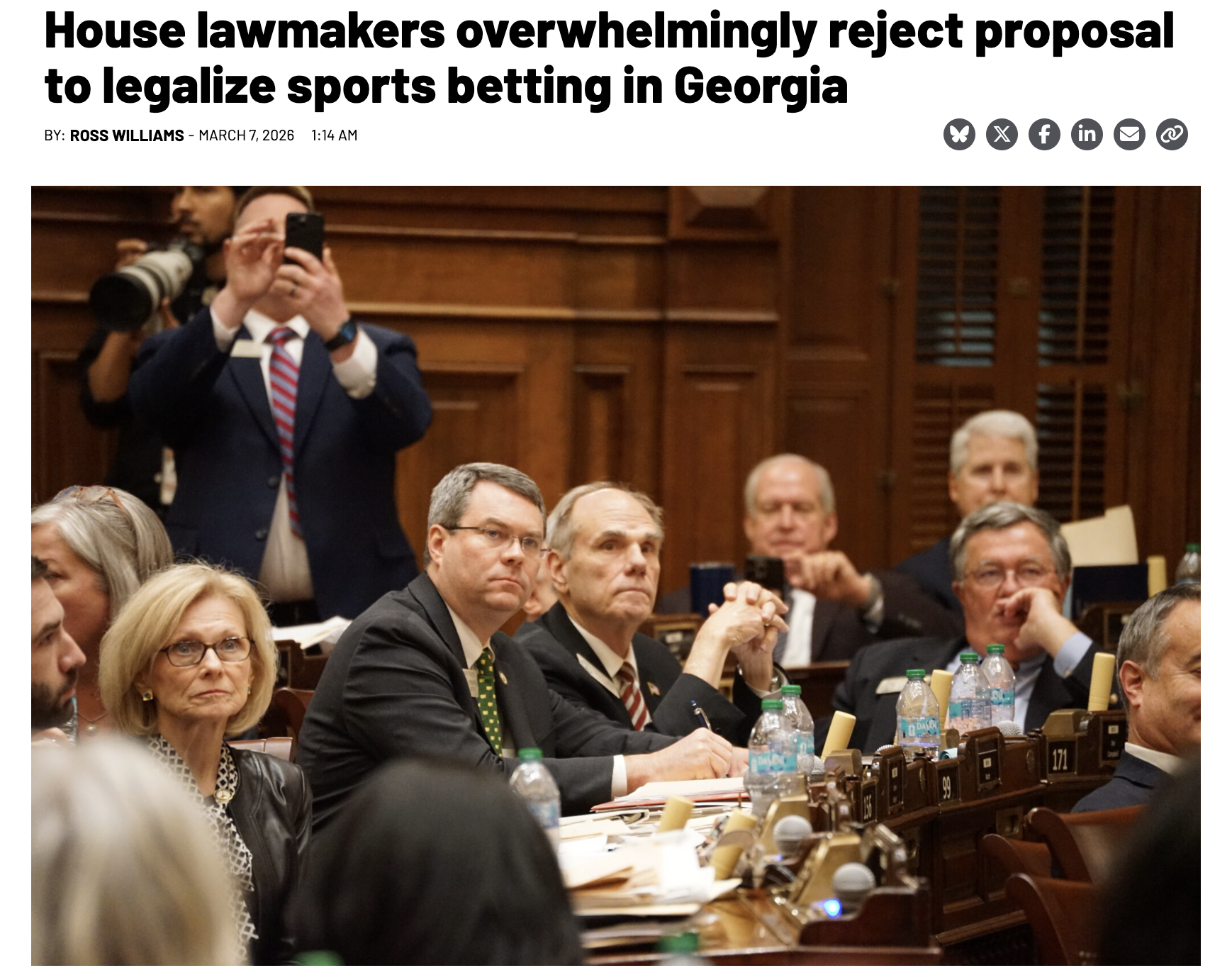
(Via Georgia Recorder, click here to read full article)
Some policy discussions in Georgia are evergreen, and one of those issues is the legalization of sports betting, which we have debated every single year that I’ve been in the legislature. It also tends to be a more interesting issue because support and opposition do not neatly fall along party lines.
“Some conservatives support [sports betting] because they say it will be a boon to the state’s economy, while others oppose it because of moral or religious reasons. Some representatives from both parties say that online gambling sites exploit addiction for profit, while others argue that bringing what is currently an under-the-table practice into the light will allow for regulation and help for people dealing with addiction.
The bill, House Resolution 450, would have sent proceeds to a special fund to be spent on pre-K and other educational programs with a portion set aside to benefit programs that seek to prevent and treat addiction.”
The measure, which would require a Constitutional amendment to pass, only garnered 63 votes in favor (falling far short of the 120 votes needed), while 98 members voted no. I personally voted YES based on the outreach I’d received from residents of HD 50, and my personal opinion that as sports betting is already taking place, the state should have the option to regulate the practice and use its profits to fund education and mental health interventions.
Thank you to all my constituents who reached out to me about this and all the issues we discussed leading up to Crossover. My most important responsibility in this job is to represent you and to be your voice at the Capitol.
PASSING THE FY 2027 “BIG BUDGET”
(Image via State Affairs GA, click here to read article)
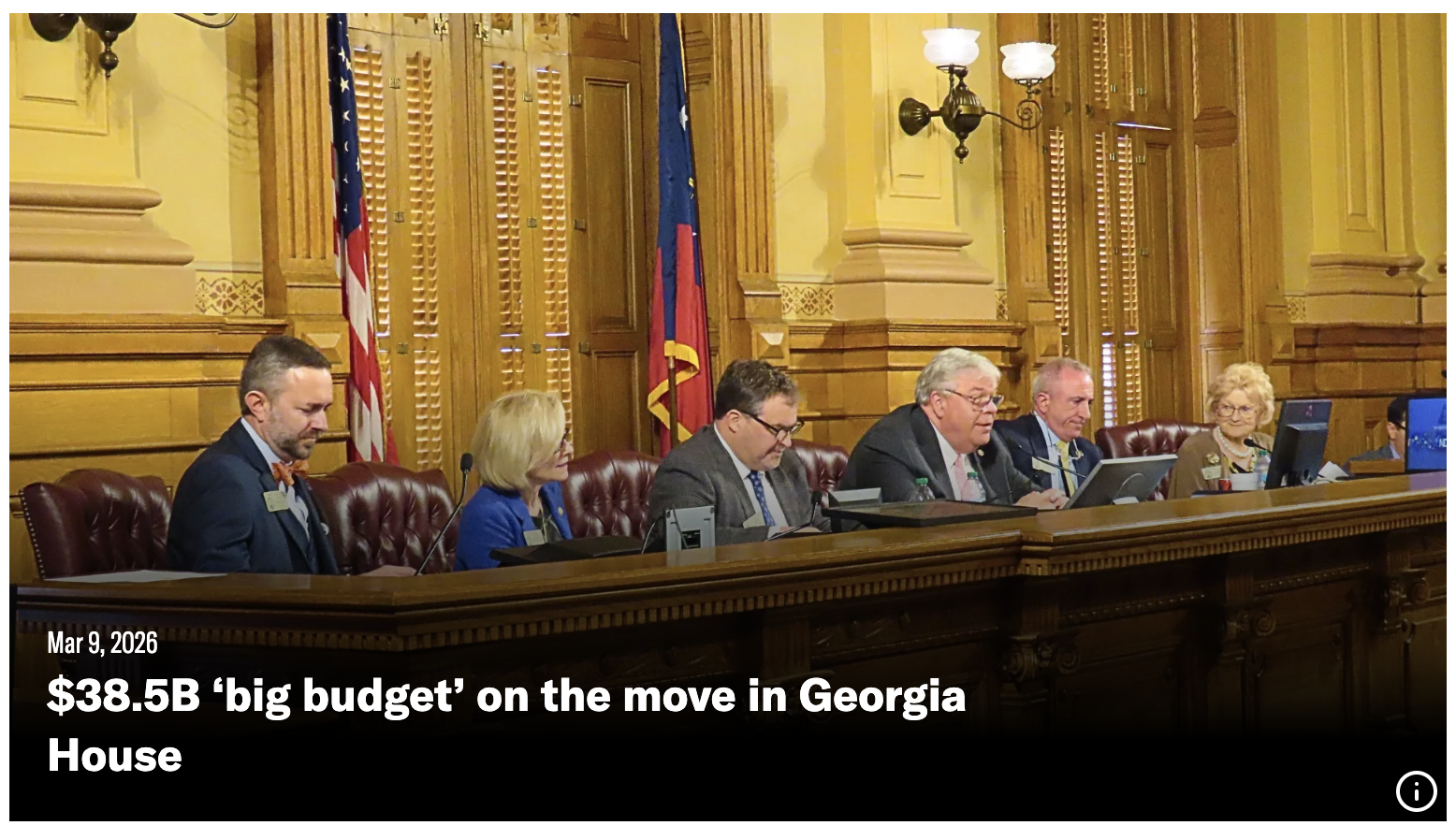
Earlier this week we passed the Fiscal Year 2027 state budget out of the House. As the newest member of the House Appropriations committee, this was my first experience helping to draft the “Big Budget,” and I think there is a lot in it that will help Georgia’s families and the residents of HD 50.
(I walked through the state budgeting process in detail in this January newsletter, it’s worth a review if you want to learn more!)
As a member of the Health Appropriations subcommittee, I had a few priority budget items that managed to stay in the budget through its passage out of the house. Some of these included funds for colorectal cancer screening, increasing the Medicaid dental fee schedule, adding additional NOW-COMP waivers to help people with disabilities receive services, and funding Medicaid coverage for heart and lung transplants in Georgia.
Here are some other FY 2027 budget wins:
(Via Georgia Public Broadcasting, click here to read full article)
- $2 million to the Department of Human Services to implement SUN Bucks, a new summer nutrition program for economically disadvantaged students. This investment will allow Georgia to draw down significant matching funds from the U.S. Department of Agriculture to help with the program’s administrative costs.
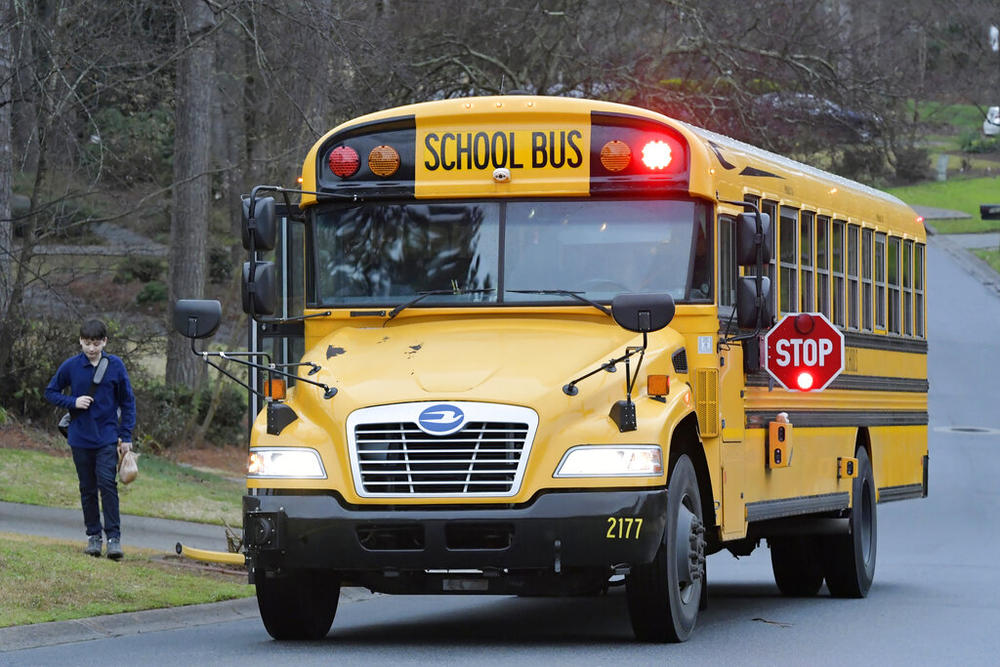
- $41.1 million in additional funding for school transportation, including replacement and retrofitting of old school buses to improve interior air quality.
- Increase for school mental health grants and social worker grants to total $5 million to help underserved districts provide services for students.
- Increase of > $10 million to the Department of Early Care and Learning (DECAL) to help fund and expand Georgia’s Pre-K program, including aftercare, additional slots, and additional paid leave for lead and assistant teachers.

- Approximately $45.3 million in state funds to increase reimbursement rates for providers treating patients on Medicaid, including funding for air ambulance transfer reimbursement.
- $18.2 million in new funding for graduate medical education (GME), covering 147 slots in primary care residencies and 13 new fellowship slots.
- $6.9 million to expand the Department of Public Health’s maternal home visiting program to expand coverage to 62 additional counties, thereby ensuring that every rural county has access to the program.
- $1.2 million to support patients in Georgia with sickle cell disease (Georgia has among the highest number of patients with SCD in the country)

(Photo credit: University of Georgia)
- $9.5 million in start-up costs for the University of Georgia School of Medicine. (The med school’s inaugural class is expected to start classes Fall 2026.)
- An additional $45 million to fund HOPE scholarships at public and private institutions, bringing the total appropriation in 2027 to over $1 billion, wich will provide awards to > 120,000 students throughout the state.
- $2.5 million to initiate the Georgia Foster Care Scholarship, providing up to $30,000 per year to eligible former foster care students for tuition, room and board, meal plan, and books.
- An additional $15 million to the Georgia Student Finance Commission to fund growing participation in the Dual Enrollment Program, bringing the total FY 20207 appropriation to $124 million in state funds, providing awards to > 70,000 students across the state.
(Photo credit: Georgia Council on Developmental Disabilities)
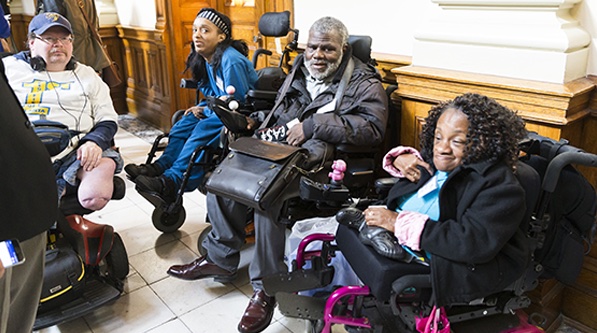
- Funding for 100 additional NOW/COMP waivers to support eligible Georgians with intellectual and/or developmental disabilities.
- $6.69 million for memory care and treatment, home delivered meals, respite, caregiver support, and other services for older adults and their families.
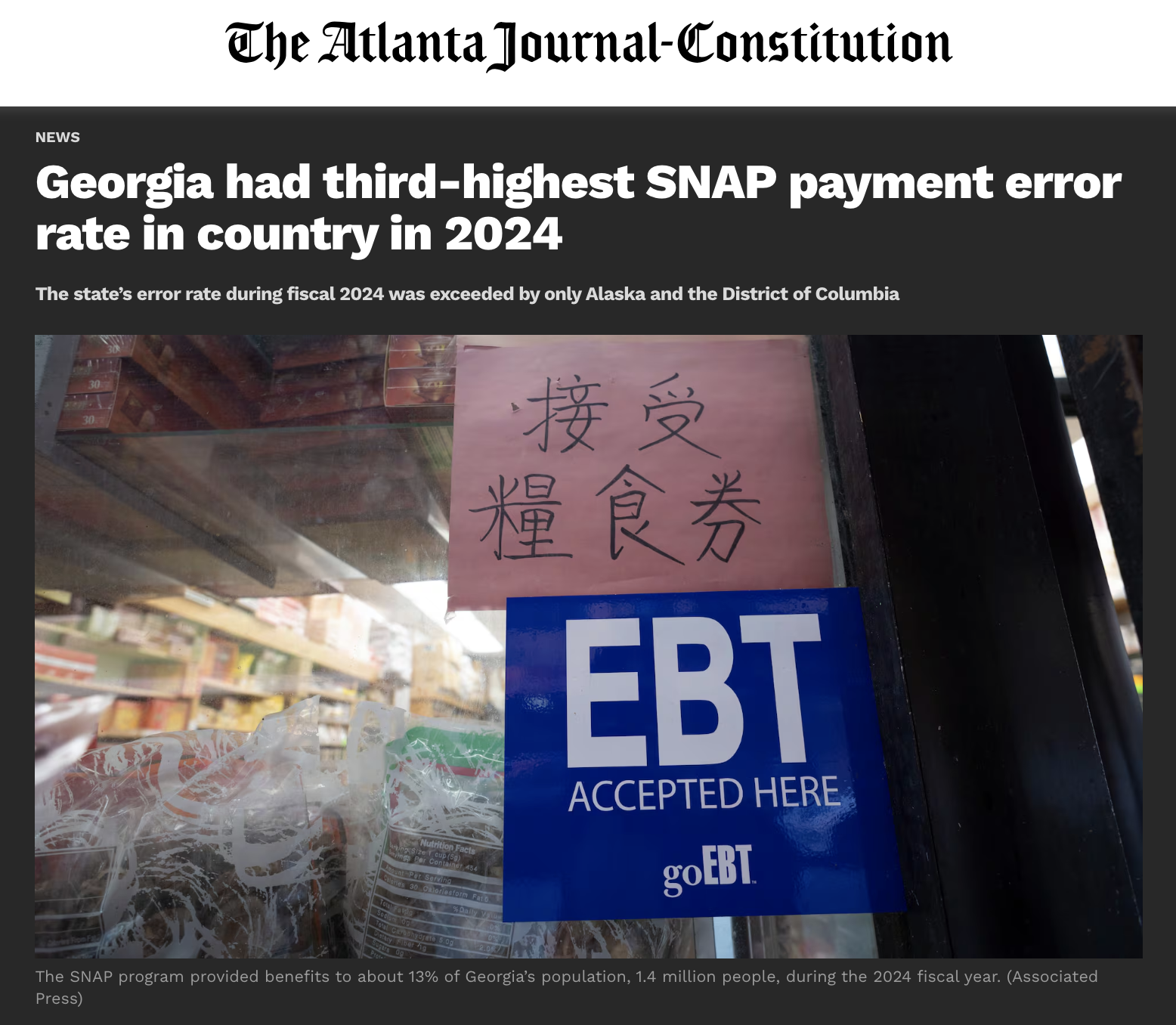
- An additional $10.98 million to the Department of Human Services in an effort to reduce the error rate for the Supplemental Nutrition for Needy Families program. This seems to me a far more direct way to address the error rates than cutting benefits to hungry families, as I discussed above, and I hope we will continue to focus on protecting funding and providing assistance rather than punishing the people due to the toll of under-resourced administrative burdens.
(Via the Atlanta Journal-Constitution, click here to read full article)
- $20.7 million to the Criminal Justice Coordinating Council (CJCC) to increase grants and offset the loss of federal unds for victim service providers, including child advocacy centers, domestic violence shelters, and sexual assault centers, which provide services for the most vulnerable Georgians. More than 21,000 children were served last year in child advocacy centers, and domestic violence shelters served 40,000 victims, with more than 15,000 victims turned away because shelters were at capacity.
- A $1.1 million appropriation to create four new superior cour judgeships in Atlanta, Gwinnett, Middle and NOrtheastern Judicial Circuits, to help address case overloads and backlogs.
As with every budget, there were missed opportunities and potential for future action. That said, there is a lot of good in this budget, and it is my hope as we finish out the session that most of these priority items remain in the FY 2027 budget and reach the Governor’s desk by Sine Die.
THE GEORGIA DIAGNOSIS

Available on Apple, Spotify, or YouTube
Team Au is in pre-production for Season 2 of our podcast THE GEORGIA DIAGNOSIS, and we want to hear from you!
Whose stories do you want to hear, and what fascinating voices would you love to have included? Fill out our podcast survey here. Thank you for listening to and sharing our first season, and for helping us make Season 2 even better!
Catch up on Season 1 of THE GEORGIA DIAGNOSIS on Apple, Spotify, or YouTube.
UPCOMING EVENTS
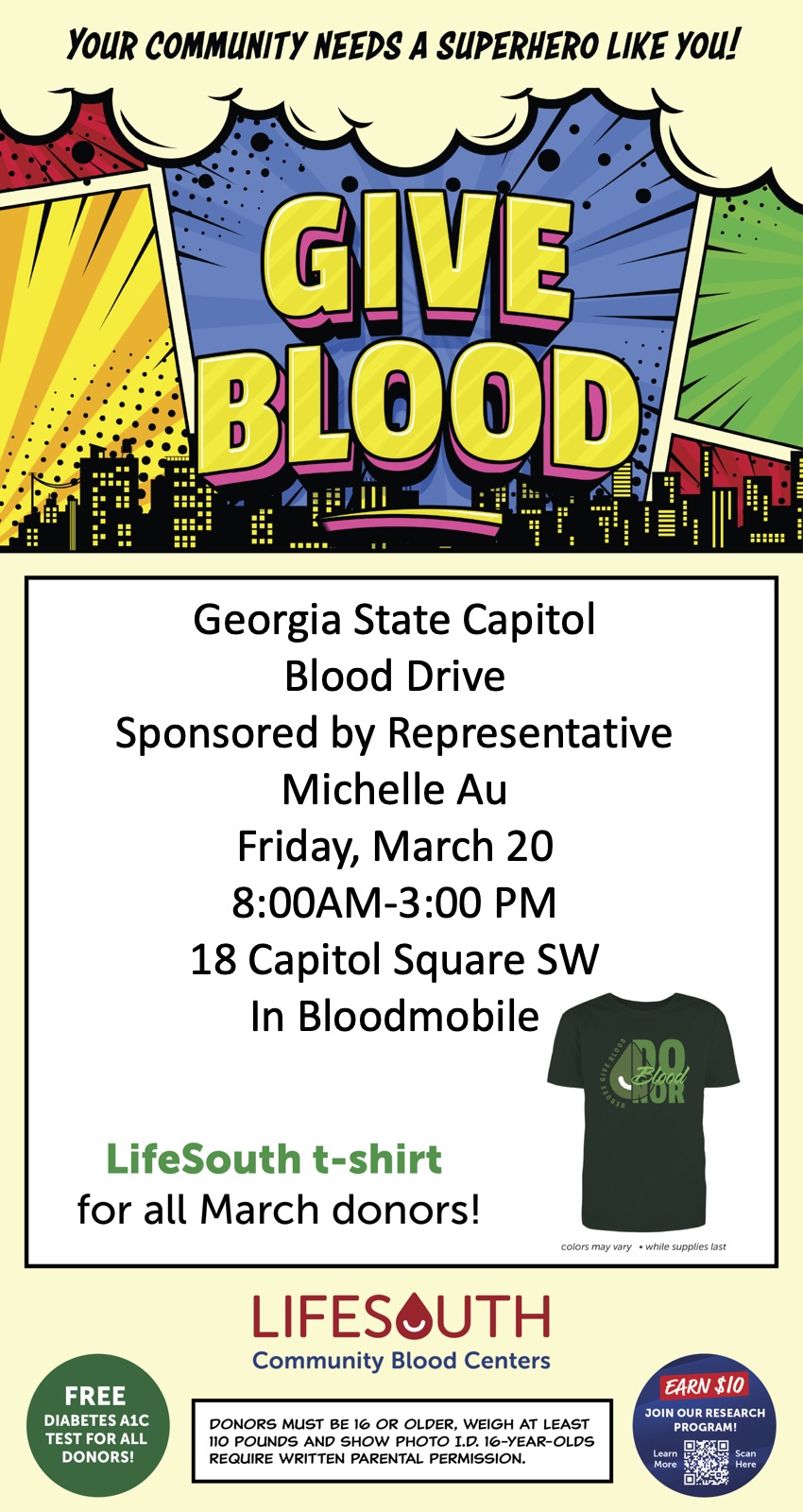
Join Team Au next Friday, March 20th for our second Gold Dome Blood Drive of the 2026 session! We’ve partnered with our friends from LifeSouth once again to give the gift of life to trauma, cancer, surgical, and pediatric patients, among the many people who may need life-saving blood transfusions!
Walk-ins are always welcome, but if you prefer you can also reserve your appointment time here. They will be on Mitchell St right in between the Coverdell Legislative Office Building and the Capitol. See you there!
TEAM AU IN ACTION
Pre-Crossover Town Hall
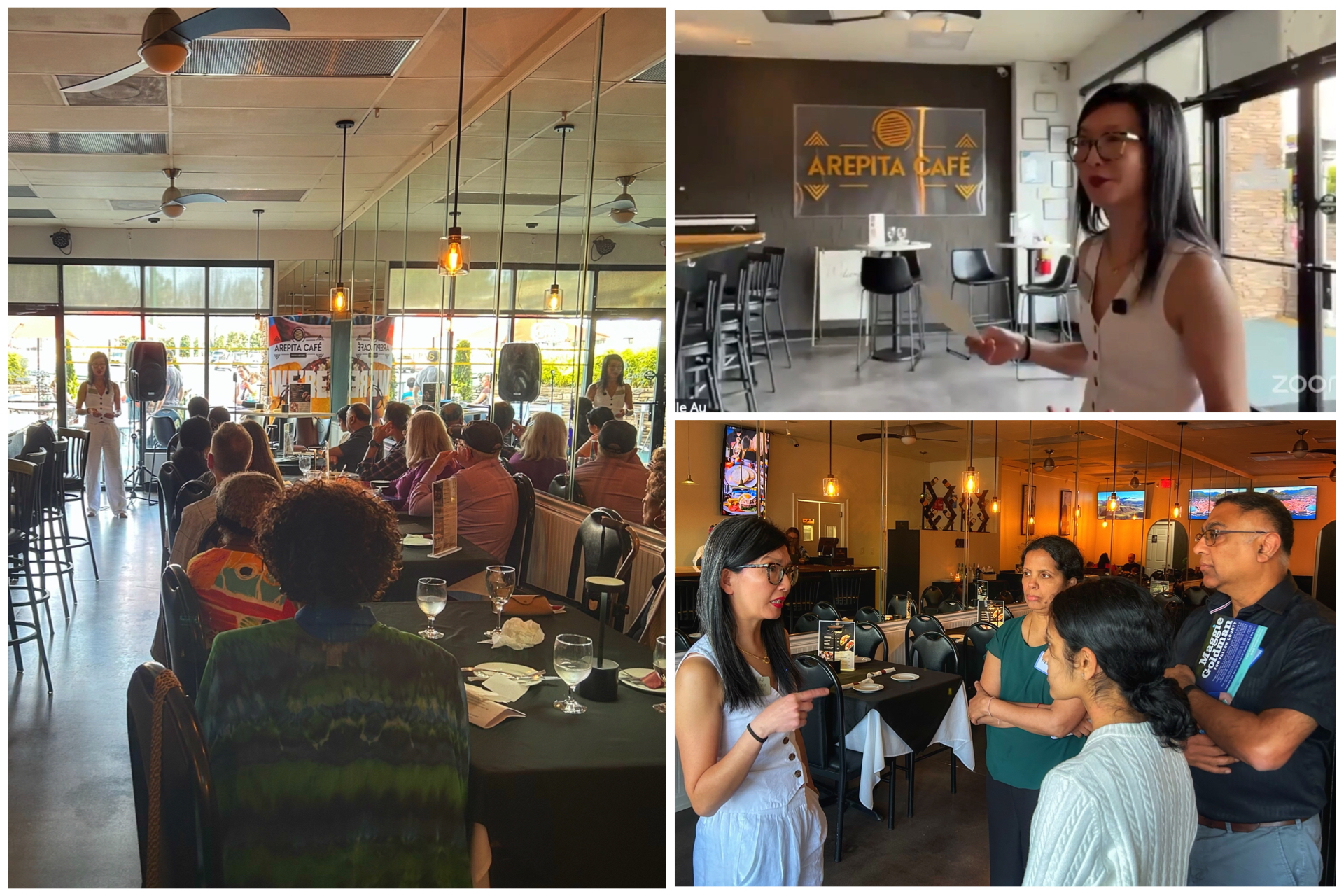
We had wonderful conversations and questions at our annual Pre-Crossover Day Town Hall at HD 50’s own Arepita Cafe! Our goal for this Town Hall was to discuss priority bills that could be brought up before Crossover, answer questions, and hear what issues were most important to our District so I can best represent you at the Capitol.
(For those who were unable to attend in person, we also live-streamed out Town Hall, and the full video is archived here.)
Be on the lookout for an announcement about our annual Post-Sie Die Town Hall, which will take place in April after the legislative session has wrapped up. We’ll discuss what bills made across the finish line, which pieces of legislation failed or languished, and what we have on deck for the upcoming year. See you there!
Asian American Advocacy Day
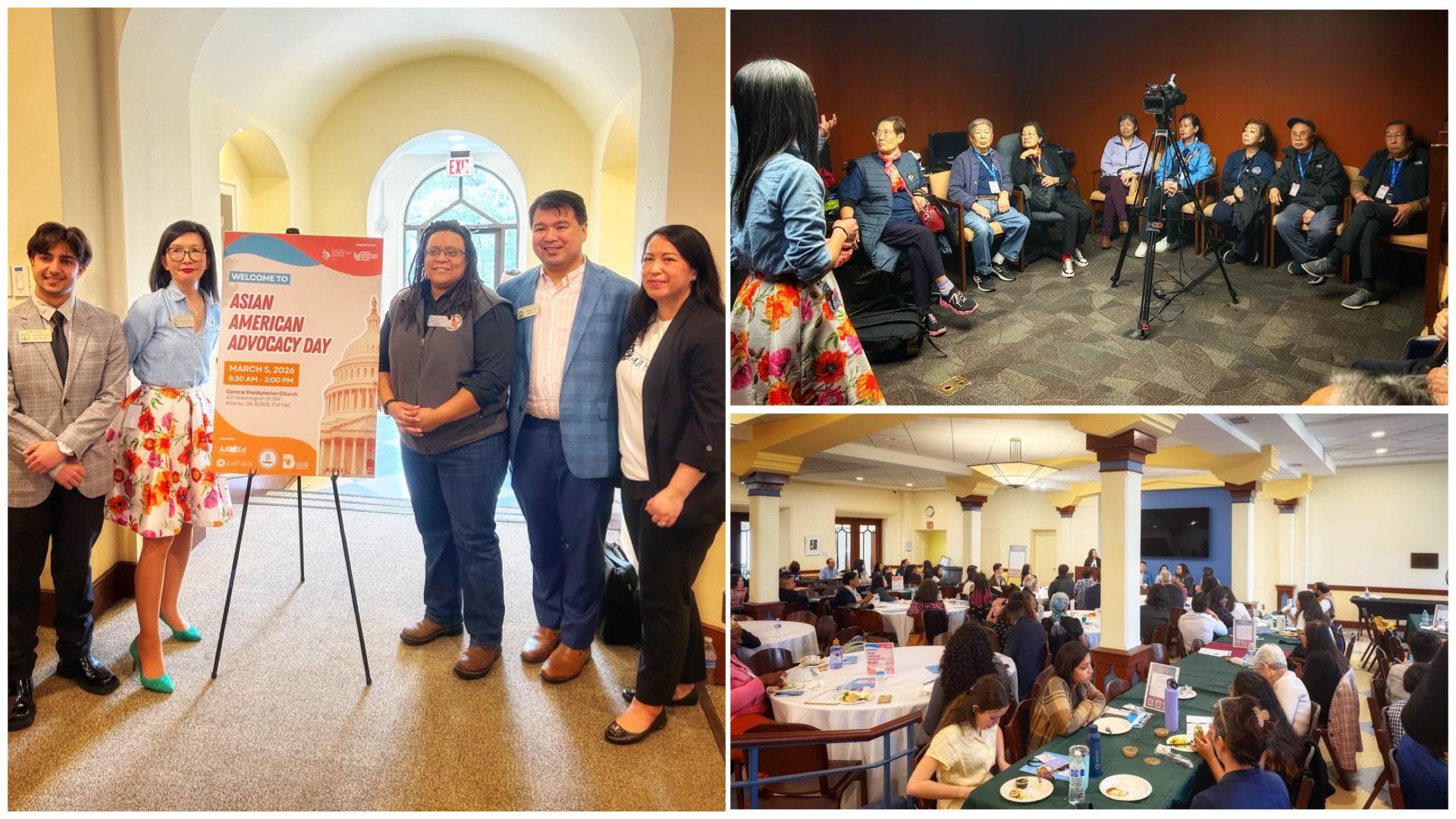
It was great to see so many community members and advocates at Asian American Advocacy Day at the Capitol! This is a day that I look forward to every year under the Gold Dome and I am so encouraged by how engaged the community is with state-level politics.
Asian Americans are the fastest growing demographic group in this country, and as we have seen time and time again, our votes and our voices are crucial to build change in our communities. Thank you to everyone for visiting us at The People’s House!
Qualifying Week
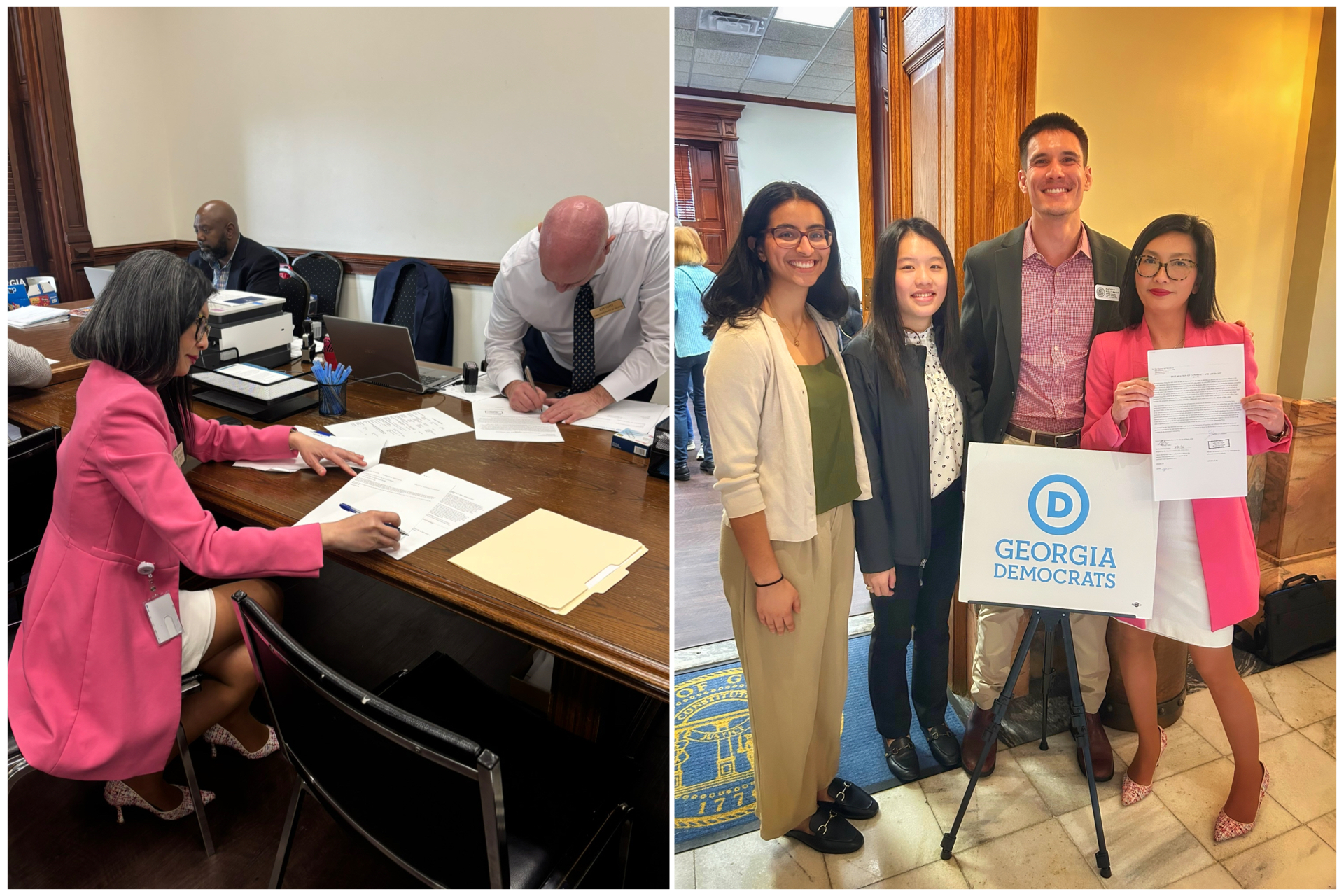
I was excited last week to qualify for re-election to continue serving Georgia’s 50th District in the Georgia House of Representatives! I am truly humbled in the trust the people of this district have put me these past three terms in the Georgia General Assembly, and it would be my deep honor to continue representing you under the Gold Dome.
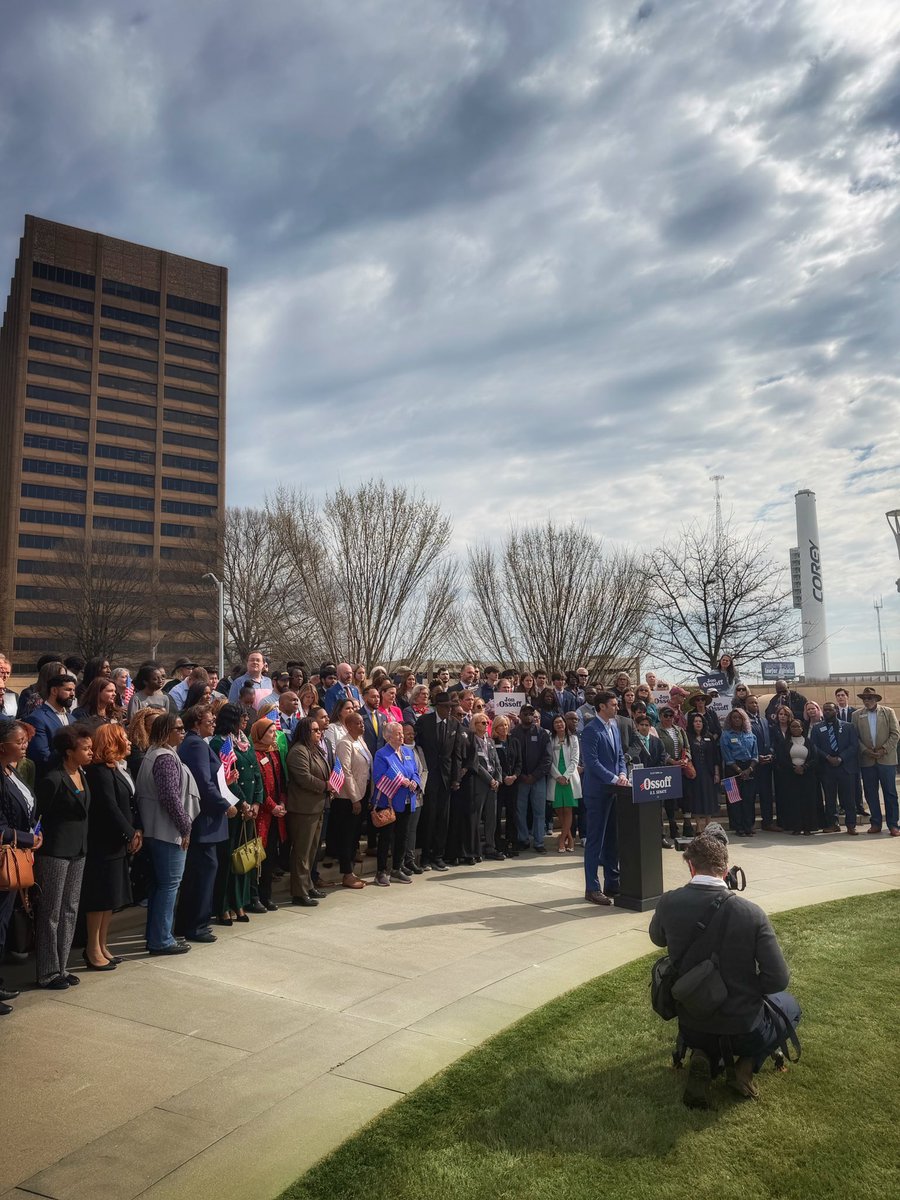
I was not the only person filing for re-election, of course. I was proud to stand with my fellow legislators and community leaders as we supported Senator Jon Ossoff in his re-election campaign, in the country’s most competitive U.S. Senate race and the only Democratic Senator running for re-election in a state that Donald Trump won.
We distinguish ourselves by the work we do and the choices we make. Senator Ossoff is a true leader, and I look forward to sending him back to Washington to do the people’s work.
* * *
It has never been more important to pay attention to the work of state legislatures. Thank you as ever for your support so that we can keep doing this most important work together.
As always, please do not hesitate to reach out to our office should you need any assistance, or if you have any concerns you’d like me to address on your behalf.
It is my honor to be your voice in the Georgia House of Representatives.
In service,