
Friends,
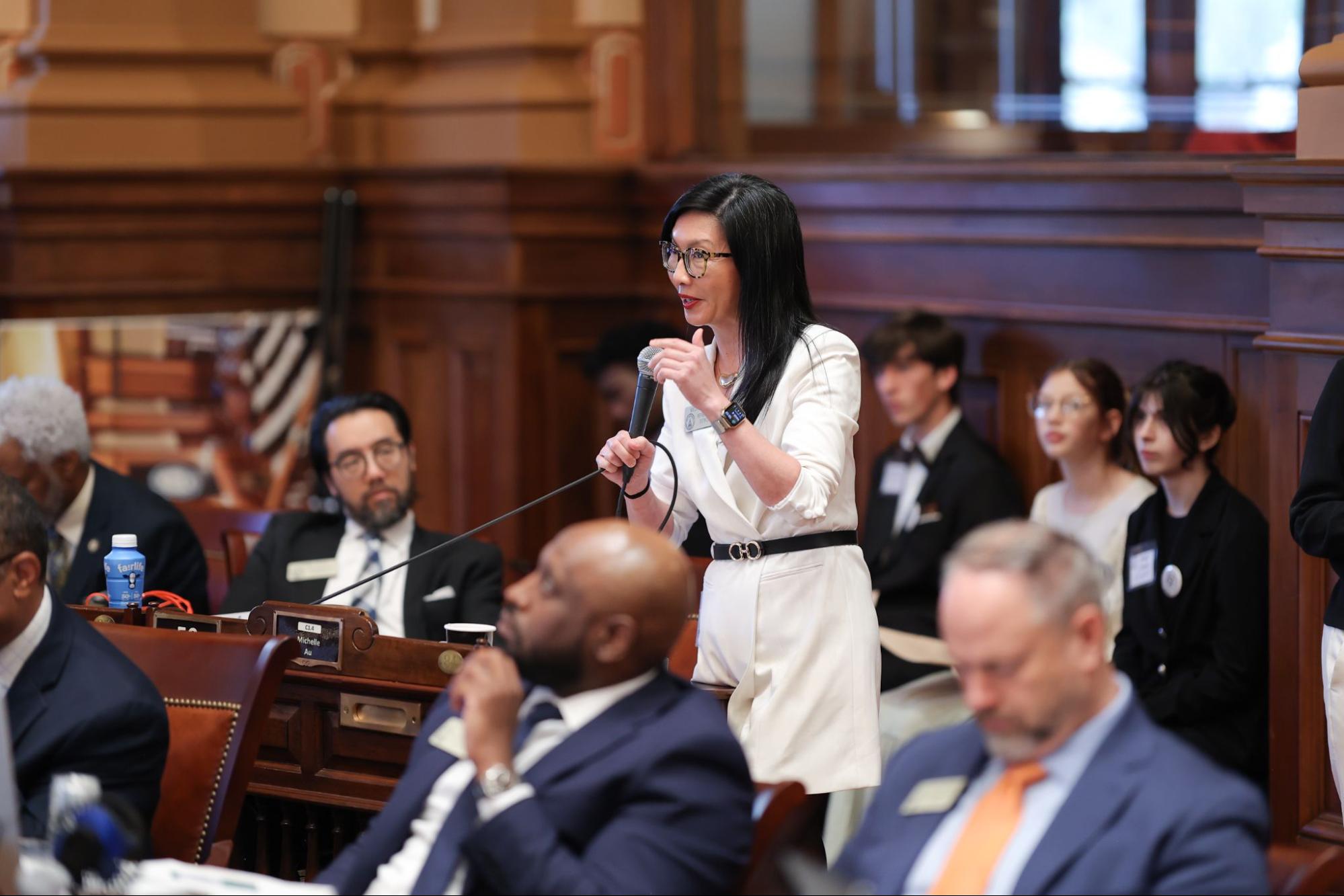
We just wrapped up what I am presuming will be the first of two special legislative sessions this year, and I’m incredibly proud of the work Democrats were able to do, holding the line against further gerrymandering of our state electoral maps and protecting Georgians interests during a historic affordability crisis.
The fact of a special session is already quite unusual. Let’s get into what we worked on over the last two weeks, why we needed to do so, and how we need to prepare for the fight ahead of us.

This is, of course, an election year, and we cannot continue to do the work of the people without first ensuring that we can return to the fight. In another extremely competitive election, running in a swing district at the heart of a swing state, I am so grateful for every one of you that supports our work. Your support keeps us strong and focused as we charge towards November.
Are you ready to get into it? Then let’s go.
SPECIAL SESSION RECAP
What is “special session” anyway?
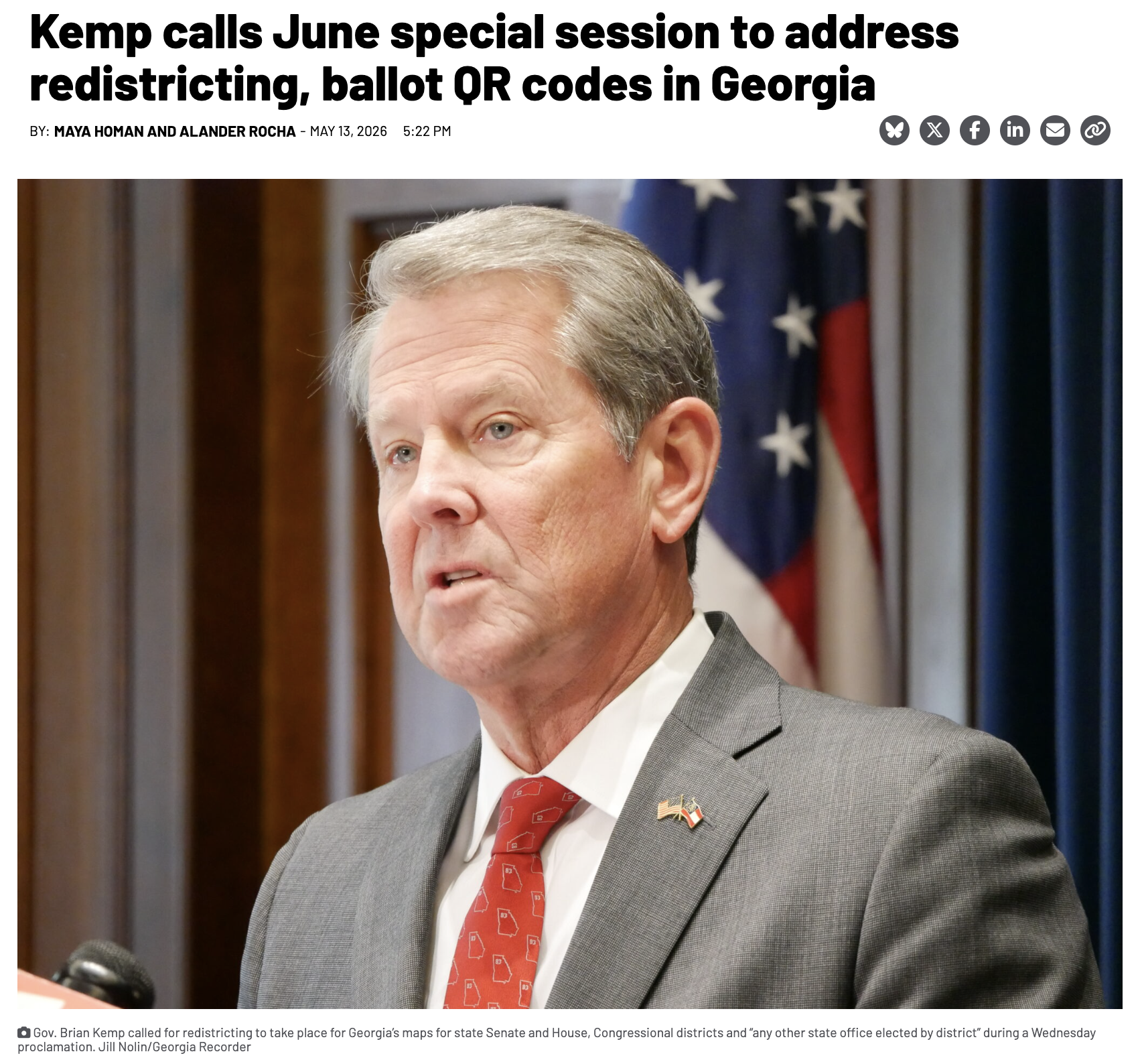
(Via the Georgia Recorder, click here to read full article)
Georgia’s is considered a part time state legislature, which means that typically the Georgia House and Senate convene for about three months of the year at the state Capitol. During this time, which usually runs between January and April, we debate policy, pass the budget, and vote on new laws.
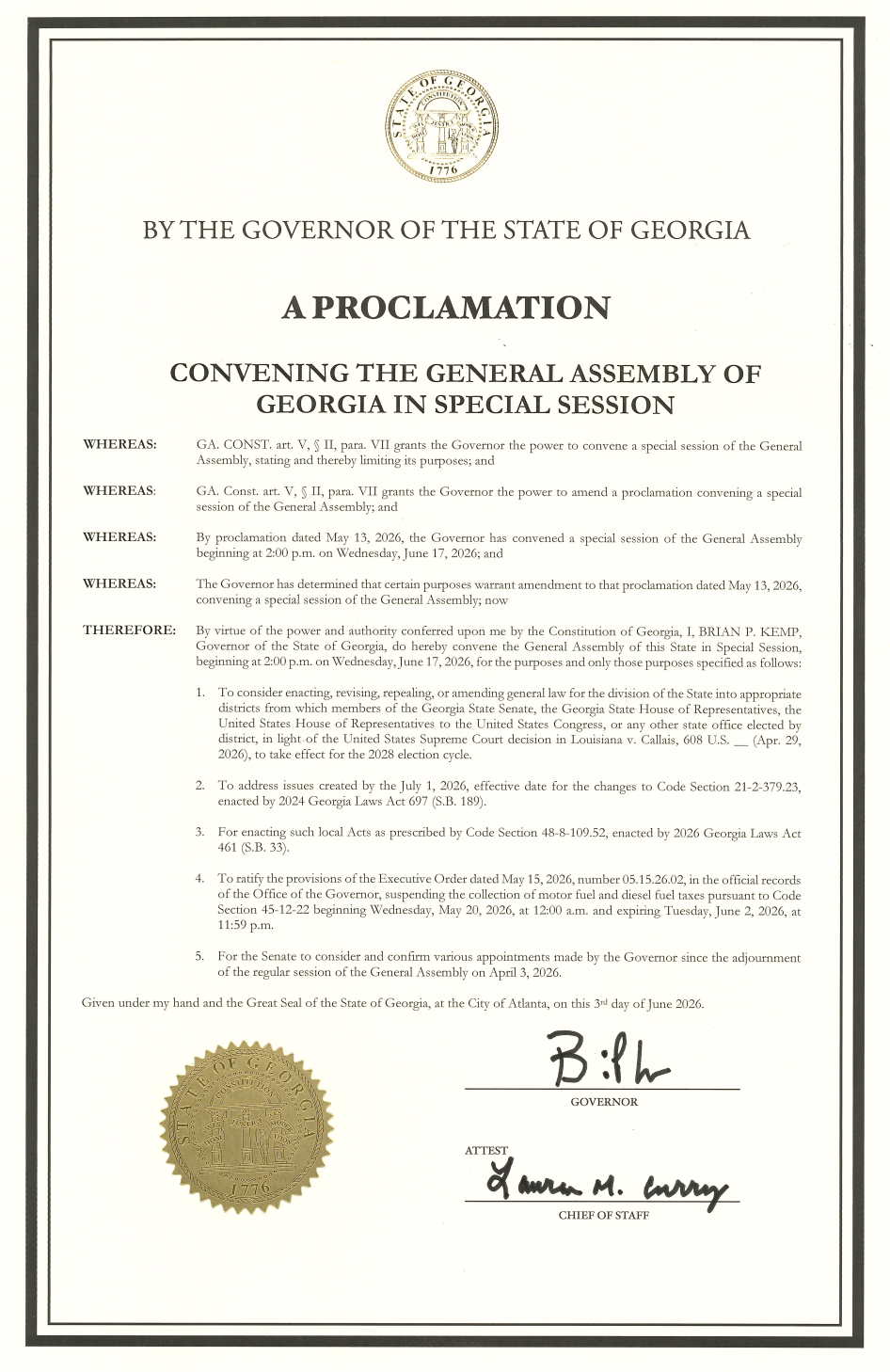
A special session of the Georgia legislature is a focused legislative period outside of the standard annual session. Lawmakers convene ostensibly to address specific, urgent issues, and are legally restricted to passing bills only on the topics outlined in the official proclamation, which is issued by the governor.
Special sessions function differently than the 40-day regular annual session in a few key ways:
- A special session can only be called by the governor or by a vote of three-fifths of both the Georgia House and Senate.
- Unlike regular sessions, where members can introduce a broad array of legislation, lawmakers in a special session are limited exclusively to the subject matter designated in the calling proclamation.
- While they can legally run for up to 40 days, special sessions usually last only a few days or weeks depending on the complexity of the agenda.
The proclamation issued by the governor ordered this year’s first special to start Wednesday, June 17th, the day after the primary election runoff for the 2026 election. Let’s walk through the items enumerated in the proclamation, and the action we took on each.
1.) Redistricting 3.0
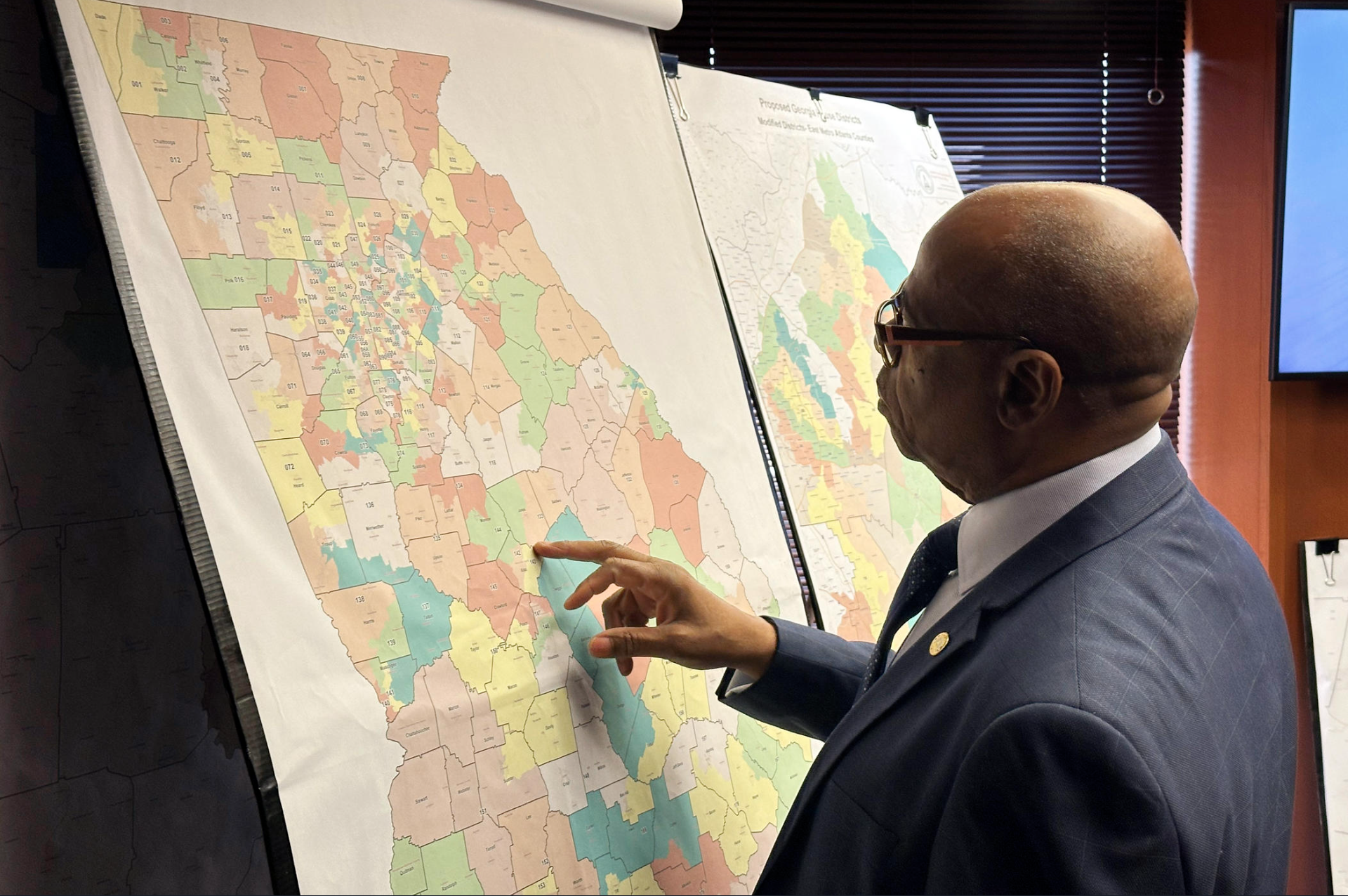
(Photo credit: Jeff Amy for the Associated Press)
We detailed the long history of redistricting in Georgia since the 2020 Census in our last newsletter. It’s worth a scan just to get caught up on where we started when the special session was first called in May. But in short…
Section 2 of the Voting Rights Act has been eviscerated after the U.S. Supreme Court’s decision in Louisiana v. Callais in April. As a result, many Southern states have been rushing back into special sessions to redraw their electoral maps, in a blatant attempt to weaken the power of Black voters to elect the candidates of their choice. Georgia, Governor Kemp, and our Republican majority, were determined not to be left behind, and redistricting was in fact spelled out as the #1 priority of our June special session.
We were set to gavel in at 2:00 pm on Wednesday, June 17th. But about an hour before, in a stunning press conference at the South Steps of the Capitol, the Republican leaders of both the Senate and the House rejected the Governor’s request to redraw the maps during the special session.
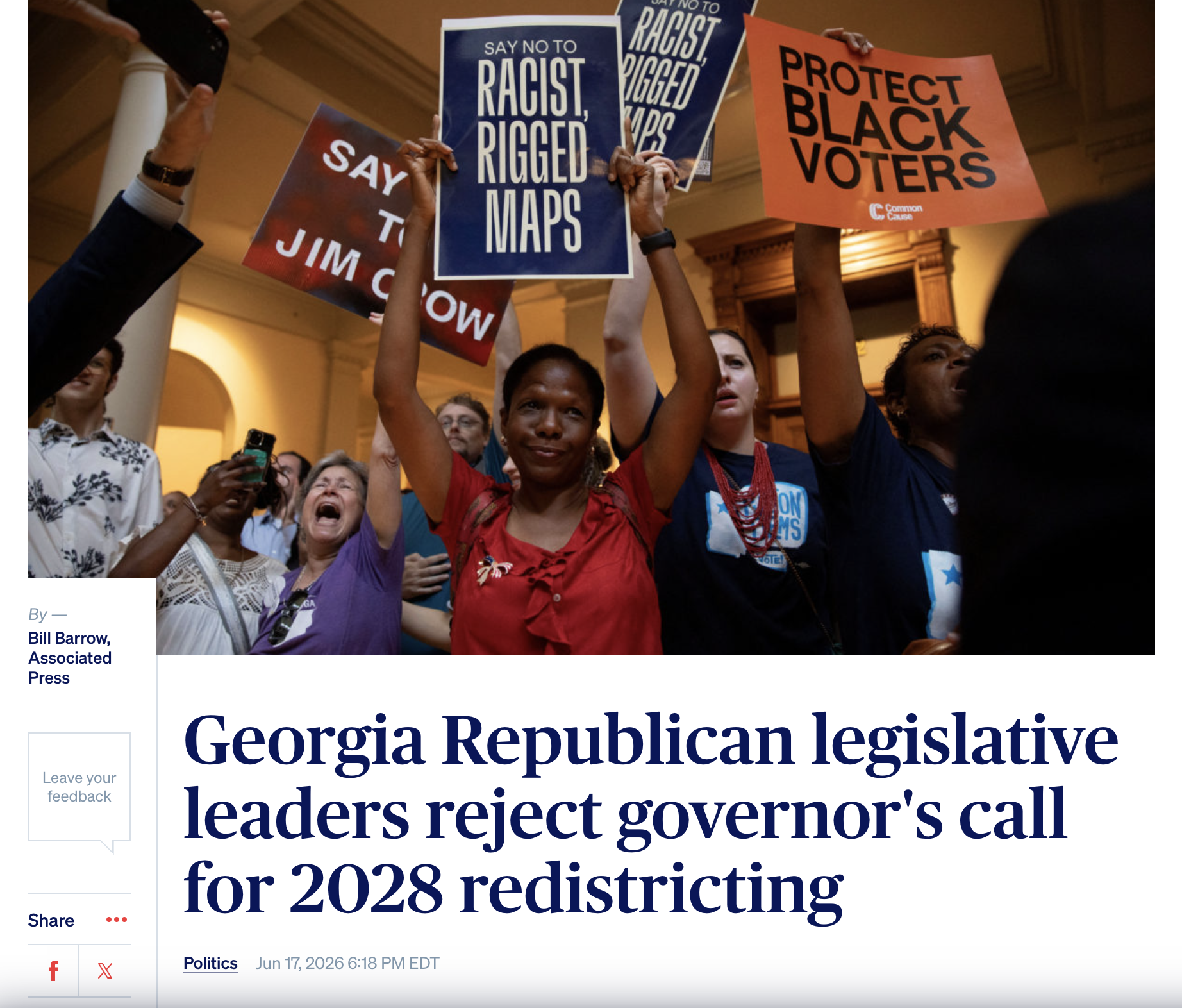
(Via PBS, read full article here)
“Changes to Georgia’s maps should take place only when members of the General Assembly and citizens have been given ample opportunity to gather the facts, provide input, and engage in meaningful discussion,” Speaker of the House Jon Burns wrote in a public statement signed by all members of House Republican leadership. “For this reason, we will not be taking up congressional or legislative redistricting for the 2028 election cycle during this special session.”
(I will note here that Republicans seemed to understand what they are “supposed” to say in a moment like this, and they certainly also committed to the pantomime of “engaging in meaningful discussion” prior to redistricting in 2021, though the majority of the public input they showily solicited from around the state was sought prior to the publication of the proposed maps, or indeed the 2020 Census results.)
But let’s get real for a second here on why the Republicans in fact backed off of redistricting in June. They got scared that the blowback might cause them to lose seats in November.
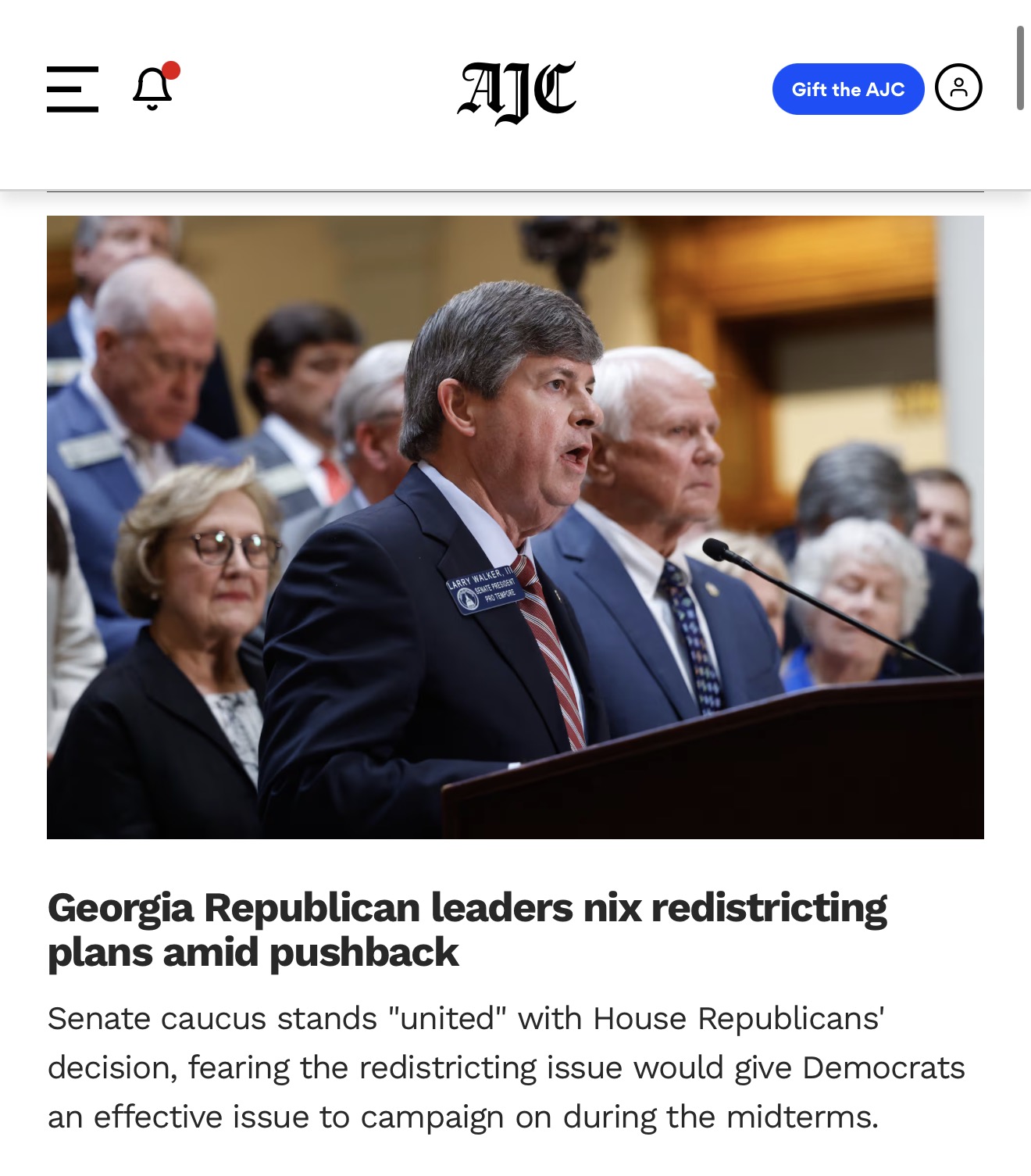
(Via the Atlanta Journal-Constitution, click here to read full article)
The Republicans’ intent to redistrict was met with furious mobilization from voting rights and civil rights advocates throughout the state, along with massive protests at the Georgia State Capitol. Republicans were nervous about further energizing Democrats to turn out in what has already proved to be a historic midterm cycle, because they are fearful of losing power already in decline, and this is what made them back off their original plans.
And their worries aren’t simply confined to statewide races like the U.S. Senate race or the race for governor. State legislative Republicans in swing districts are also looking at close races in November, and in elections where a few hundred votes could spell the difference between holding or losing their seats, these endangered Republican members (in districts circumscribing HD 50), want no additional motivation for Democrats to show up at the polls.
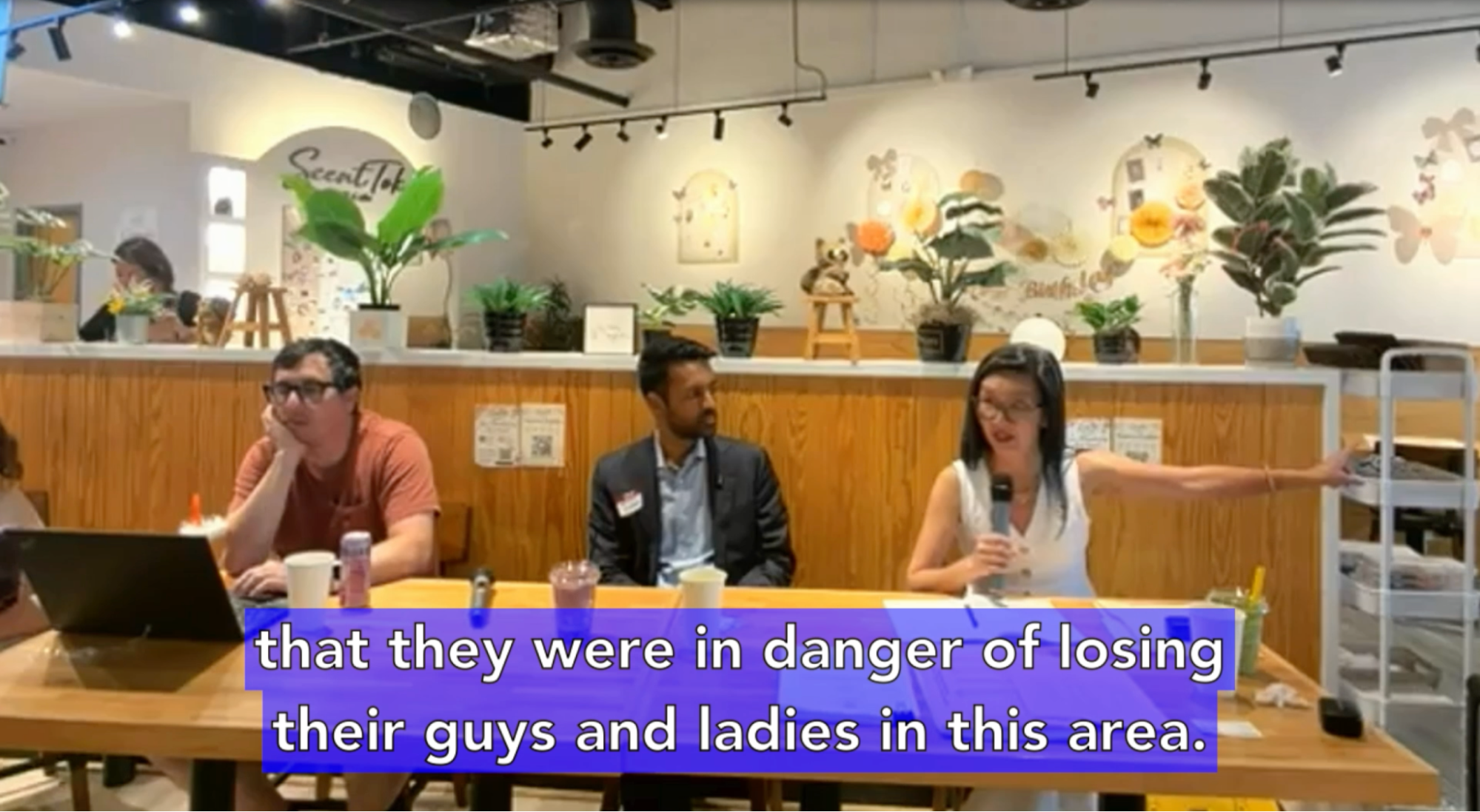
(Watch full clip from our HD 50 Special Session Town Hall on June 18th, 2026)
I want to underline here what this shows about the area in and around our district, in the northern arc of the Atlanta metro, a region that has undergone remarkable demographic and electoral change over the last decade.
It’s because of the work of Democrats in the North Atlanta suburbs we’ve been able to beat the Republicans back into retreat. Because even in formerly comfortably Republican areas like this, Democrats are asserting their power, and their electoral weight, and acting as the fulcrum in close elections like the ones we’ll see this November.
To those who have been with us in this fight since the beginning, thank you. Keep going.
It’s also important to note the language the Speaker used in his statement. He said, “We will not be taking up congressional or legislative redistricting for the 2028 election cycle during this special session.” But he did not preclude the possibility of redistricting later in the year, perhaps in a second special session after Election Day. So particularly if Democrats make big gains in November, especially in marquee races at the top of the ticket, I’d expect a last-ditch desperate attempt to claw back some of that power for 2028 during a lame duck special session of the state legislature. Stay tuned.
2.) Address ballot QR code elimination (SB 189)
(Via WABE, click here to read full article)
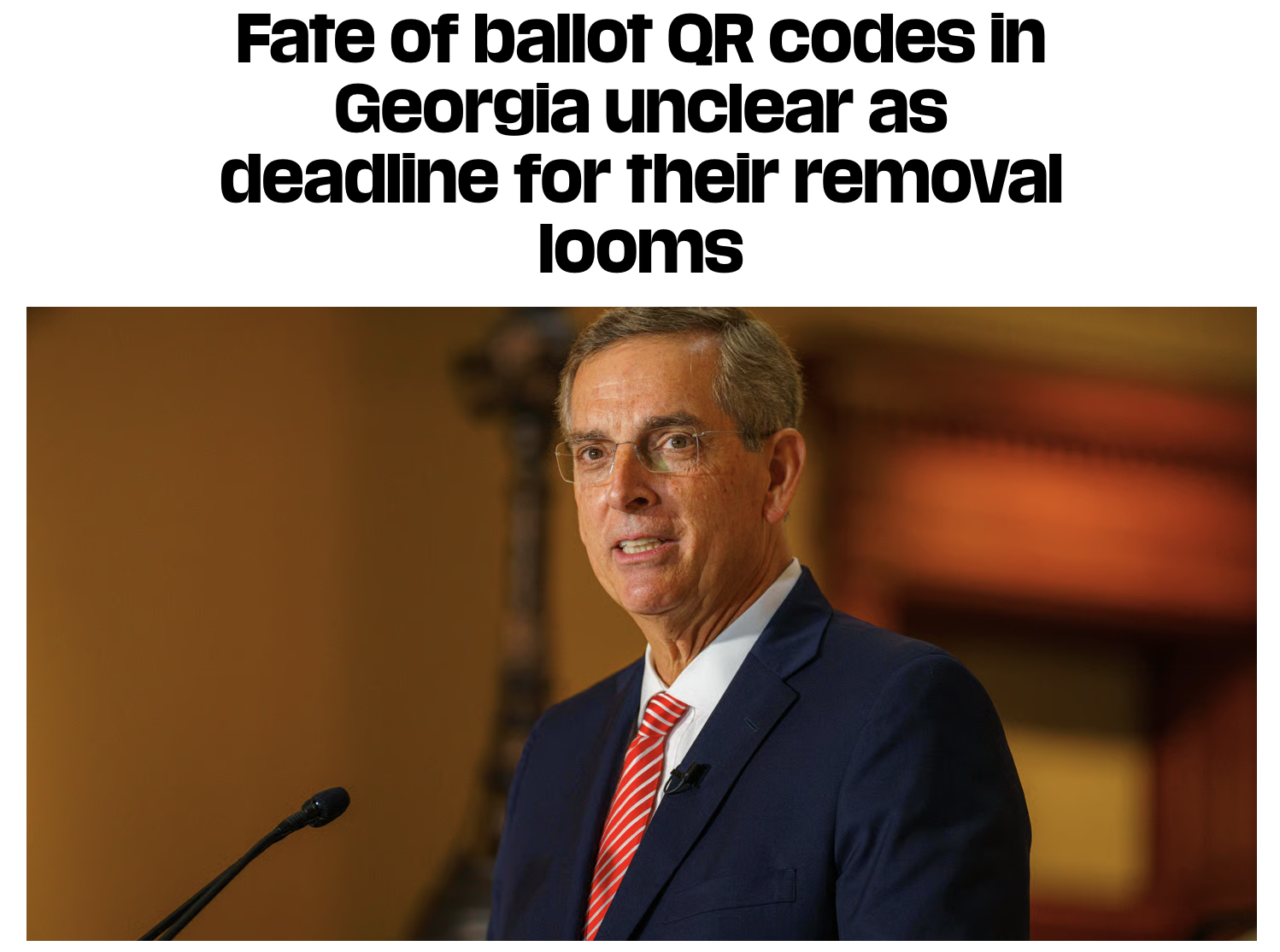
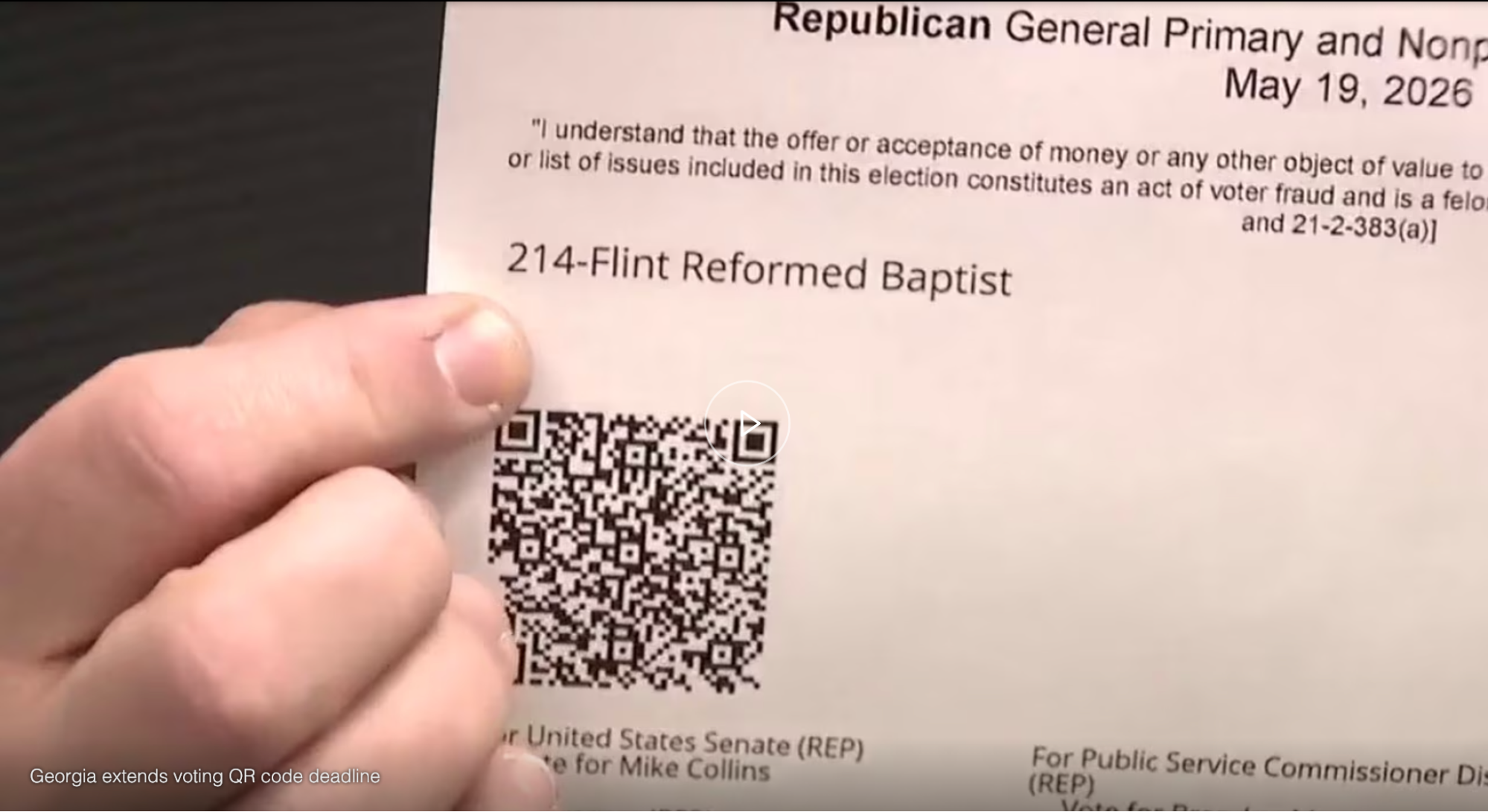
In 2024, Republican lawmakers, spurred by President Trump’s lies about a stolen election in 2020, passed a law that outlawed the use of QR codes on ballots to count votes. The law, SB 189, gave the state legislature a deadline of July 1, 2026, to devise a viable alternative.
The problem? The same Republican majority that insisted we overhaul how ballots are cast and counted never got around to passing a workable solution. SB 214, amended on the last day of the 2026 legislative session, would have offered such a fix, but inexplicably the conservative state Senate refused to bring the bill up for a vote before our time ran out.
There were many reasons that we were told we needed to come back into special session this month. But the only thing we absolutely had to address was what to do to bring the state in compliance with the QR code issue by July 1st.
(Image source: Fox 5 Atlanta, click here for full story)
By the end of special session we simply addressed the issue by kicking the can down the road. SB 3EX proposed the following:
- Pushed back the July 1st deadline to eliminate QR codes from ballots, extending their use until January 2028. Local election officials confirm voters will use the exact same touchscreen devices and printed ballots they are accustomed to for the 2026 general election in October and November.
- Creation of an Election Equipment Specifications and Standards Committee that “shall recommend the specifications, standards, and requirements for a new uniform system of election equipment based upon hand marked paper ballots produced utilizing ballot on demand printing.” The committee will be composed of nine people, three each appointed by the Governor, the Senate Committee on Assignments, and the Speaker of the House of Representatives.
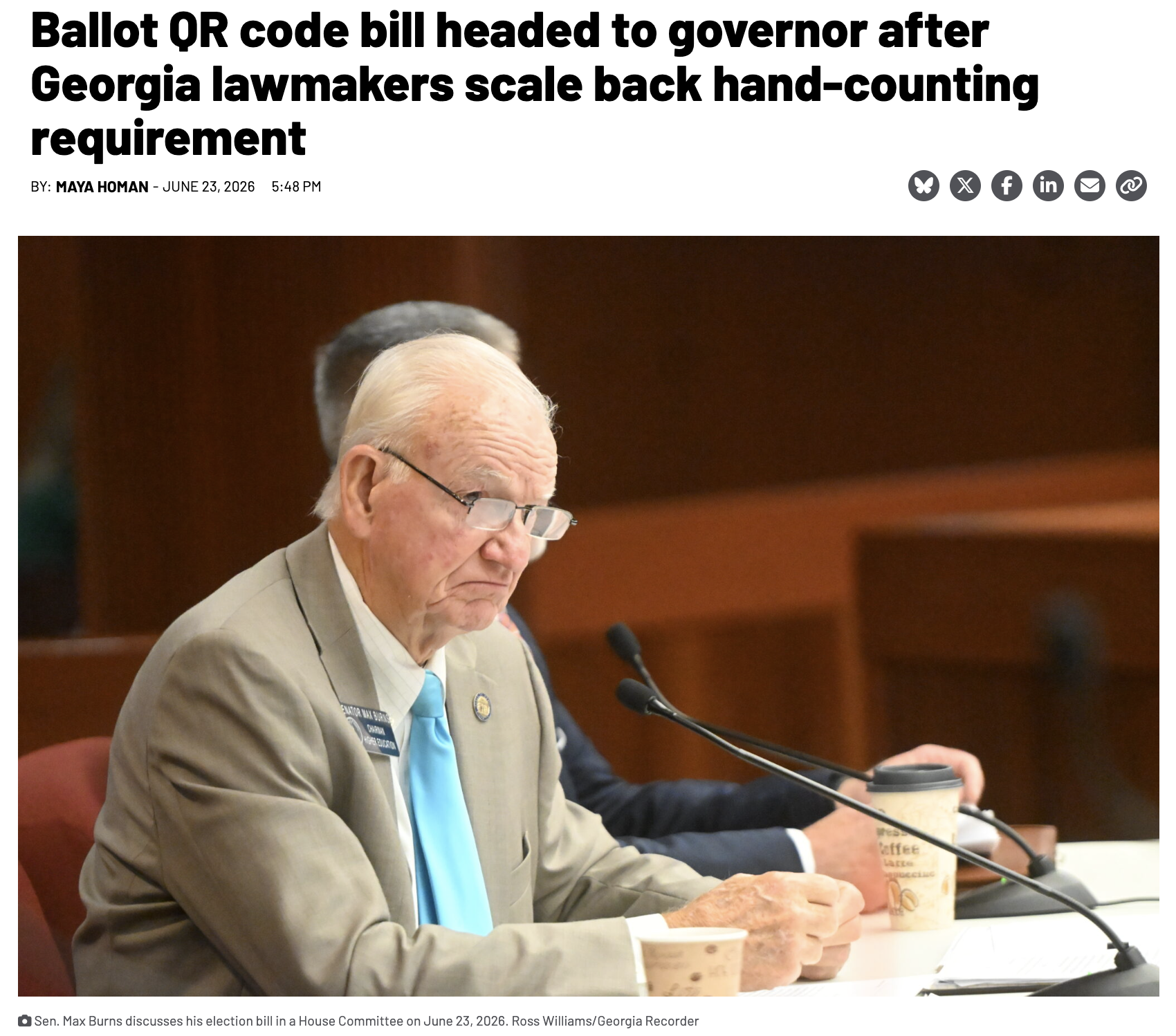
- Mandatory hand recounts of governor and lieutenant governor races where the margin of victory between the top two candidates falls within 0.5%. The House was able to scale back the hand-counting requirement from the version passed out of the Senate, which required mandatory recounts for the top two races on the ballot regardless of how close the results were (does a 70/30 victory really need to be hand recounted?), and would have likely resulted in hundreds of millions of dollars in needless expense. The House also amended the bill to clarify that the cost of these mandatory recounts will be reimbursed by the state rather than borne by the county boards of election.
(Via the Georgia Recorder, click here to read full article)
Do I love this bill or the underlying law that necessitated its passage? No, I do not. Beyond any of the details (for example, I’d like some codified assurances that the Election Equipment Specifications and Standards Committee must have bipartisan participation), I don’t think we should capitulate to the unreasonable demands of those who refuse to accept electoral results they don’t agree with.
But the fact is that the underlying SB 189 did pass, against my objections, in 2024, and that it created a problem that did need to be addressed this year. This fix, SB 3EX, passed 94-79 out of the House, and averted a larger electoral crisis in November.
3.) Remedy for unconstitutional property tax bill (SB 33)
(Via Atlanta News First, click here to read full article and watch video)
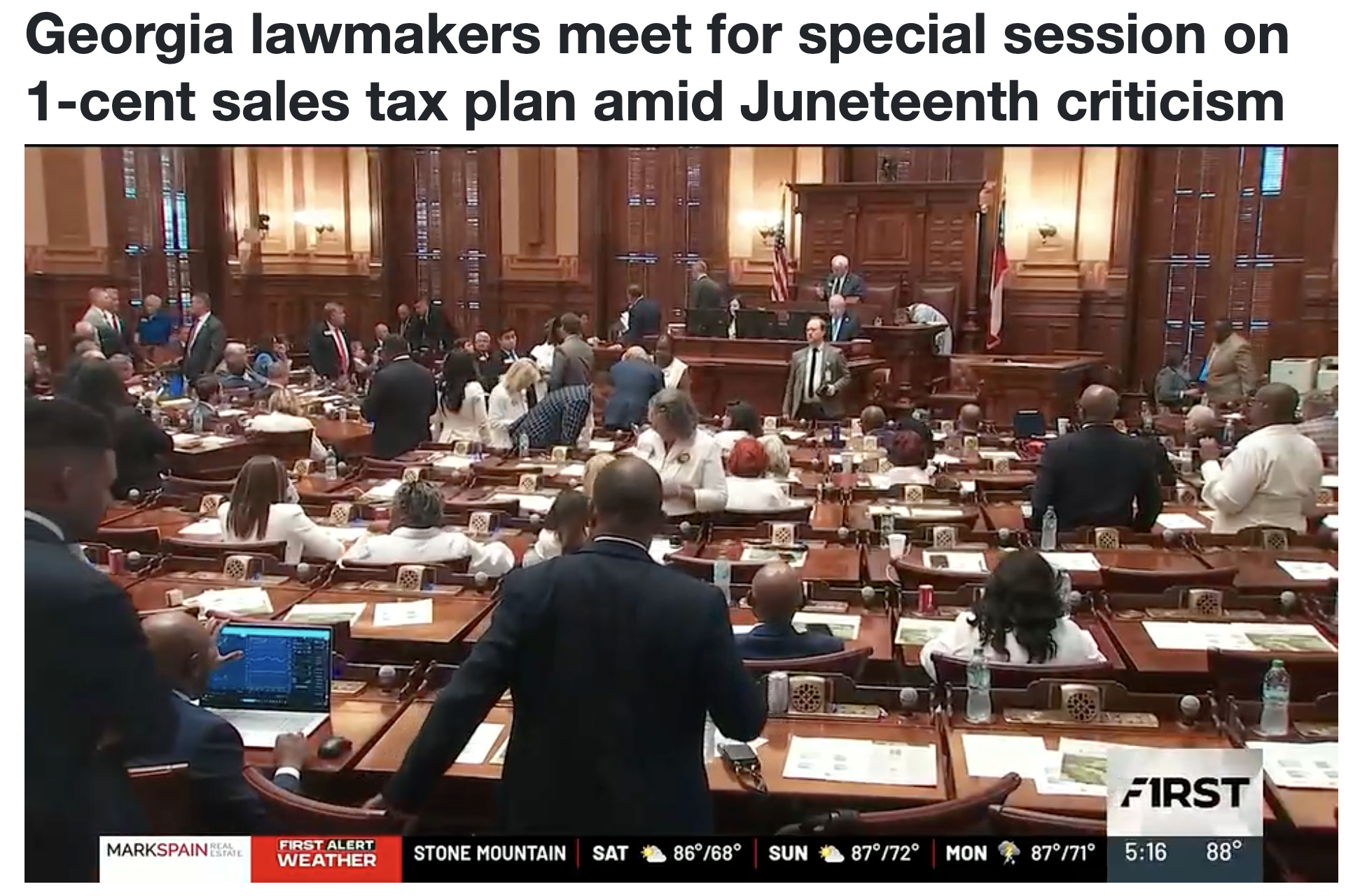
Coming into this session, House Republicans’ top priority was a bill to eliminate the state property tax. We have discussed this policy in great detail in several past newsletters and town halls, but in sum, my position has been this.
We are in the midst of an affordability crisis, and a conversation about property tax relief is certainly important to me and to my district. But responsible lawmakers need to make sure not just to propose ideas that sound good in an election year, but to ensure the effect of that bill don’t end up hurting the communities we serve.
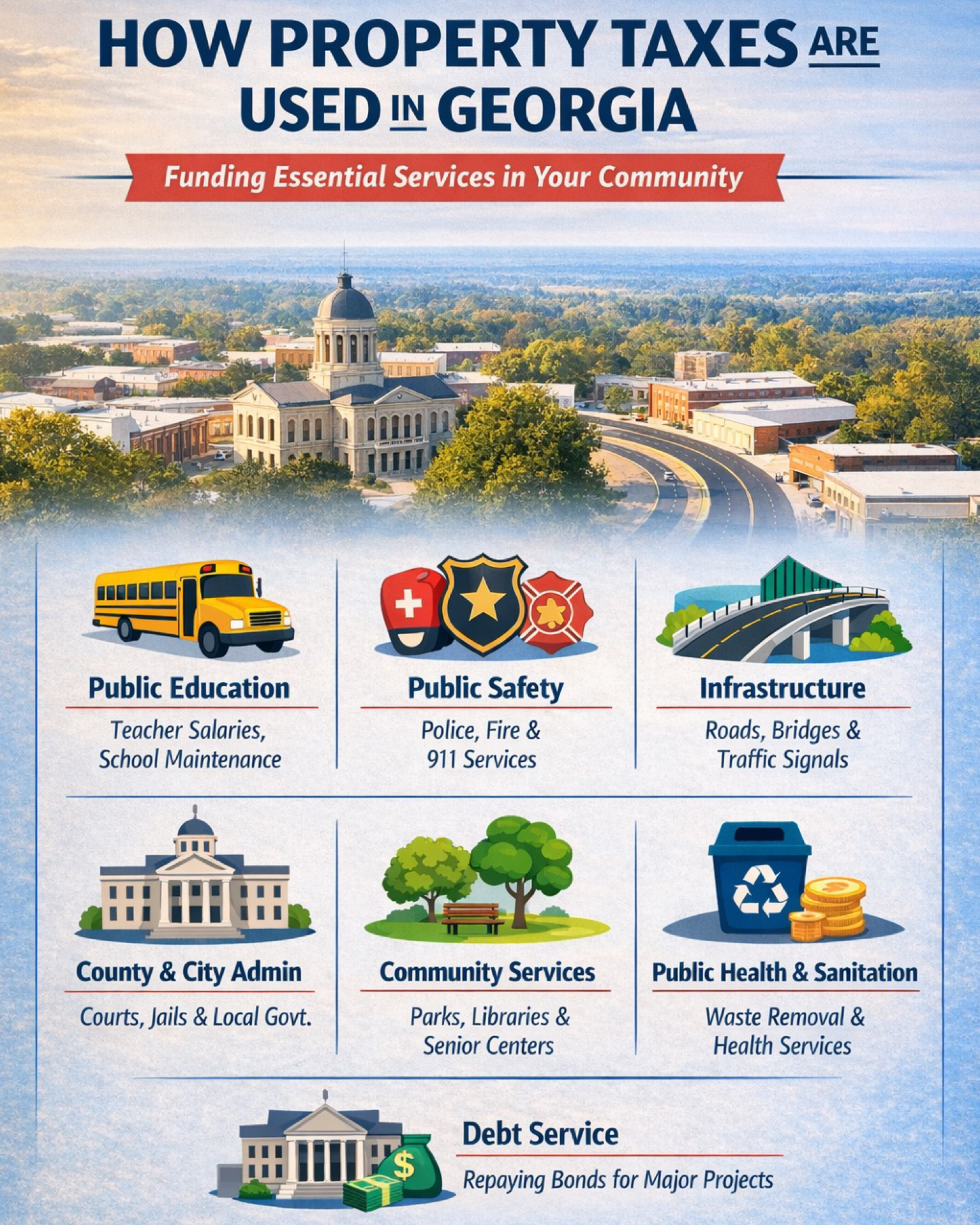
Property taxes pay for a number of the services we value the most in our district, including schools, police, fire, parks, sanitation, and roads. A proposal to eliminate the state property tax would punch a huge hole in many city and county budgets, requiring them to cut services many of us view as essential.
Further, the proposal to make up for these budget shortfalls by imposing a new local sales tax has two clear problems. The first is that not all localities have the kind of commercial base where a sales tax increase could make up for the property tax revenue shortfall. Secondly, and perhaps most existentially, it makes no sense to address an affordability crisis by imposing a new tax on everyday goods and services that everyone–including those who cannot afford to own property–rely on.
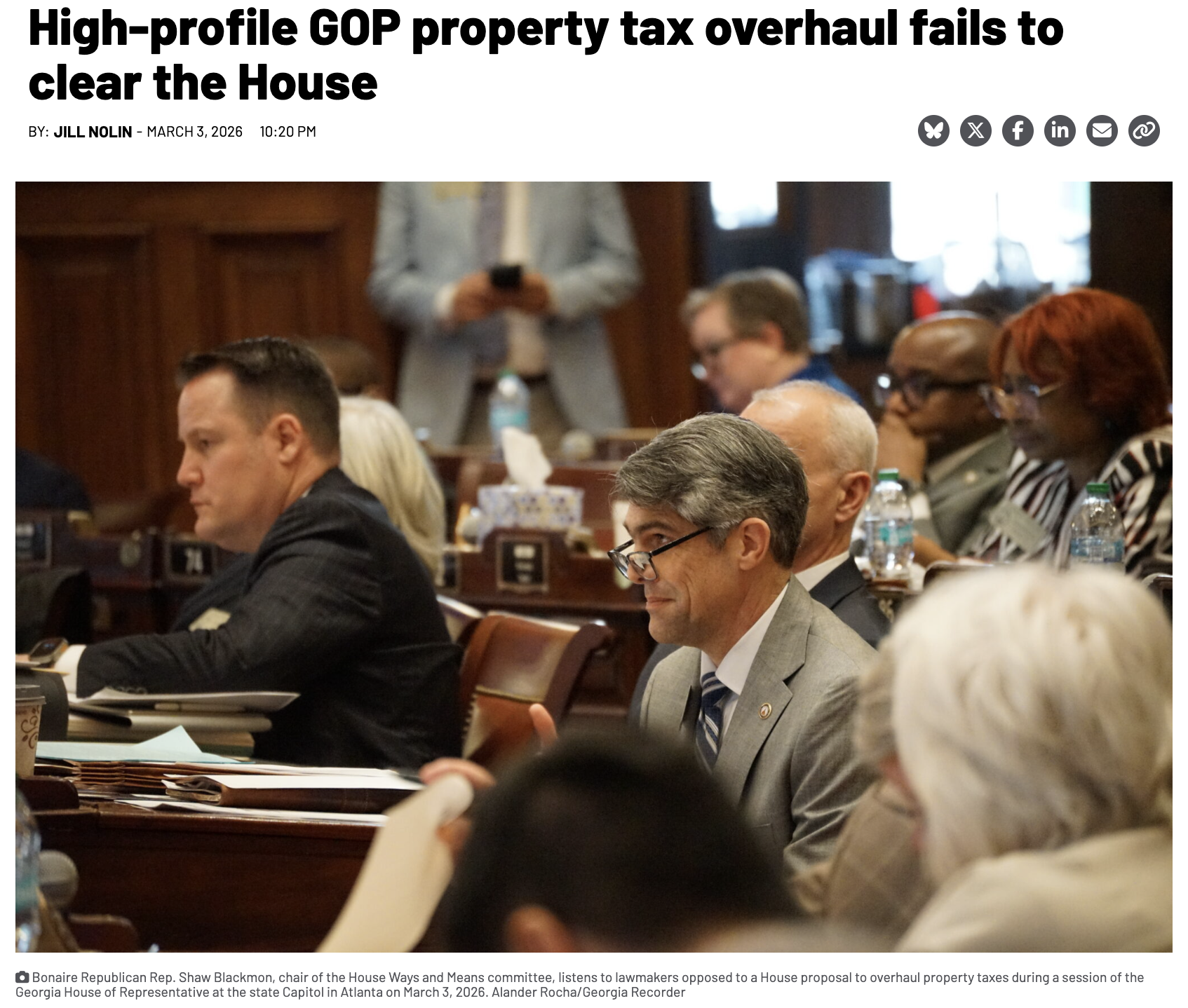
(Via the Georgia Recorder, click here to read full article)
The original version of the Republican property tax bill failed, largely because such a bill would require a constitutional amendment and therefore a 2/3rds affirmative vote out of both chambers, which it did not secure. However, at the last moment on Sine Die, a different bill (SB 330, originally entitled the “Georgia Hemp Farming Act”), was amended to a bill proposing a 3% cap on increasing annual property assessments, allowing Republicans to say that they “got a win” and campaign on property tax relief.
The problem? That bill, and how it passed, was unconstitutional. Here I discuss this issue with Rep. Scott Holcomb at our Post Sine Die Town Hall this past April.
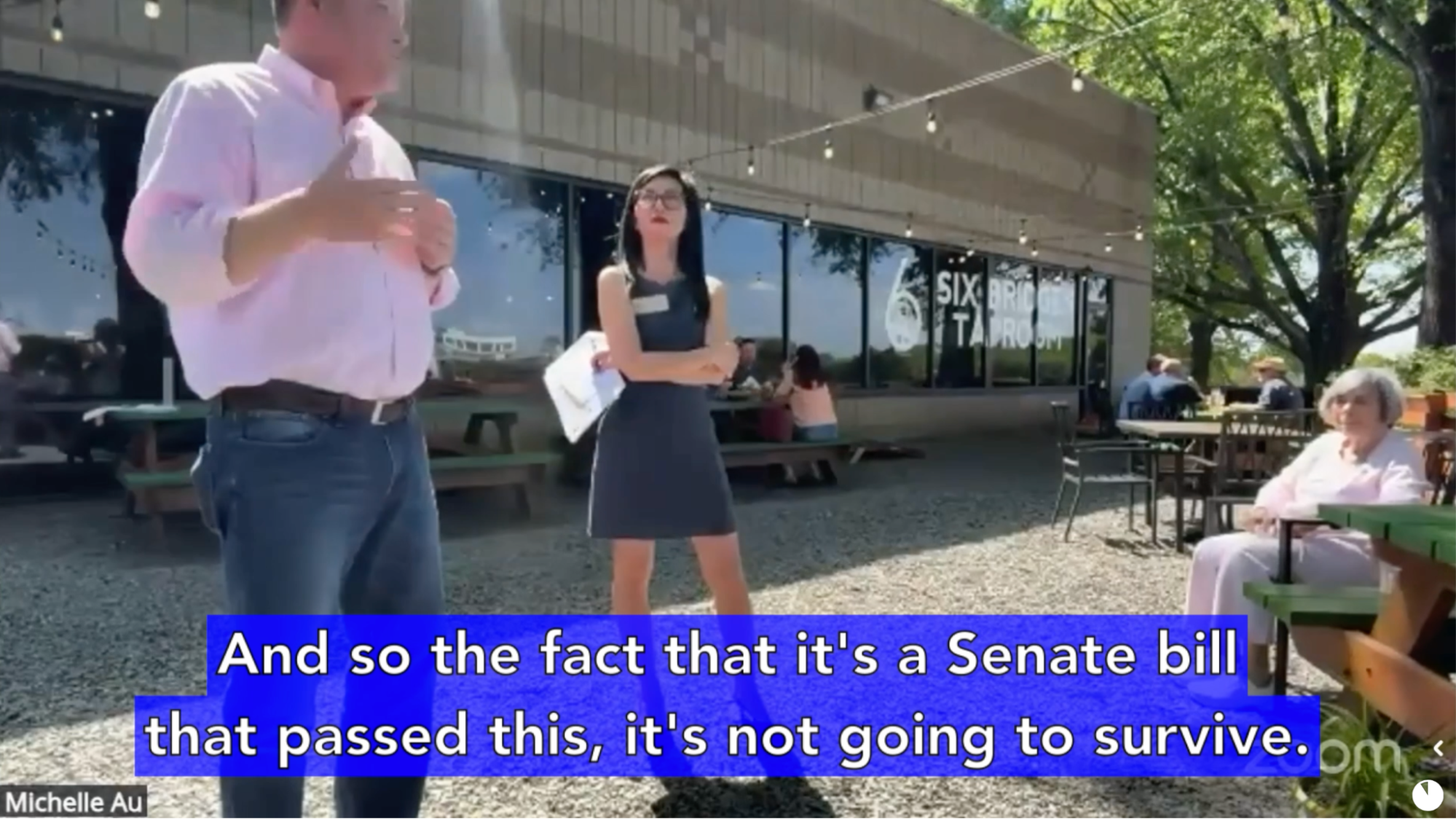
(Click here to watch the full clip of our Post Sine Die Town Hall)
First, per the Georgia constitution, all bills that deal with revenue must originate in the House. SB 33 as it was amended is a revenue bill that originated in the Senate. Beyond that, a bill that aims to change the homestead exemption must pass by a 2/3rds vote because that is the threshold that must be met for the issue to be offered to the voters as a ballot referendum. Neither of those two requirements were met, yet Republicans passed SB 33 anyway. And now we had to get dragged back into a special session to fix their screw up.
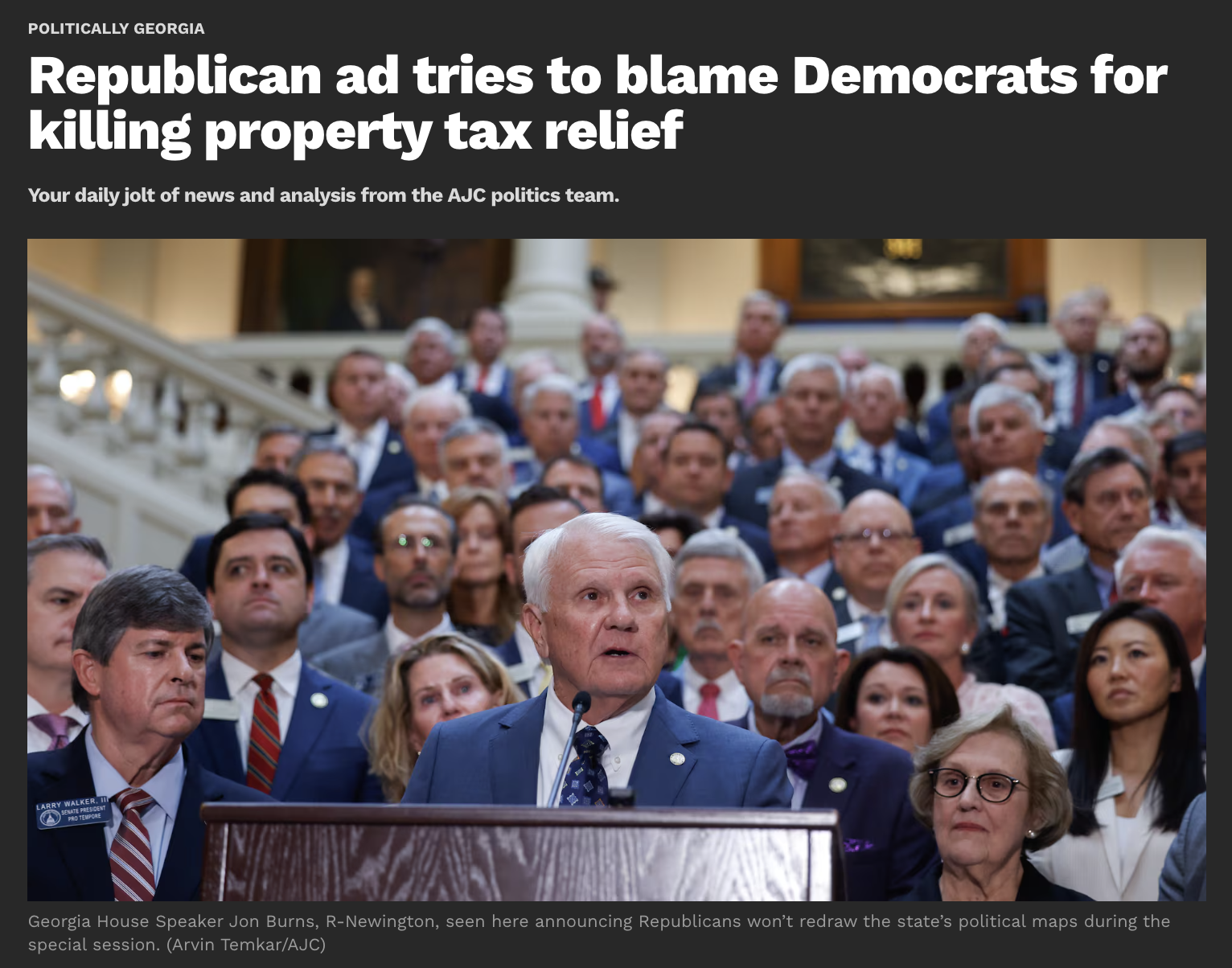
Their “fix,” such as it is, was to file scores and scores of local bills, each seeking to put a local homestead exemption on November’s ballot, but only for specific counties and municipalities. Several key points I want to make here.
- The cities and counties for which local legislation was filed for a property tax ballot referendum were those that skew Republican. Of note, Fulton County, which I represent, was not among those included, so not one of these homestead exemption bills would have affected HD 50.
- The goal of putting a property tax referendum only for Republican counties is electoral in more ways than one. Not only do Republicans want to campaign on it, they want to use the ballot referendum in specific geographical areas as a way to push their own voters, but only their own voters, to the polls.
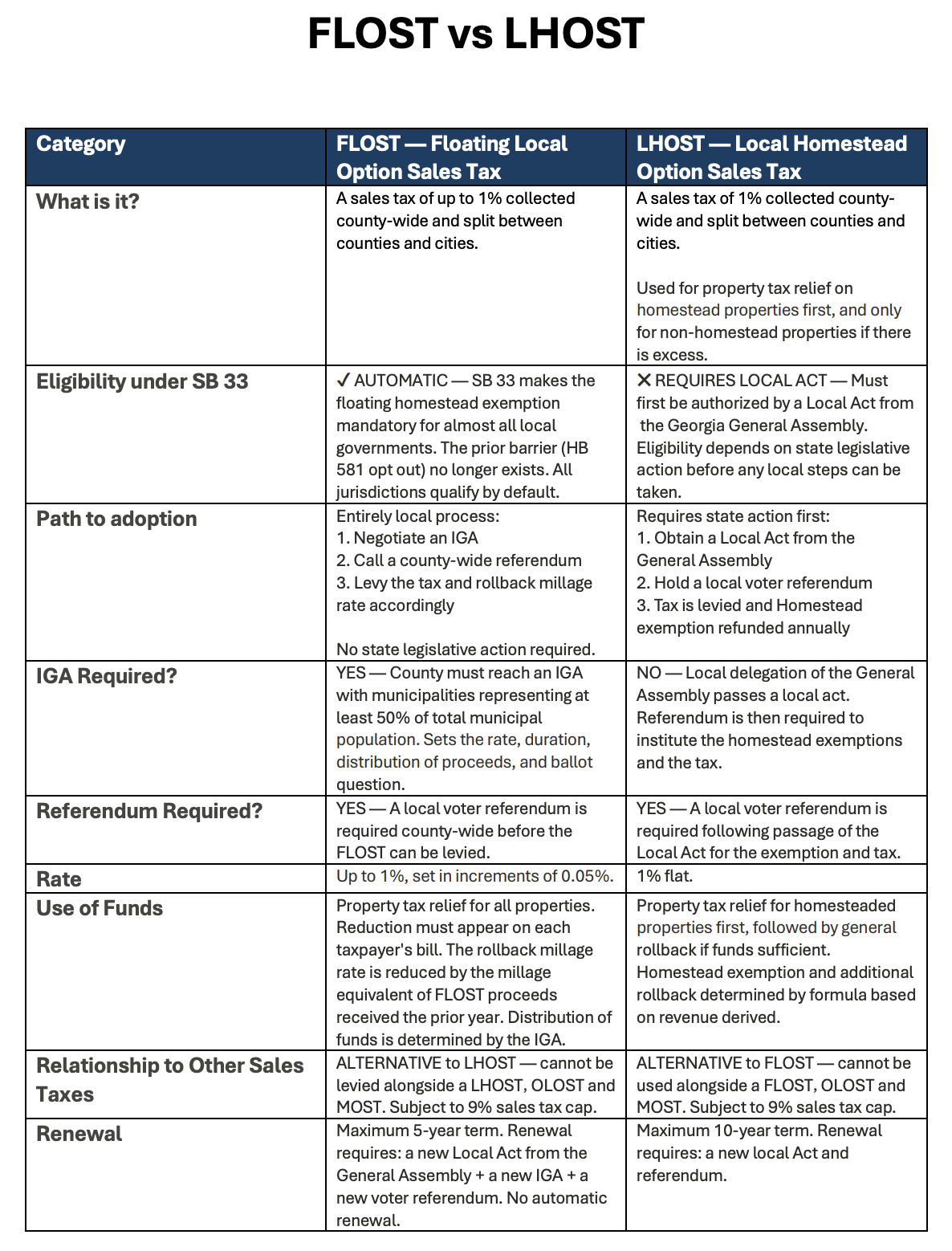
(Via the Georgia Municipal Association, click here for full article)
- The bill proposes imposing a new Local Homestead Option Sales Tax (LHOST) to offset revenue losses from cutting property taxes. Essentially, this is swapping one tax for another, and raising the cost of everyday goods like gas, food, diapers, and clothing, would disproportionately hurt working class families, many of whom may not even be able to afford to own homes and who would not benefit from the property tax cuts.
- Remember that sales taxes are regressive, meaning that people who make less money pay a higher percentage of their total income to cover these costs, and raising sales taxes, on top of inflation, on top of the new tariffs imposed by the Trump administration, could be lethal for working families.
(Via the Atlanta Journal Constitution, click here to read full article)
Ultimately the poorly thought out, sloppily considered property tax local referendum bills did not pass, but look forward to Republicans campaigning on “Democrats blocking property tax reform” while not mentioning that Republicans aimed to raise the tax on the everyday goods we rely on every day.
4.) Retroactive approval state gas tax suspension
(Via The Current, click here to read full article)
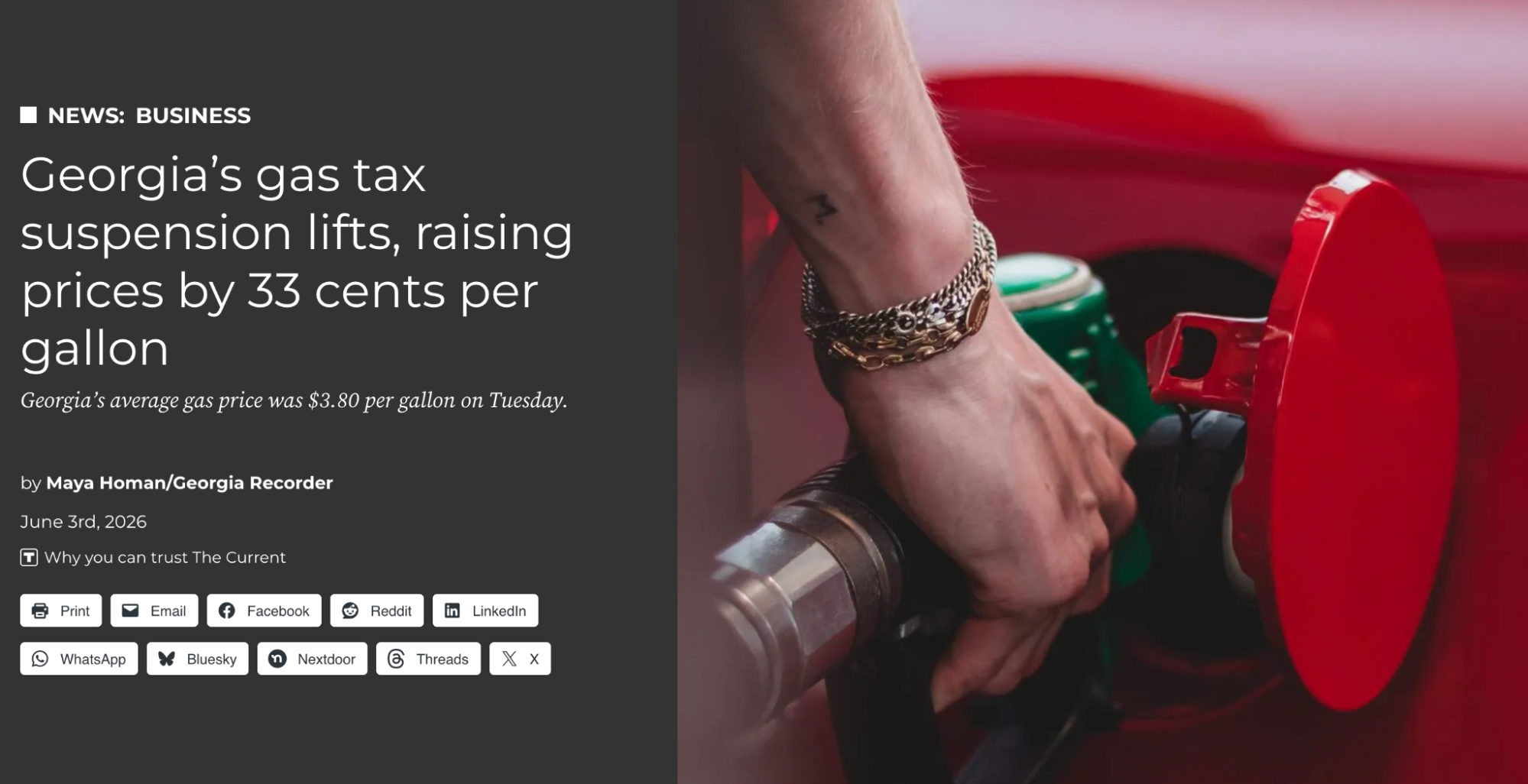
With gas prices soaring since the start of President Trump’s war in Iran, Governor Kemp temporarily suspended the state gas tax. During special session, we took a vote retroactively approving the suspension that already took place between May 20th and June 2nd. The bill passed unanimously.
This in and of itself was not enough of a reason to convene a special session, which ultimately ended up costing the state hundreds of thousands of dollars. We could have easily approved this action retroactively when we return to session in January.
Of note, Governor Kemp has declined to suspend the gas tax beyond June 2nd.
BLUE RIBBON STUDY COMMITTEE ON YOUTH EXPOSURE TO KRATOM AND RETAIL-AVAILABLE SUBSTANCES
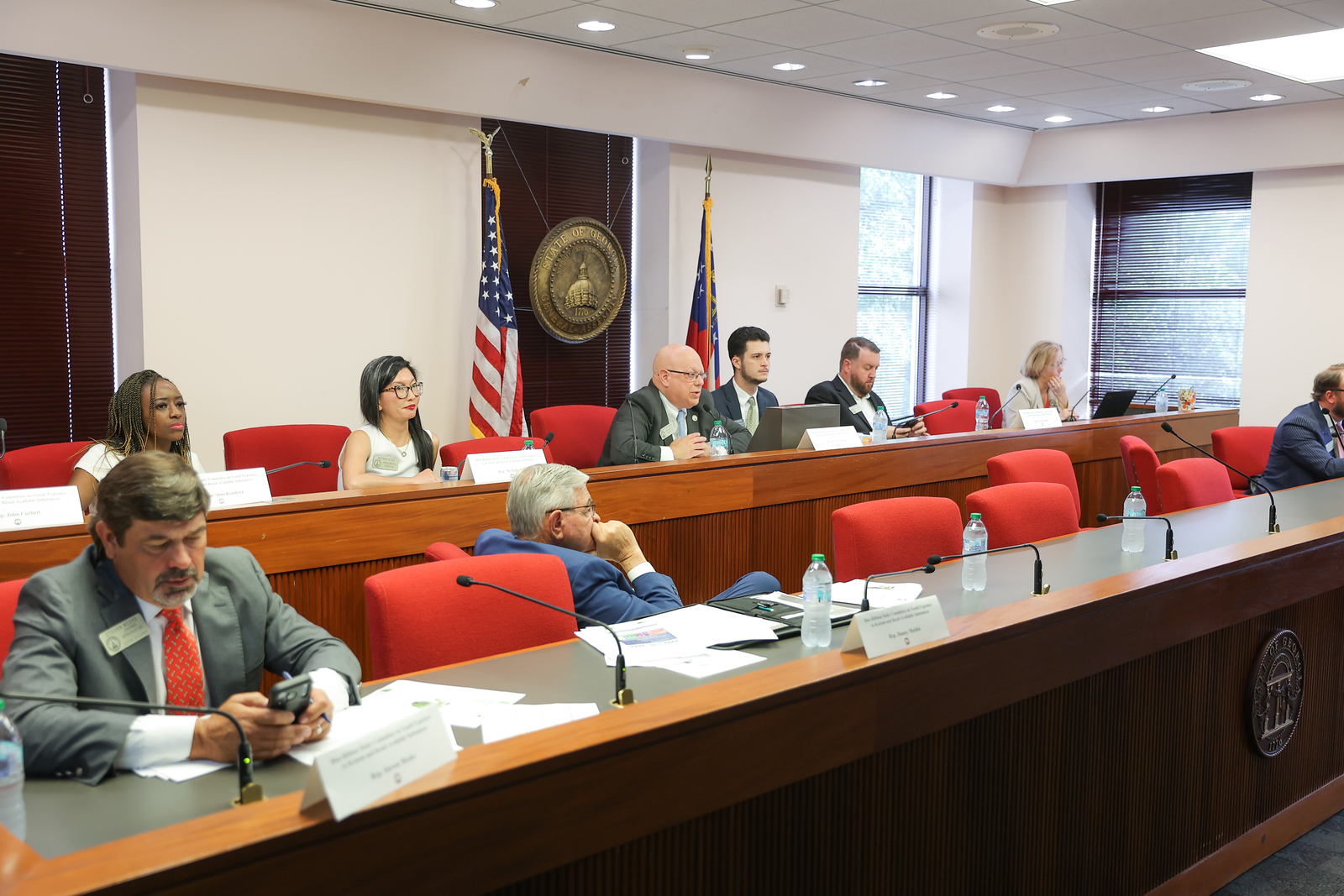
While Georgia’s in a part-time legislature, the work of a lawmaker continues year-round. One part of the job I look forward to is participating in study committees, which do a deep dive into one particular area with the goal of making policy recommendations for future legislation.
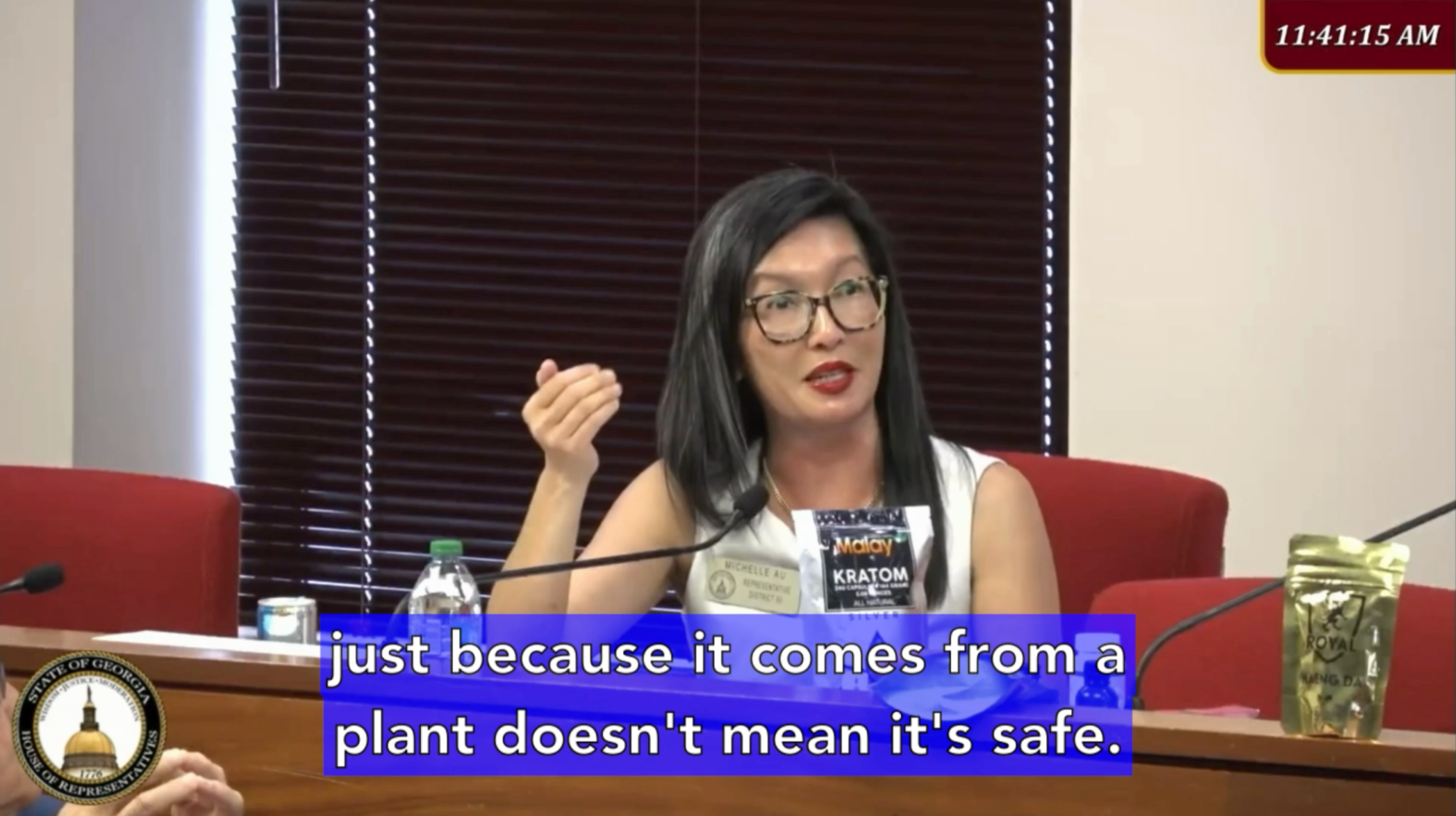
This year, I’m excited to participate in the Blue Ribbon Study Committee on Youth Exposure to Kratom and Retail-Available Substances, which will look at the largely unregulated market of supplements and products with potential for significant public harm.
We had our first study committee hearing the morning of June 17th, and had the chance to hear informed expert testimony from many in the field, including addiction specialists, toxicologists, consumer advocates, law enforcement, and more.
(Click here to watch full clip)
The full live stream of the first study committee can be accessed here. We will likely have at least three more meetings through the summer and fall, one of which will focus on youth exposure to vaping products. Stay tuned!
FOUR YEARS SINCE DOBBS DECISION
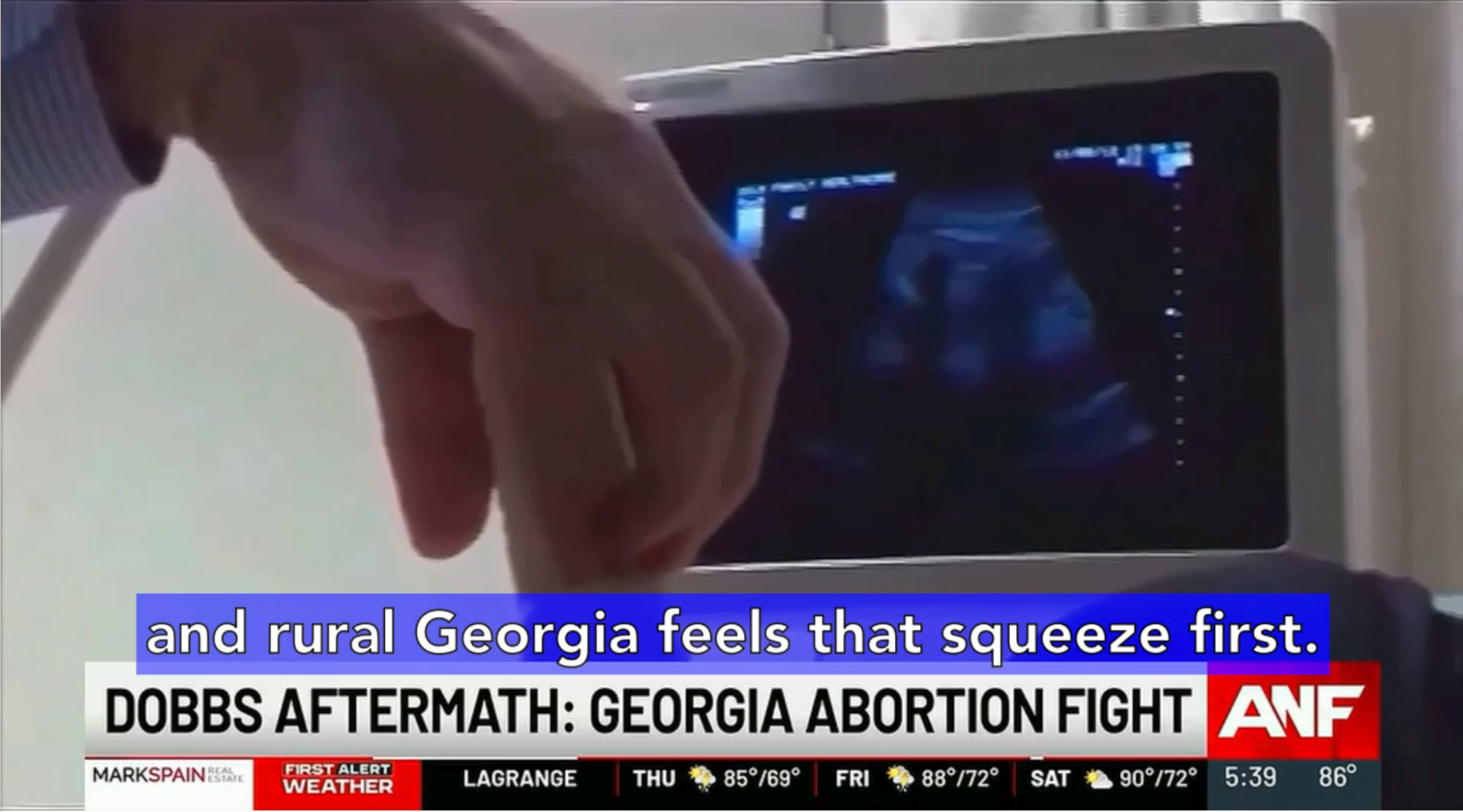
(Via ATL News First, click here to watch full clip)
On June 24th, 2022, the U.S. Supreme Court’s decision in Dobbs v. Jackson Women’s Health Organization overturned the constitutional right to abortion we’ve relied on for nearly five decades. Less than a month later, on July 20th, 2022, Georgia’s six week abortion ban started to be enforced “with immediate effect,” and the consequences have been deadly.
As the only Democratic physician legislator in the state of Georgia, I’ve long fought for access to safe, quality healthcare, including access to abortion care. It’s clear to me that the only way we’ll be able to claw back the rights we lost is by electing a Democratic governor and gain Democratic majorities in the state legislature.
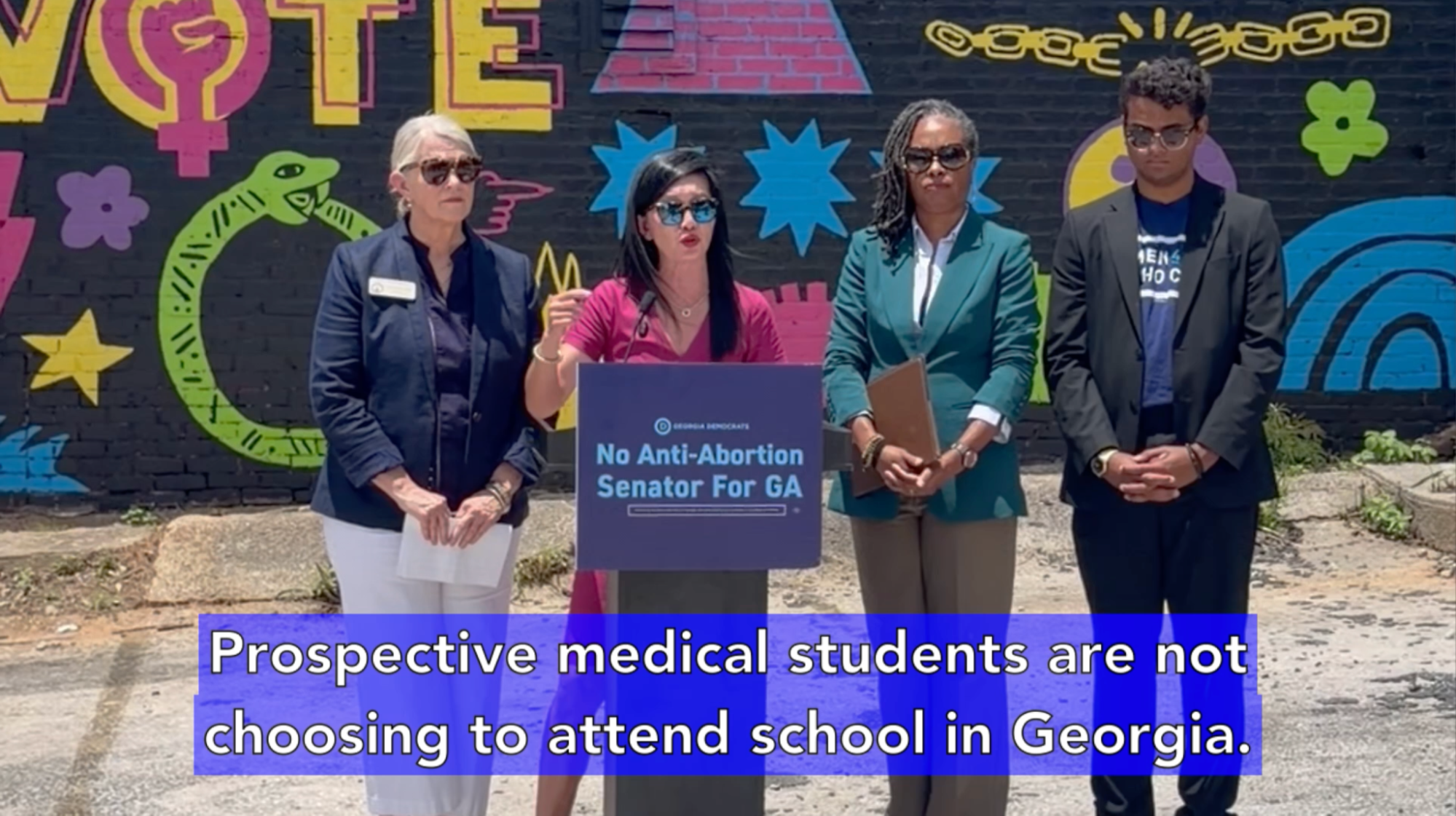
Here I speak at the Democratic Party of Georgia’s press conference on the four year anniversary of Dobbs. The work goes on, and so do we.
TEAM AU IN ACTION
Johns Creek Chamber of Commerce Annual Golf Classic

Delighted to join the Johns Creek Chamber of Commerce for their Annual Golf Classic on June 22nd, and for the chance to present awards to these local community and business leaders!
Innovation in Business/Transportation Award: Lisa Silverboard, Vice President of Marketing of Saia.
The AI Pioneering Excellence Award: John Lavelle, of Kindo
The Dedicated Community Servant Award: Celia Talbot, programs director of Revved Up Kids
The Community Leadership Award: John & Kay Suttles, of The Suttles Foundation
The Operational Excellence Award: Yao Peng, General Manager & Franchise Owner of Clean Eatz Johns Creek
Thank you to these incredible civic leaders, and to Northside Hospital for their partnership, and their care for our community!
Johns Creek Juneteenth Celebration
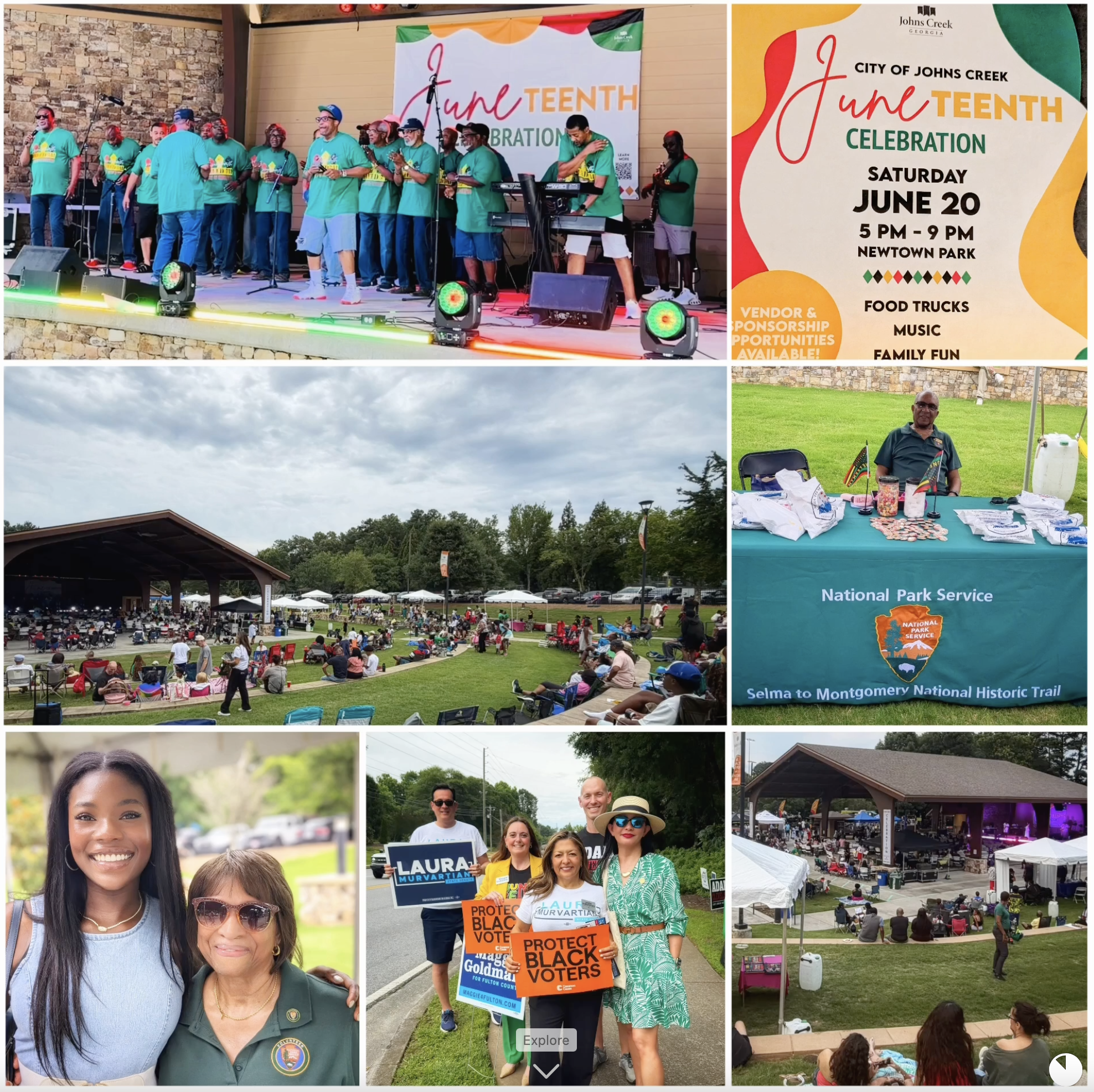
Wonderful spending time with friends and neighbors at Johns Creek’s Juneteenth Celebration this weekend in Newtown Park! As one of Georgia’s most diverse cities, I love how we can celebrate together in ways that honor and highlight everyone’s histories and cultures.
Juneteenth is a celebration of independence, and a reminder that the long, hard work to fulfill the promise of this country remains unfinished. It also gives us a chance to pause, reflect, and recommit to that promise.
Happy Freedom Day, Johns Creek!
THE GEORGIA DIAGNOSIS

Available on Apple, Spotify, or YouTube
Team Au is in pre-production for Season 2 of our podcast THE GEORGIA DIAGNOSIS, and we want to hear from you!
Whose stories do you want to hear, and what fascinating voices would you love to have included? Fill out our podcast survey here. Thank you for listening to and sharing our first season, and for helping us make Season 2 even better!
Catch up on Season 1 of THE GEORGIA DIAGNOSIS on Apple, Spotify, or YouTube.
* * *
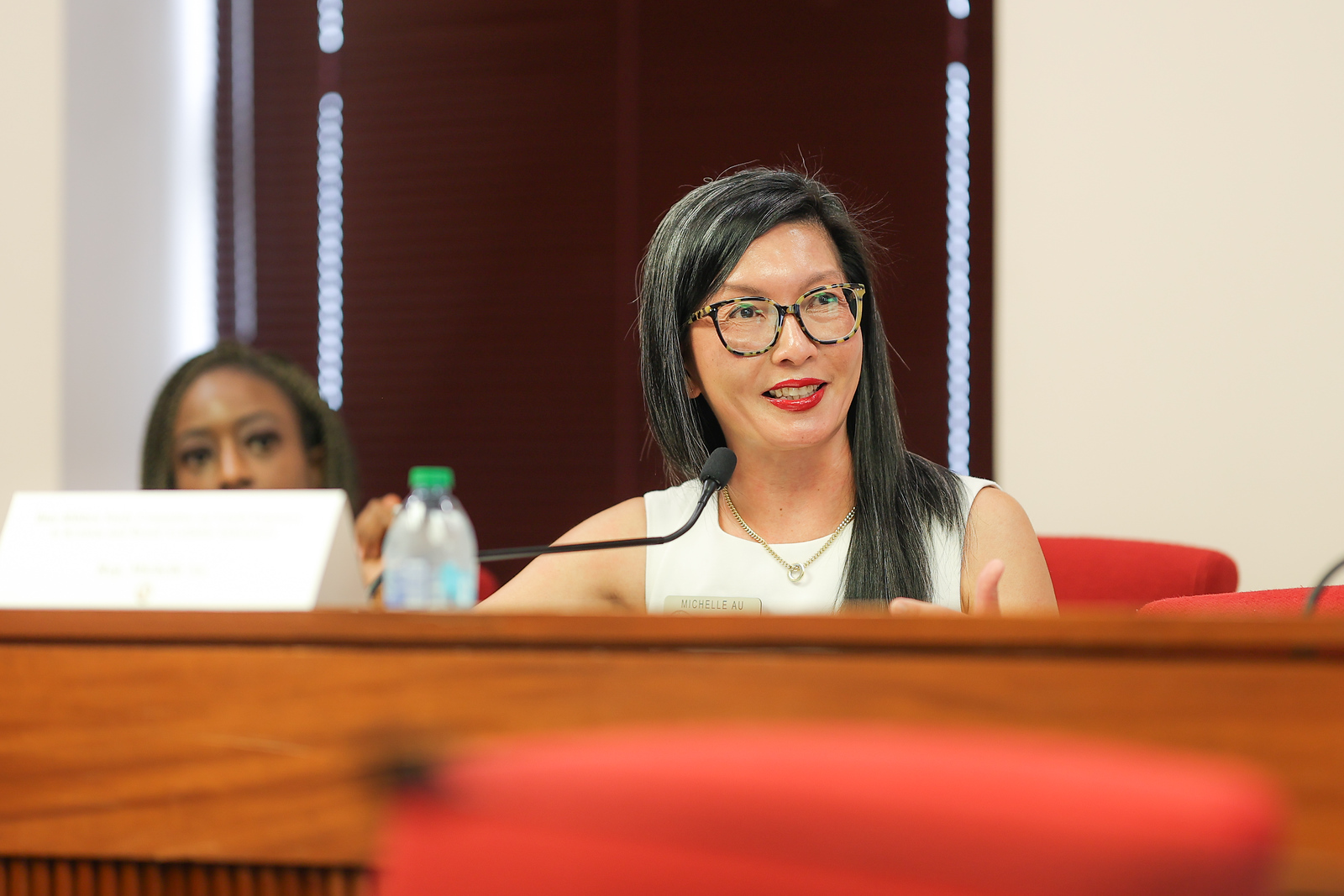
It has never been more important to pay attention to the work of state legislatures. Thank you as ever for your support so that we can keep doing this most important work together.
As always, please do not hesitate to reach out to our office should you need any assistance, or if you have any concerns you’d like me to address on your behalf.
It is my honor to be your voice in the Georgia House of Representatives.
In service,