
Friends,
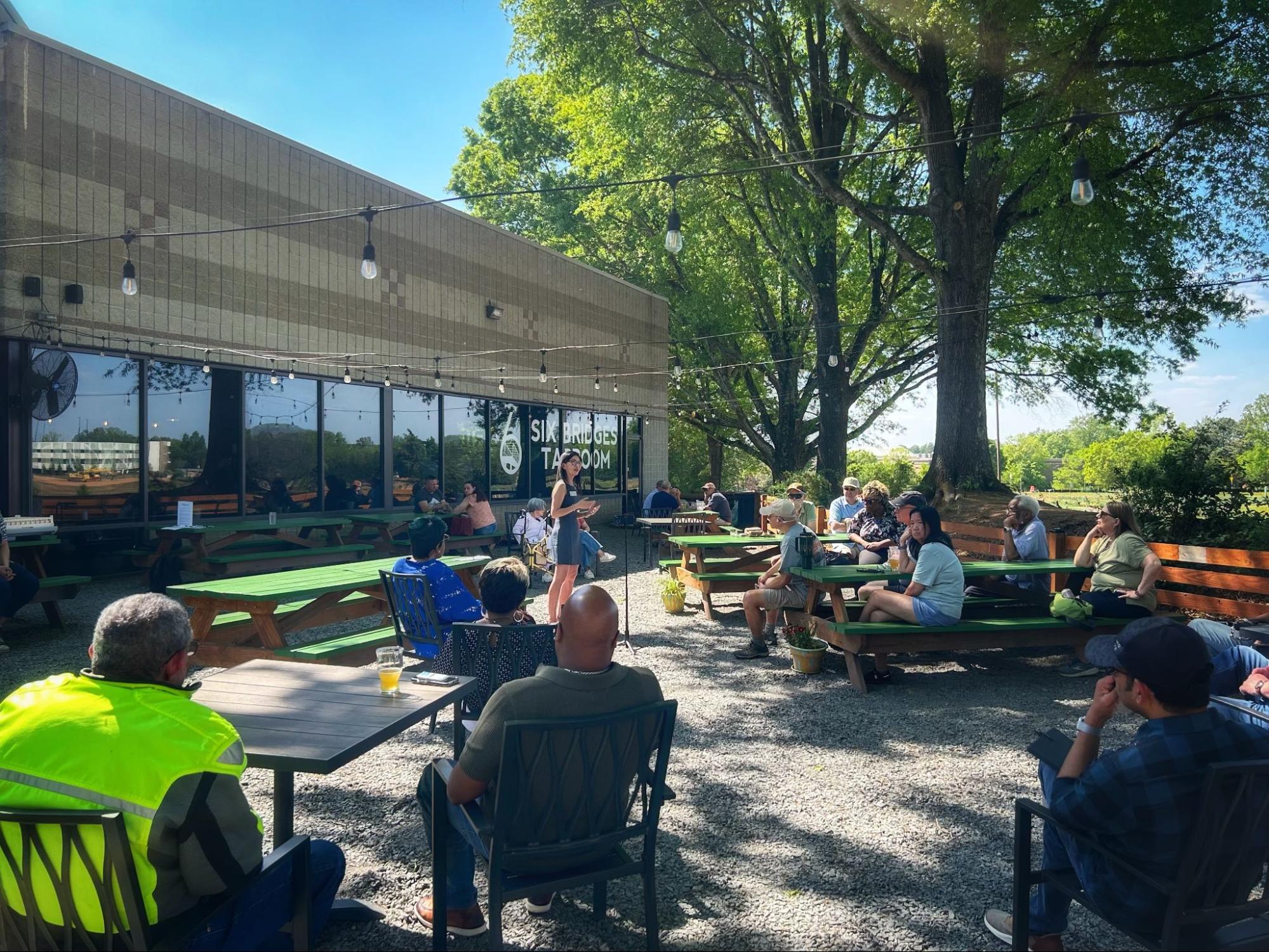
It’s summer again in Georgia, which means kids are out of school, families are enjoying some hard-earned vacation time, and everyone is working a little harder to stay cool. And I hope everyone votes in the Primary Runoff Election by June 16, voting information and why its important to vote in this particular election below.
Georgia is a part-time state legislature, which means under normal circumstances the legislative session is limited to 40 legislative days at the start of the year. Two things to note, however:
- Our presence at the Capitol has little bearing on whether serving as a state legislator can be considered a “part-time” job. Even when we are not voting on bills, we remain busy serving our districts. Constituent services, town halls, educational forums, mentoring students, meeting with local elected officials and community groups, and running for reelection are all part of the job. When done effectively, these responsibilities add up to far more than a full-time commitment.
- Here in Georgia, we are not operating under normal circumstances.
In this newsletter, we’re going to take a deep dive into an issue we’re going to be discussing a lot in the upcoming weeks here in Georgia: electoral redistricting and racial gerrymandering. It’s about to get crazy here in Georgia, and I want you all to have all the information you need to help us fight back.
You ready for this? Then let’s go.
SPECIAL SESSION FOR REDISTRICTING…AGAIN
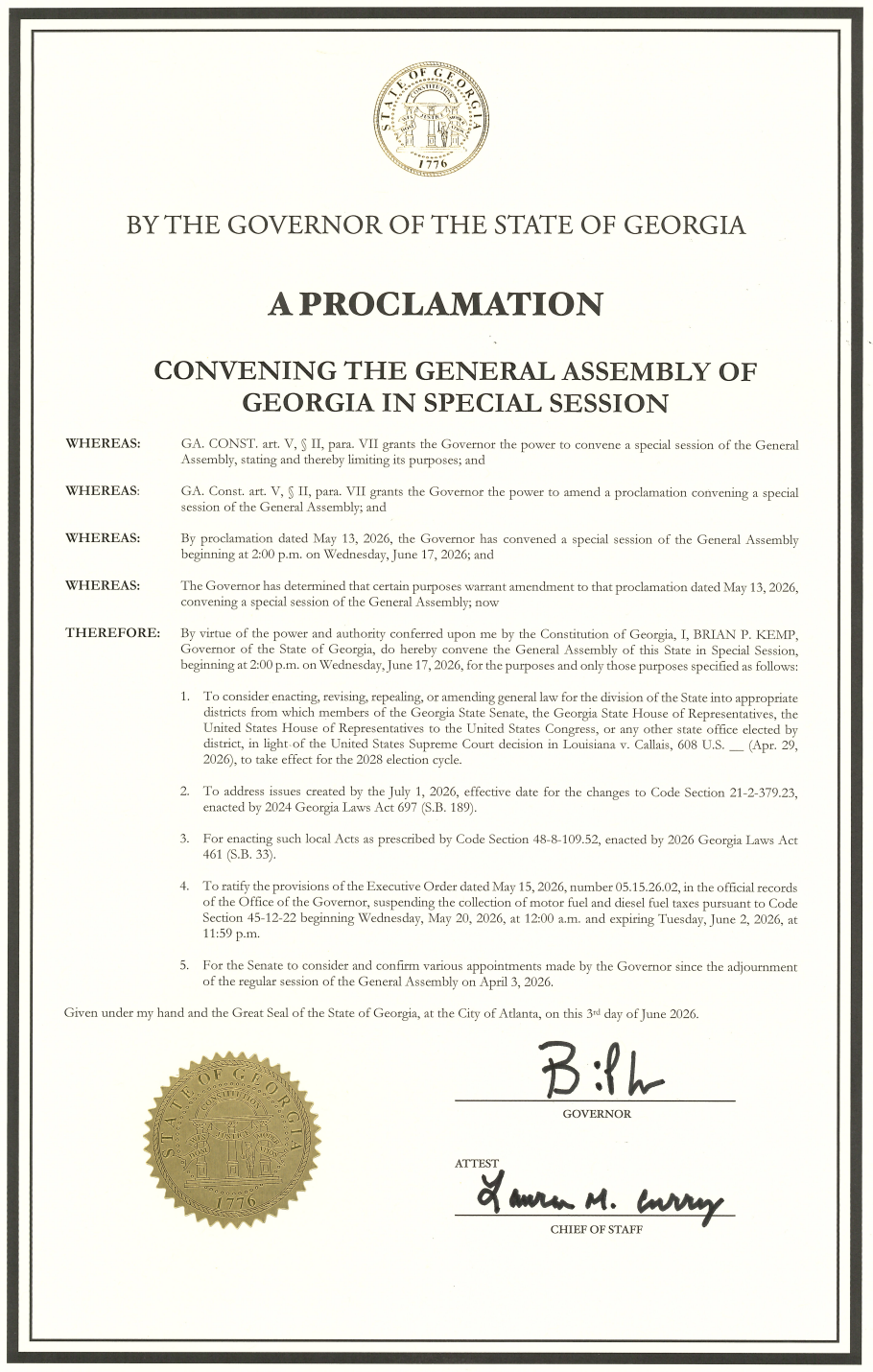
Last month, Governor Kemp issued a proclamation calling for a special session of the legislature to redraw the state’s electoral maps for the third time since 2021. The move came on the heels of a recent U.S. Supreme Court decision (Louisiana v. Callais) eviscerating Section 2 of the Voting Rights Act, which prohibited racial discrimination in voting practices or procedures.
Georgia’s special session will convene on June 17.
Before we discuss what we can anticipate for the upcoming special session, let’s put things in a broader context.
REDISTRICTING VIA GERRYMANDERING
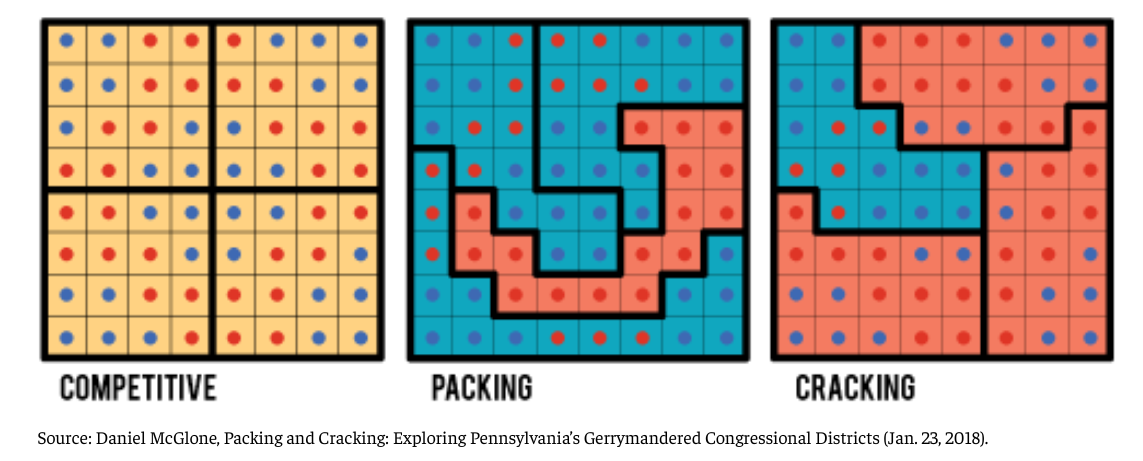
(Image source: Bipartisan Policy Center)
Every decade, the United States conducts a Census to count the total number of people living in the country. Redistricting is the process of redrawing the geographic boundaries of electoral districts (e.g. for Congress and state legislatures) after each Census to ensure that each district contains roughly the same number of residents.
While the equalization of populations in each electoral district is the ostensible goal of redistricting, what actually ends up happening in many states is quite a bit more political.
Particularly when state legislatures are in charge of the process, it can be an excuse for the party in power to draw the district maps in a way that entrenches or even grows its own electoral maps until at least the next decade, when the next round of redistricting is set to take place. “Gerrymandering” describes the manipulation of voting district boundaries based on partisanship or race to achieve an unfair advantage in elections.
Generally speaking, states are supposed to abide by some general principles in drawing its electoral maps:
CONTIGUITY: Areas within a district should be physically adjacent.
COMPACTNESS: Constituents within a district should live as near to one another as practicable.
COMMUNITIES OF INTEREST: Groups in a geographical area should share common political, social, or economic interests.
COUNTIES, CITIES, and TOWNS: Local governments should have their geographic boundaries respected.
That said, these norms are not always observed, as demonstrated by this font based on real gerrymandered districts across the country.
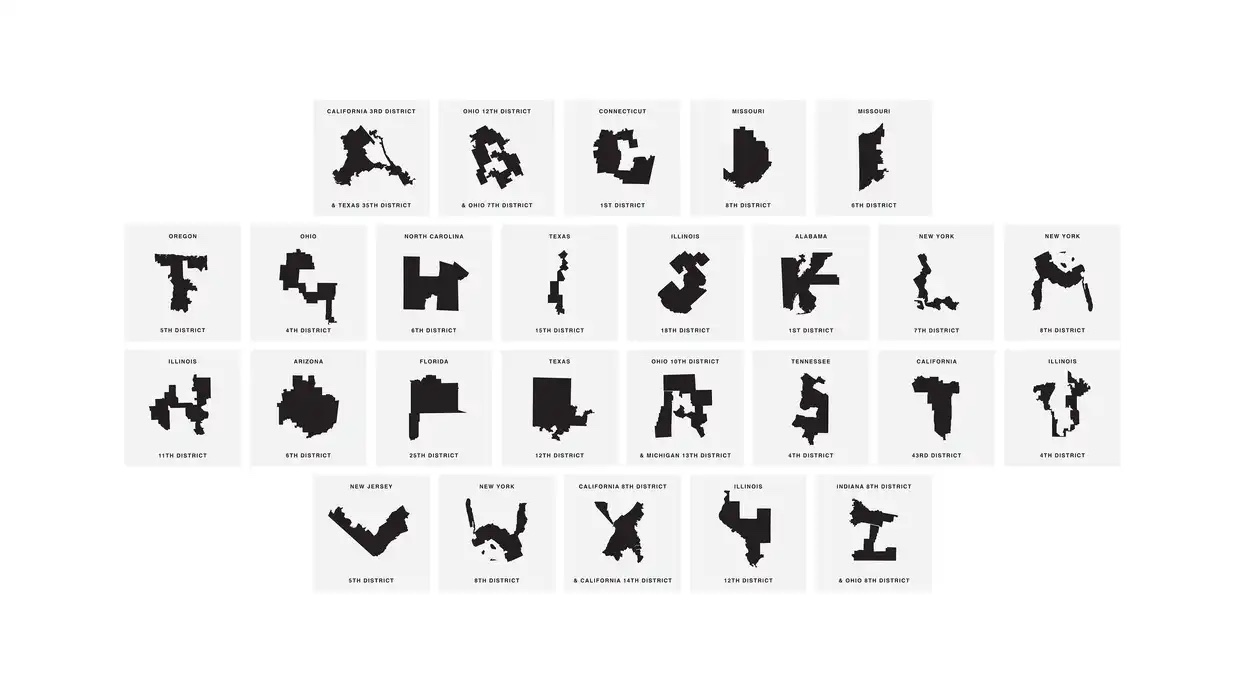
(Image source: The Fulcrum, “Ugly Gerry font”)
Now let’s review the recent history of redistricting in the state of Georgia since the 2020 Census.
GEORGIA REDISTRICTING 1.0 (2021)
(Via the Atlanta Journal-Constitution, click here to read full article)
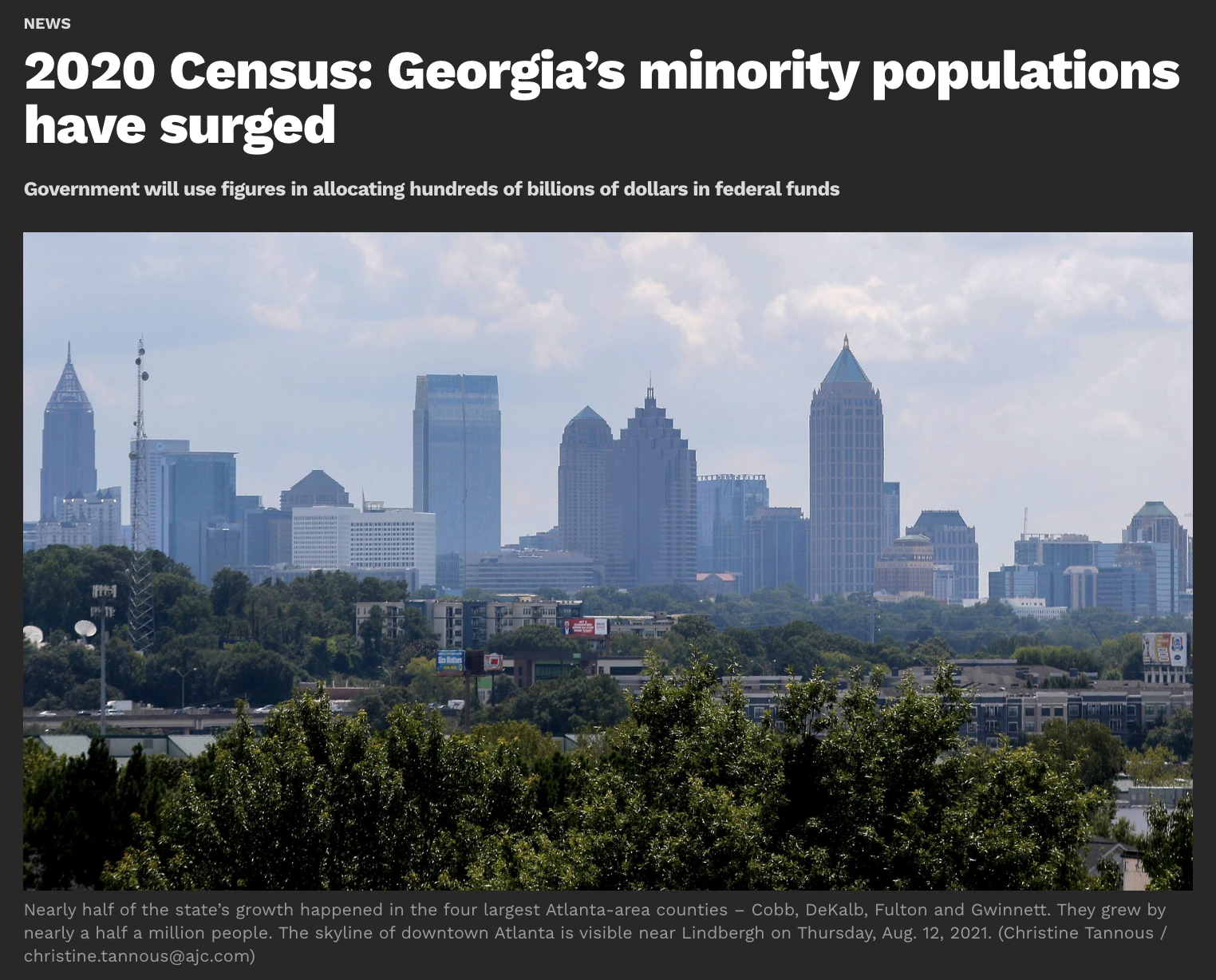
Georgia added approximately one million new residents between the 2010 and 2020 Census. Almost all of that population growth were people of color, indicating the rapid growth and diversification of this vibrant state, largely concentrated in the metro areas.
Along with this evolution comes political change. In the 2020 election, Georgia elected a Democratic president for the first time in nearly 30 years. We also elected not one, but two Democratic U.S. Senators.
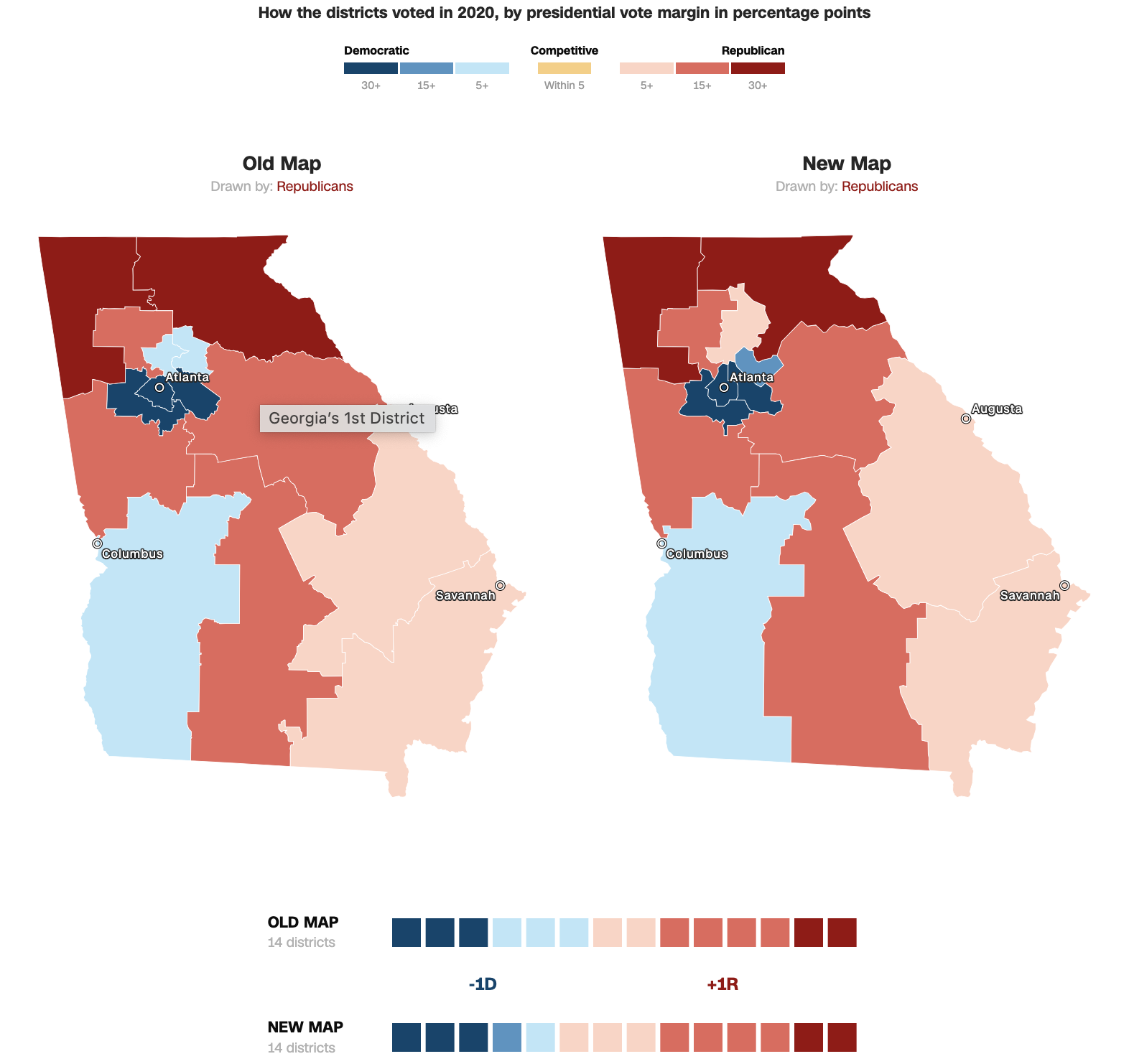
Georgia, once seen as an entrenched red state, was clearly becoming more Democratic. Not that that mattered to the state’s Republican majority when it came to drawing our electoral maps.
(Via CNN, click here to read full article)
University of Georgia political science professor Charles Bullock, one of the nation’s preeminent experts on the history of redistricting in the state, accurately predicted that the Atlanta suburbs would be ground zero for gerrymandering efforts in the state for the foreseeable future. This held true for both our federal and state legislative maps in 2021.
While Democratic vote share has obviously grown in Georgia, the 2021 Republican Congressional maps increased the number of districts favoring Republicans from 8 to 9. This move created a new Republican-leaning seat, while pushing two Democratic members–Reps. Lucy McBath and Carolyn Bourdeaux–into a primary only one of them could win.
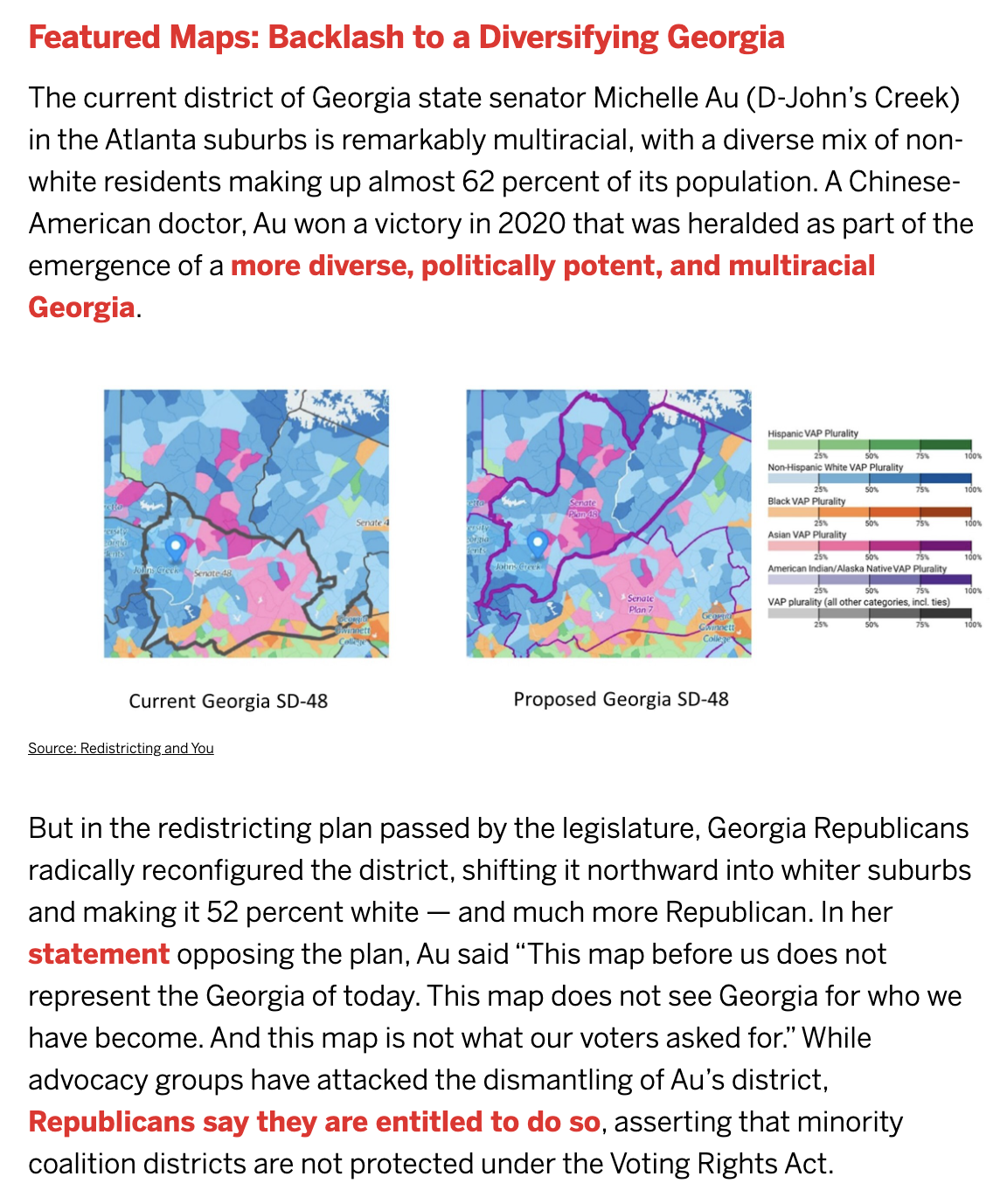
Similarly, a metro Atlanta state senate seat, SD 48, formerly encompassing a wide and diverse swath of North Fulton and Gwinnett counties, was targeted to be flipped back to Republican control. This seat just so happened to be held by yours truly at the time.
(Via Brennan Center for Justice, click here to read full article)
While it was the intent of the Republican majority to push me out of office, I decided to run for House District 50 (HD 50) to continue to serve many of my constituents, a seat I won in 2022 and continue to serve today.
These maps from the 2021 special session passed that November, and were signed into law by Governor Kemp on December 30, 2021. That was, however, only the start of Georgia’s redistricting story for the decade.
GEORGIA REDISTRICTING 2.0 (2023)
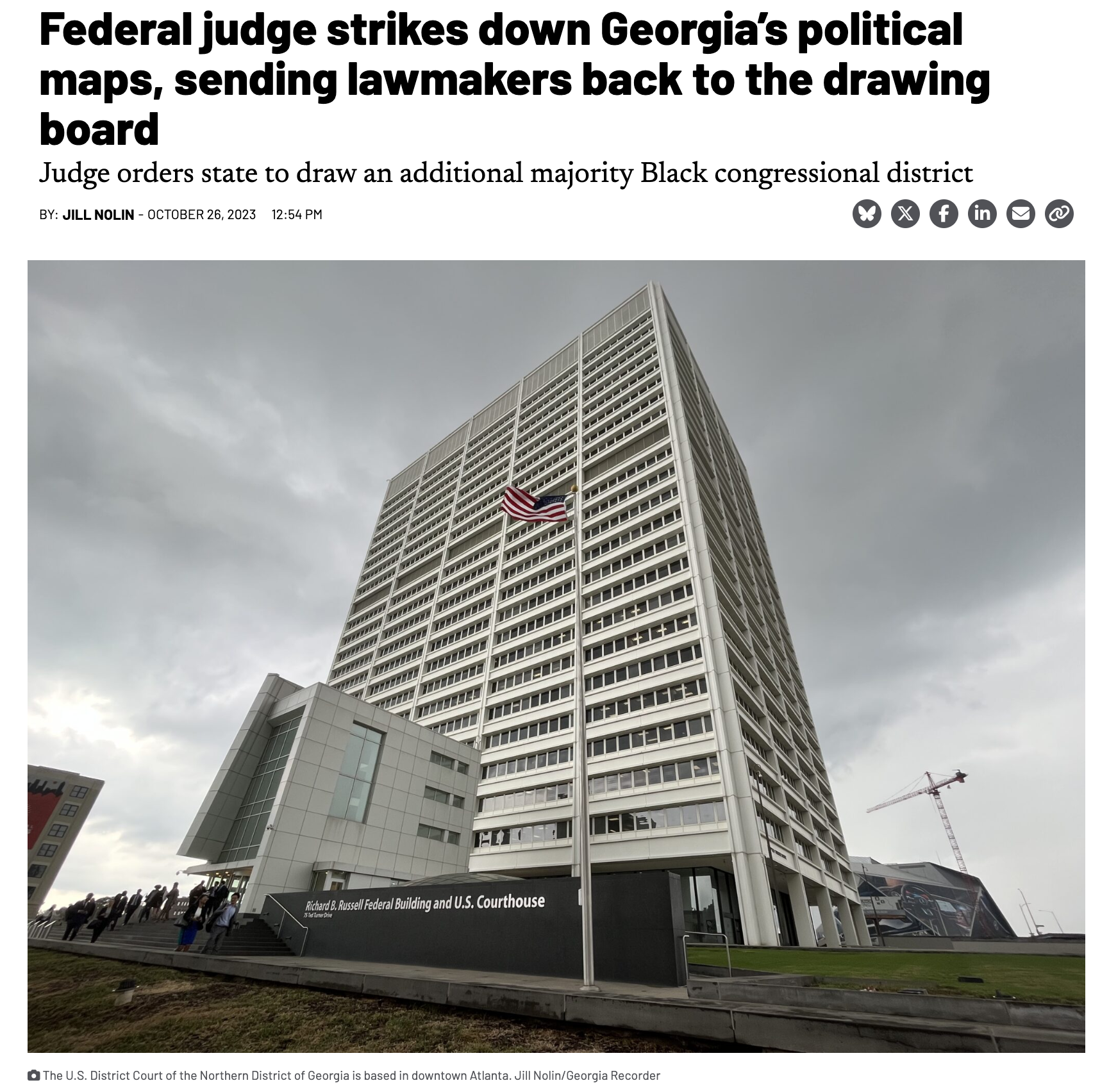
(Via the Georgia Recorder, click here to read full article)
On December 30, 2021, a group of voters filed a lawsuit alleging that the congressional map drawn after the 2020 census violated Section 2 of the Voting Rights Act (VRA) and that the legislature should have created another majority-Black district in the Atlanta region. A federal judge struck down the congressional map on October 26, 2023, ordering the state to draw a new map by December 8th of the same year.
So between Thanksgiving and Christmas of 2023, lawmakers returned to the Capitol for round two.
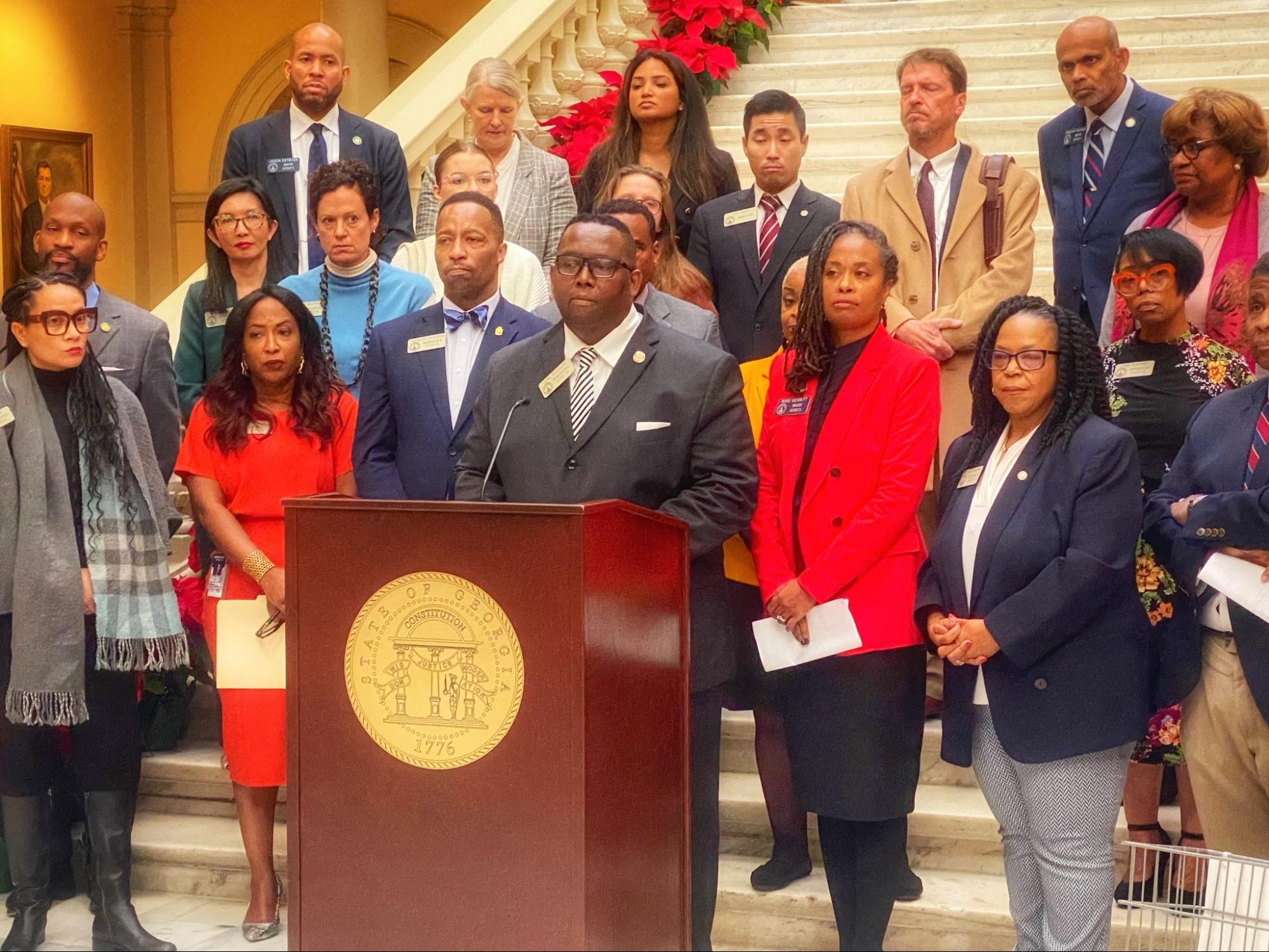
Per reporting via Georgia Public Broadcasting, the federal judge’s 2023 decision ordered the following changes:
U.S. CONGRESS
“Currently, Georgia’s congressional districts are represented by nine Republicans and five Democrats. The judge’s order calls for a new majority-Black district based in Atlanta’s western suburbs, centered around Cobb, Douglas and South Fulton counties. In the 2021 redistricting special session, Republicans reshaped two competitive districts in Atlanta’s suburbs represented by Democrats and redrew them into one solid Democratic seat and one solid Republican seat.
On Friday, Dec. 1, the Senate Republican-led proposal for the Congressional districts was released, which largely rearranges the metro Atlanta area to net two additional majority-Black districts under the definition used by the court but keeps the same number of majority-minority districts at five. The GOP map would preserve the 9-5 partisan split by matching the creation of the majority-Black 6th district in Douglas, Cobb and Fulton with the creation of a new deep red 7th district that runs from Sandy Springs into the north Georgia mountains.”
Notably, this Congressional district includes our current HD 50, oddly combining the suburban city of Johns Creek with rural North Georgia mountain communities, areas with little in common and are quite far apart.
STATE SENATE
“The federal judge’s ruling found 10 of 56 state Senate districts violate the Voting Rights Act by either consolidating Black voters into a smaller handful of districts or spreading them across too many to have meaningful power. The order specifically contemplates example districts drawn by plaintiffs suing over the maps and found that two additional majority-Black districts could be drawn in Atlanta’s southern suburbs.
An analysis of the map finds virtually no competitive general election districts for either party.”
STATE HOUSE
“The federal judge’s order found 11 of Georgia’s 180 House districts violate the Voting Rights Act by either consolidating Black voters into a smaller handful of districts or spreading them across too many to have meaningful power. The order specifically contemplates example districts drawn by plaintiffs suing over the maps and found that one additional majority-Black district could be drawn in Atlanta’s western suburbs, two in its southern suburbs and two around Macon.
With five new Black districts likely to elect Democrats but three pairs of Democratic incumbents [paired into the same district] means the party would likely to only grow the margin by two votes.”
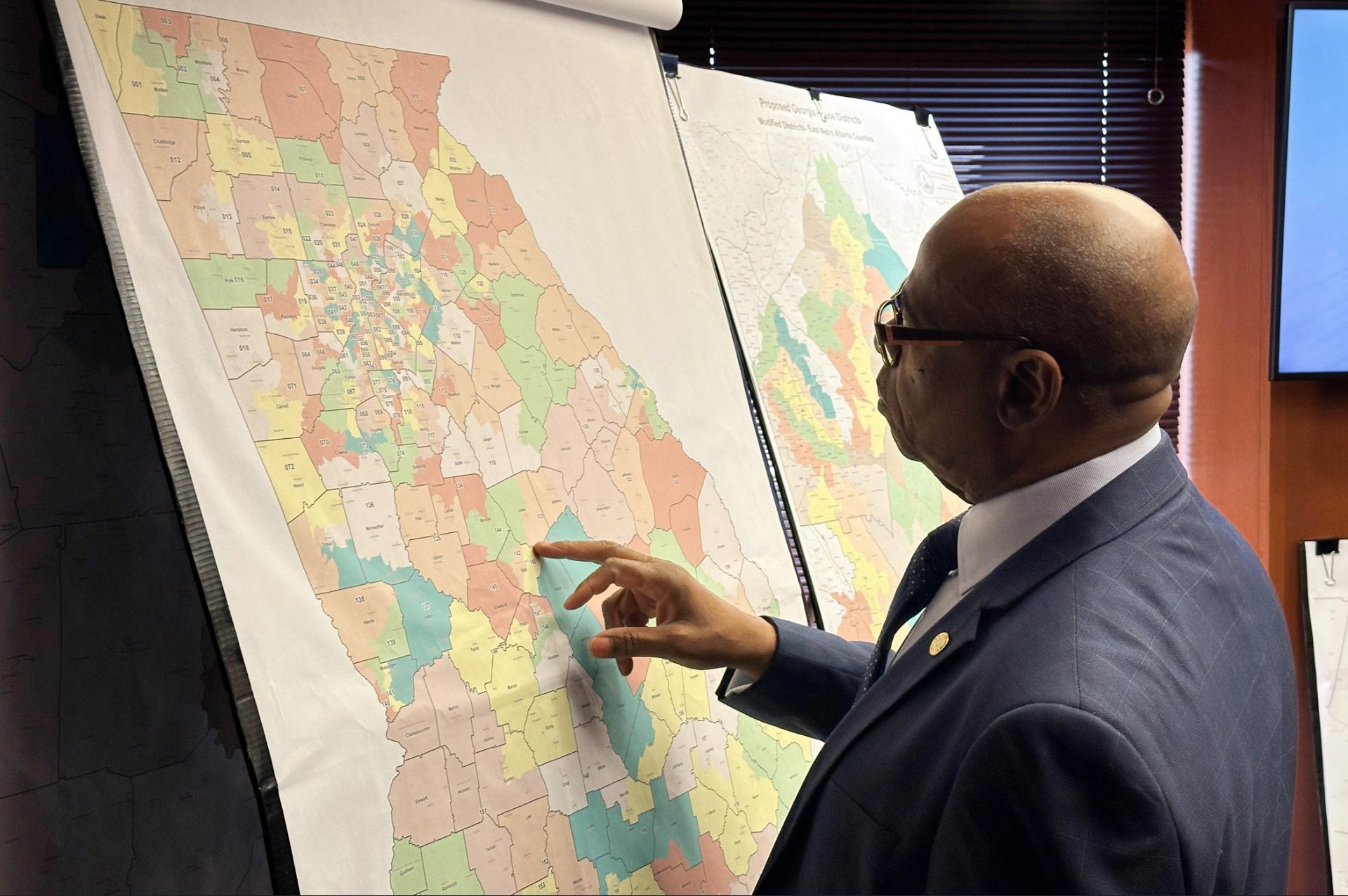
(Photo credit: Jeff Amy for the Associated Press)
On December 28, 2023, the U.S. District Court for the Northern District upheld the remedial maps enacted on December 8, determining that they were in compliance with the Voting Rights Act. These maps were used in the 2024 elections.
LOUISIANA v. CALLAIS (2026)
(Via the Campaign Legal Center, click here to read full article)
On April 29, 2026, in a 6–3 decision split along ideological lines, the U.S. Supreme Court eviscerated Section 2 of the VRA, opening the door for states to enact discriminatory voting maps and laws.
The decision held that Louisiana’s congressional map, which has included two majority-Black districts in a state where roughly one-third of residents are Black, was unconstitutional. In doing so, it created a precedent that makes it easier for conservative legislatures across the country to enact racially discriminatory maps or voting laws with fewer legal challenges.
The evaporation of these protections will likely have the greatest impact in the Deep South, where decades of racially discriminatory voting practices have prevented Black communities’ ability to elect candidates of their choice. In the wake of the Supreme Court’s decision in Callais, several Republican-controlled Southern states moved to pursue mid-decade redistricting efforts that would weaken, or eliminate majority-minority districts. These include:
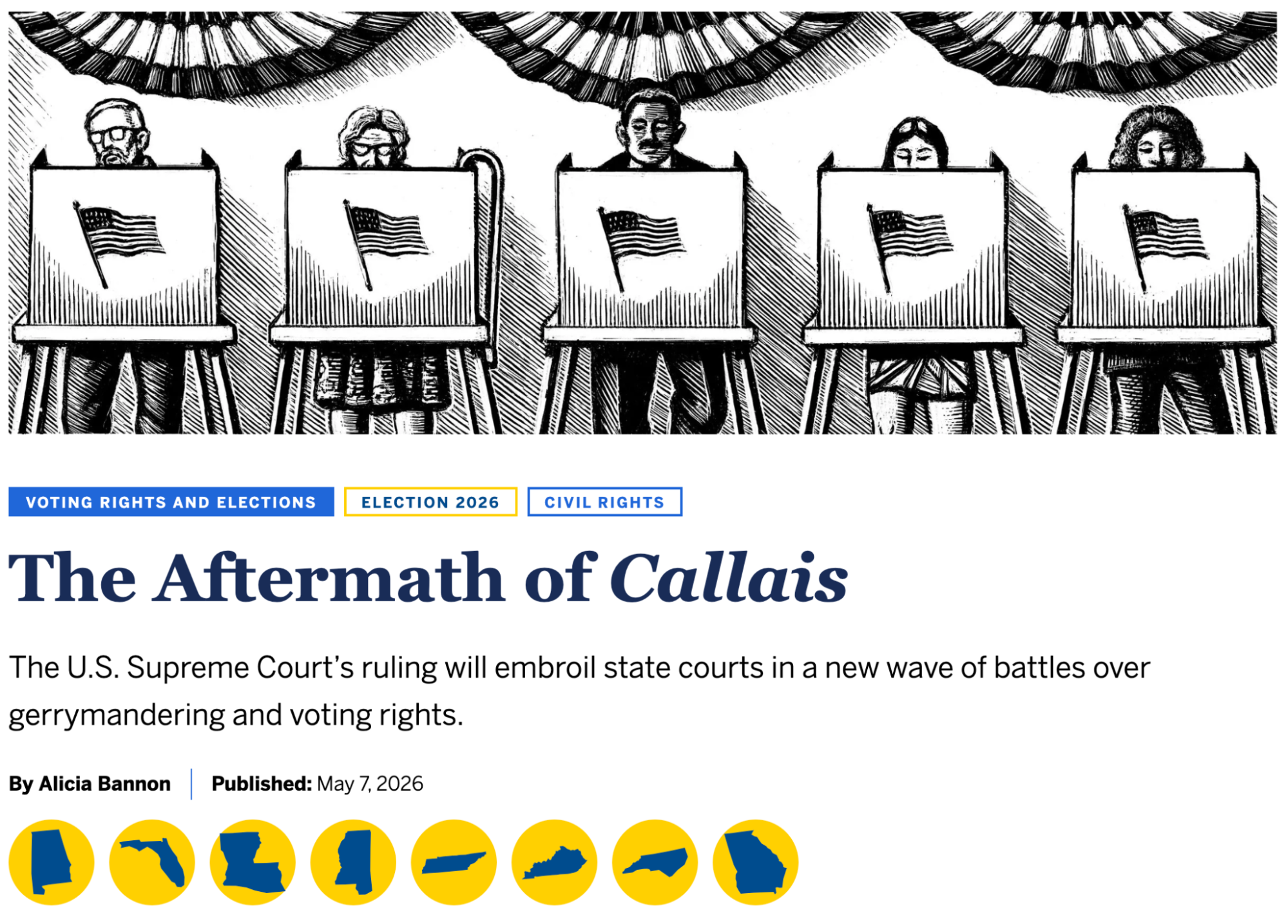
(Via State Court Reports, click here to read full article)
LOUISIANA: Immediately impacted by the ruling itself, lawmakers halted ongoing congressional elections to push new maps that threatened majority-Black districts.
ALABAMA: Governor Kay Ivey convened a special session, and the state took steps to revert to older, previously blocked maps that favor Republican representation.
TENNESSEE: The legislature swiftly passed new maps that divided the heavily Democratic and majority-Black city of Memphis into three separate, white-majority Republican districts.
SOUTH CAROLINA: Lawmakers called special sessions and attempted to eliminate the state’s sole Democratic congressional district in favor of a 7-0 Republican map.
FLORIDA: The state quickly advanced new congressional maps championed by Governor Ron DeSantis designed to dilute minority voting power.
MISSISSIPPI: GOP leaders openly called for measures to reshape Democratic districts.
And, of course, Georgia…
GEORGIA REDISTRICTING 3.0 (2026)
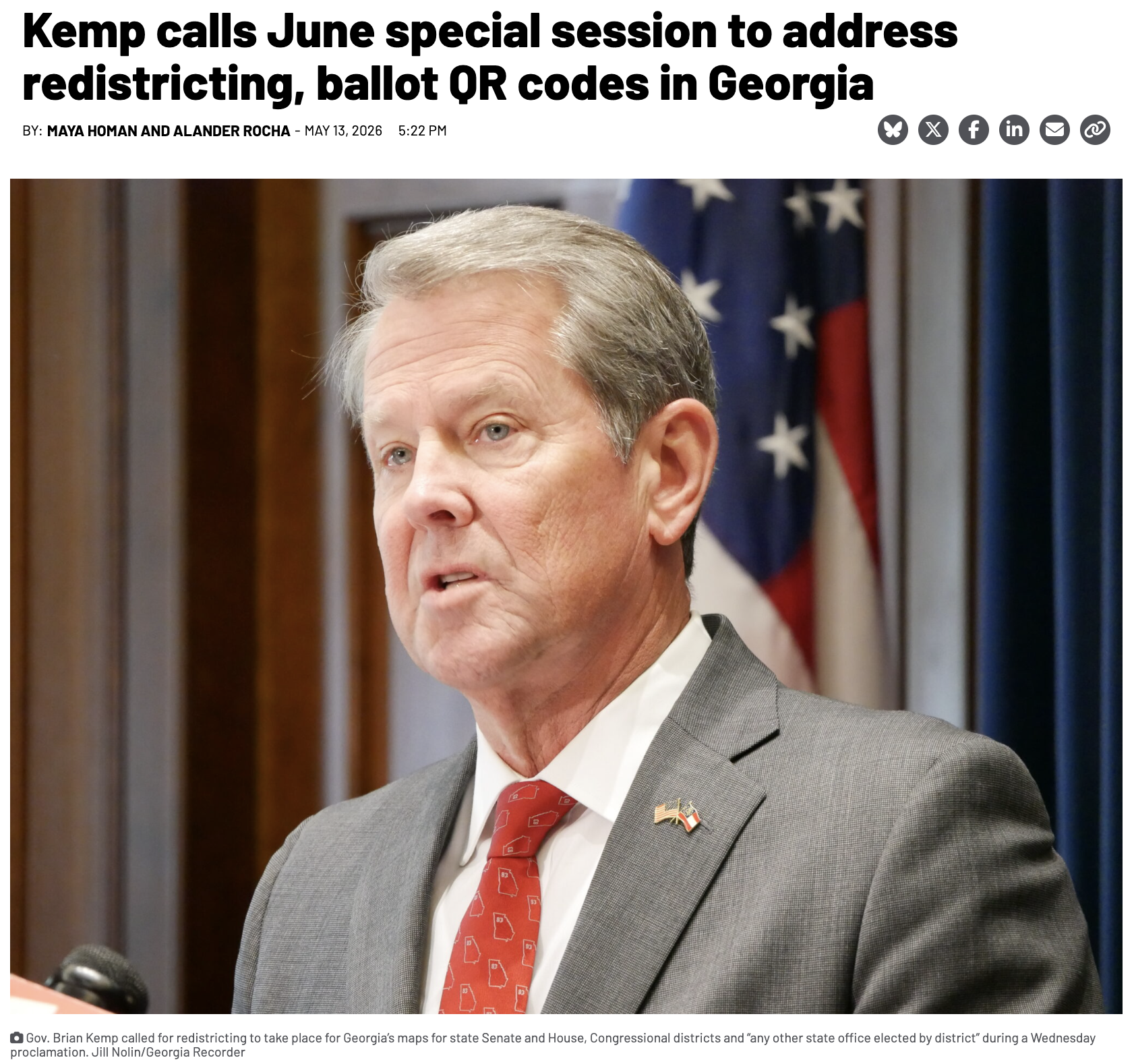
(Via the Georgia Recorder, click here to read full article)
As noted earlier, the Georgia General Assembly will be reconvening Wednesday, June 17 for a special session on redistricting, among other issues delineated in the Governor’s proclamation.
To paraphrase Thomas Hobbes, we should expect this third round of redistricting, unconstrained by the historical protections of the VRA, to be “nasty, brutish, and short.” While convention holds that the legislature debates the three maps sequentially over the course of three weeks, this round I suspect we will be in no longer than a week and a half total. Thus leaving no time for analysis, public comment, amendments, or even the pantomime of considered deliberation. Republicans have the maps they want to pass, and we’ll be lucky if we even get to see them the night before session starts.
But once those maps are public? We got you.
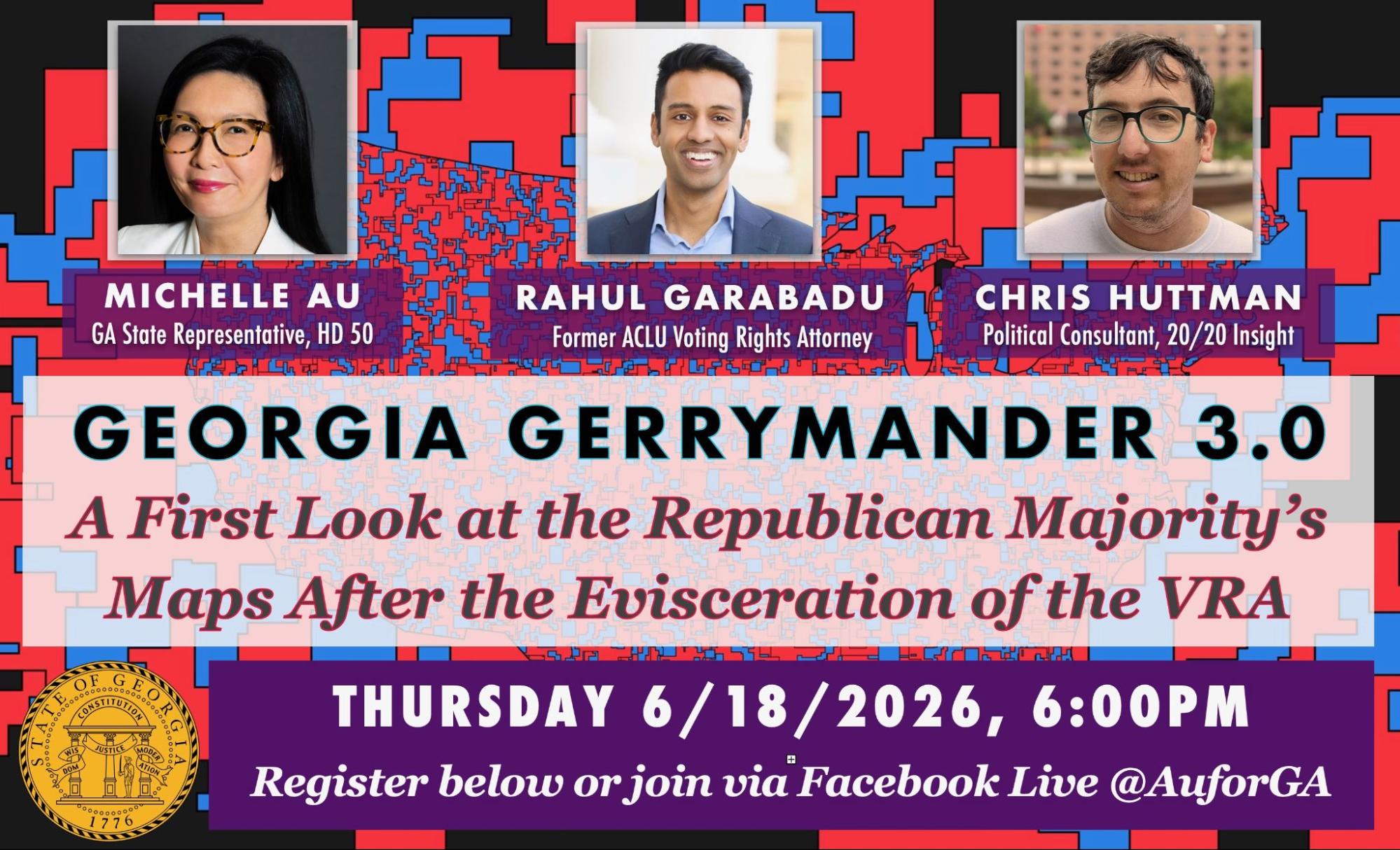
(In-person or via live stream, click here to RSVP)
On Thursday, June 18, I will be hosting a Town Hall in HD 50 to walk through the proposed maps, which I presume will be introduced when we convene the day before. I will be joined by two experts, Rahul Garabadu, a former ACLU voting rights attorney who was involved in fighting the Republican maps in both 2021 and 2023; and Chris Huttman, who worked on redistricting analysis with the Senate Democratic Caucus in 2021 and is currently the technology director at 20/20 Insight.
We held a similar Town Hall on May 13, breaking down the Louisiana v. Callais decision and its implications for the VRA and our state. The full archived livestream of that Town Hall can be watched on our YouTube channel.
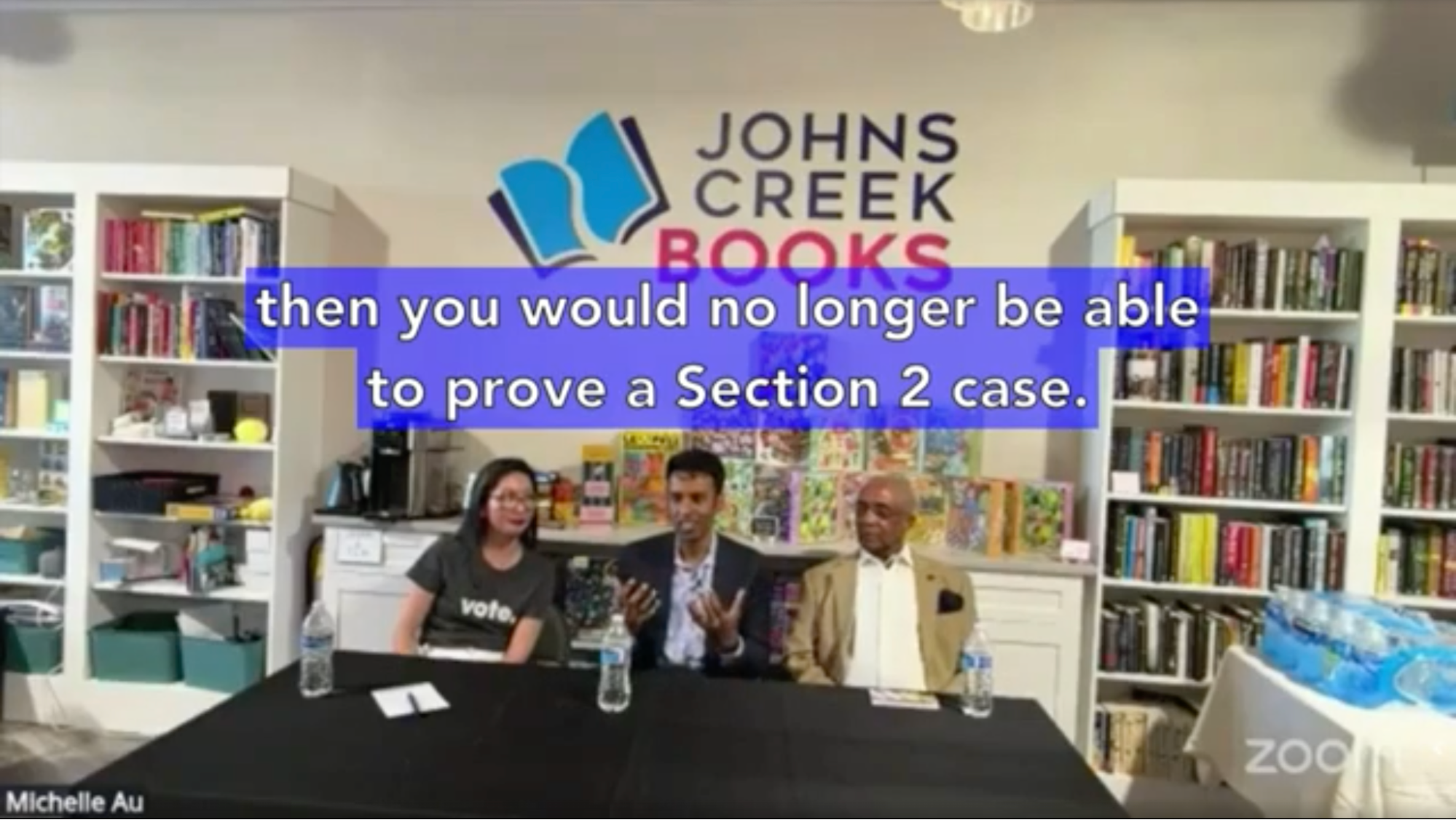
(Click here to watch full archived livestream)
In politics, as in life, there are many things we cannot control. However, there are also many things we can control, mainly our ability to organize and use our collected voices Please join us to be prepared for this latest attack on our democracy, and learn how to fight back from this swing district at the heart of our swing state.
UPCOMING EVENTS
Michelle’s Birthday Bash

(RSVP for address, or donate here)
Join us Thursday, June 11th for my annual BIRTHDAY BASH fundraiser! Food, folks and fun abound, as we enjoy each other’s company in advance of the special legislative session.
Even if you can’t attend in person, I would be so grateful if you could donate to support our upcoming re-election campaign, as we look down the road to a challenging campaign in a contentious year, fighting from the swing district at the heart of our swing state.
Early Voting for Primary Runoff is Now Underway!

The Special Session for Redistricting 3.0 starts the day after the Primary Runoff Election, which is June 16. There is no stronger message to the majority party than Georgia voters turning out in force and exercising their power at the ballot box, regardless of the maps drawn to constrain them.
Fulton County General Primary Runoff Election Early Voting Info
Monday through Friday, June 8 to 12, from 7 AM – 7 PM
Early Voting Locations in Fulton County
Note that you can early vote at any location in your home county, but on Election Day you can only vote at your assigned precinct!
Look up your sample ballot here.
Here are some commonly asked questions about voting in the primary and runoff elections here in Georgia, courtesy the Gwinnett County Board of Elections.
YOUR LAST DAY TO VOTE IN THE RUNOFF IS TUESDAY, JUNE 16
THE GEORGIA DIAGNOSIS

Available on Apple, Spotify, or YouTube
Team Au is in pre-production for Season 2 of our podcast THE GEORGIA DIAGNOSIS, and we want to hear from you!
Whose stories do you want to hear, and what fascinating voices would you love to have included? Fill out our podcast survey here. Thank you for listening to and sharing our first season, and for helping us make Season 2 even better!
Catch up on Season 1 of THE GEORGIA DIAGNOSIS on Apple, Spotify, or YouTube.
TEAM AU IN ACTION
Posse Scholars at the Capitol: The Power of the Vote
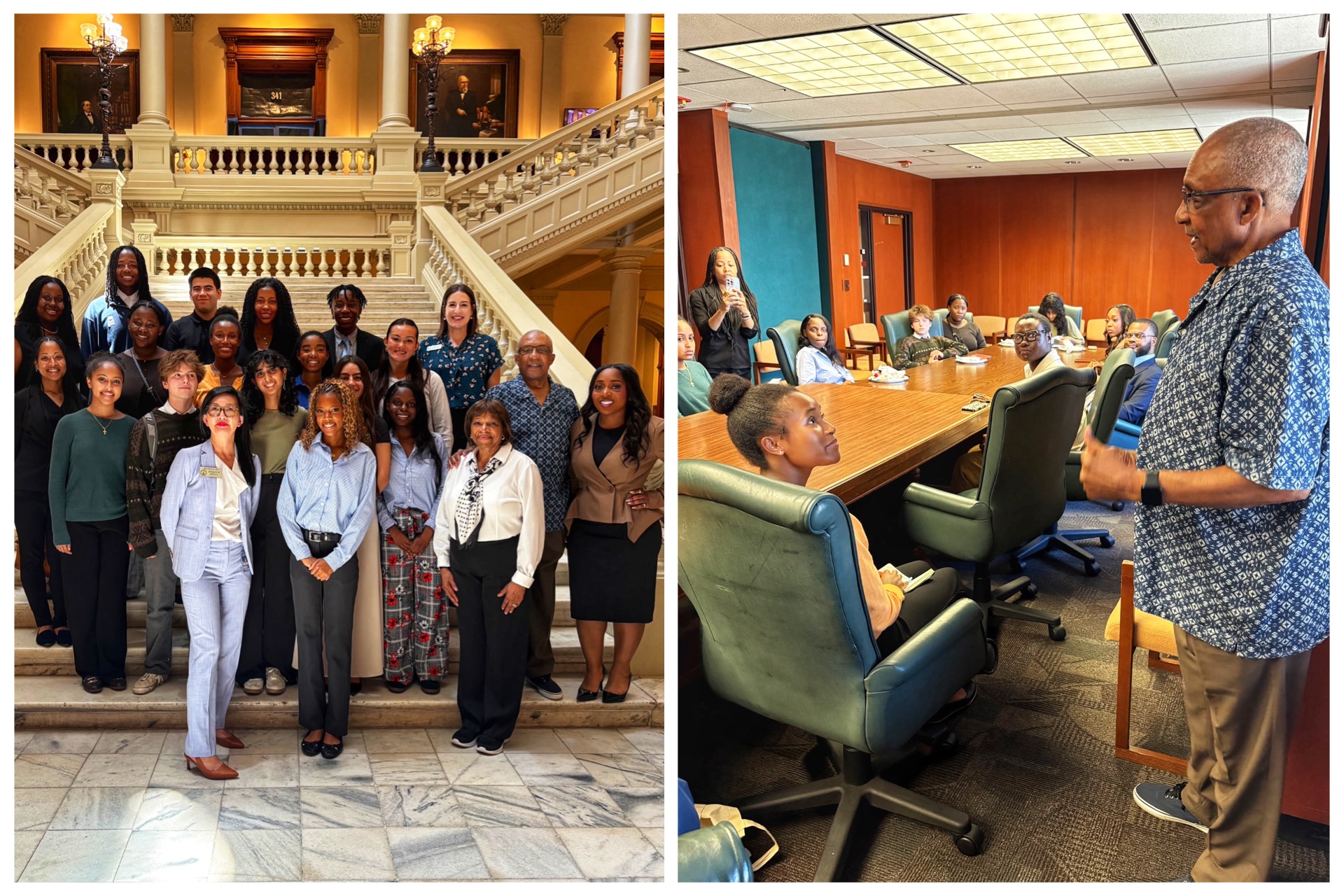
So pleased to work with my friends John and Kay Suttles to talk with this year’s cohort of Posse Scholars and alumni, a group of promising future leaders committed to mentorship, scholarship and change.
We discussed the work of the state legislature, the upcoming redistricting special session, and the awesome power of the vote, which so many people fought and died to protect.
We all stand on the shoulders of giants, and it is truly my privilege to work with civil rights legends like the Suttles, and to help guide the next generation of young leaders.
2026 Community Champion Award
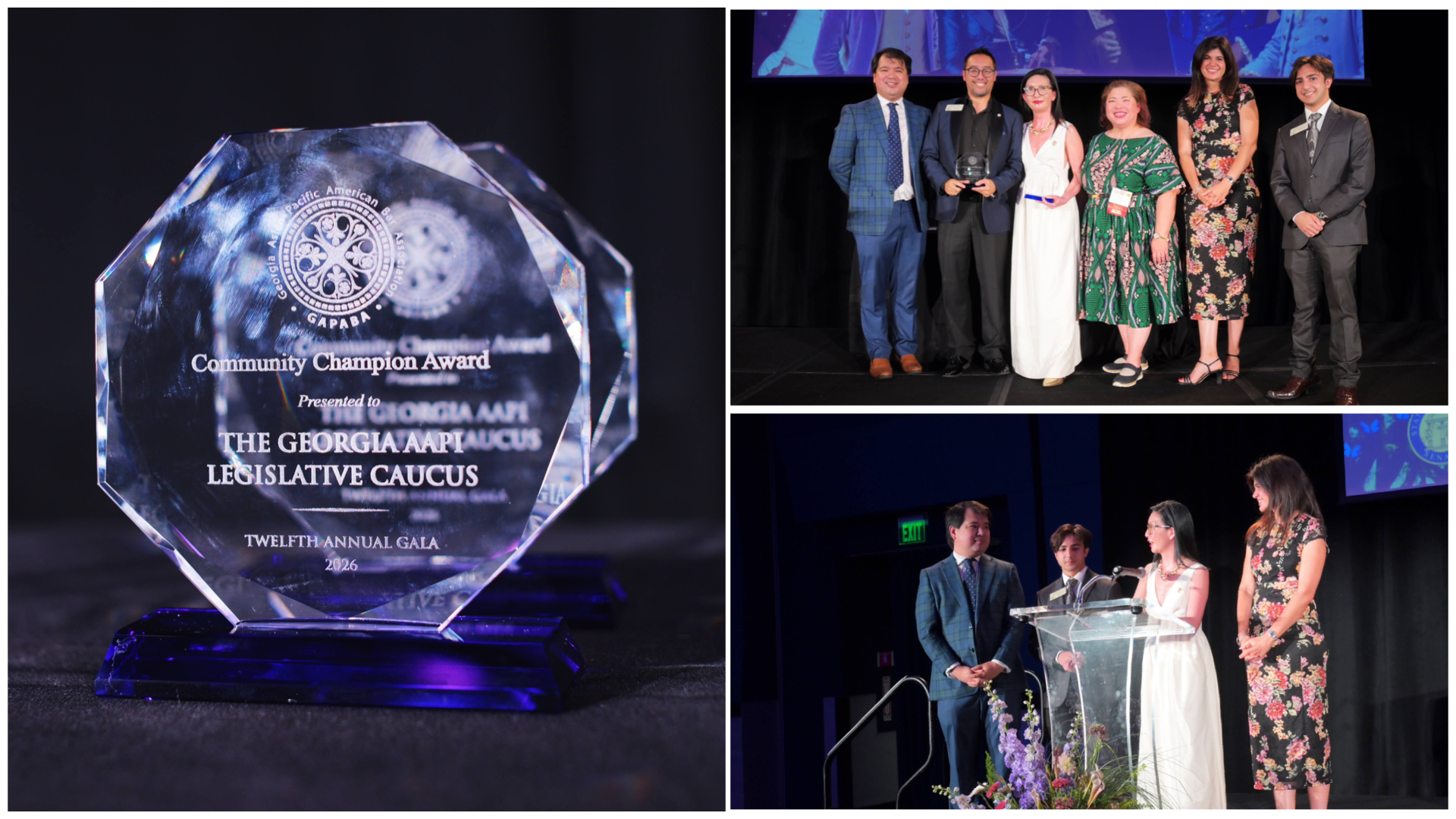
Georgia’s Legislative Asia American and Pacific Islander (AAPI) Caucus was humbled to receive the Community Champion Award at this year’s Georgia Asian Pacific American Bar Association (GABA) gala last month!
Established in 2023, Georgia’s Legislative AAPI Caucus is a bipartisan, bicameral coalition of state legislators dedicated to ensuring that Georgia’s broad and diverse AAPI diaspora is seen, heard, and empowered to shape policy at the state capitol. As its inaugural Chair, I’m extremely proud of our Caucus’ work and look forward to growing next year into the largest AAPI Legislative Caucus in the continental U.S.
Thank you to GAPABA for this incredible honor!
Georgia Politics Podcast: Tackling Gun Violence in Georgia
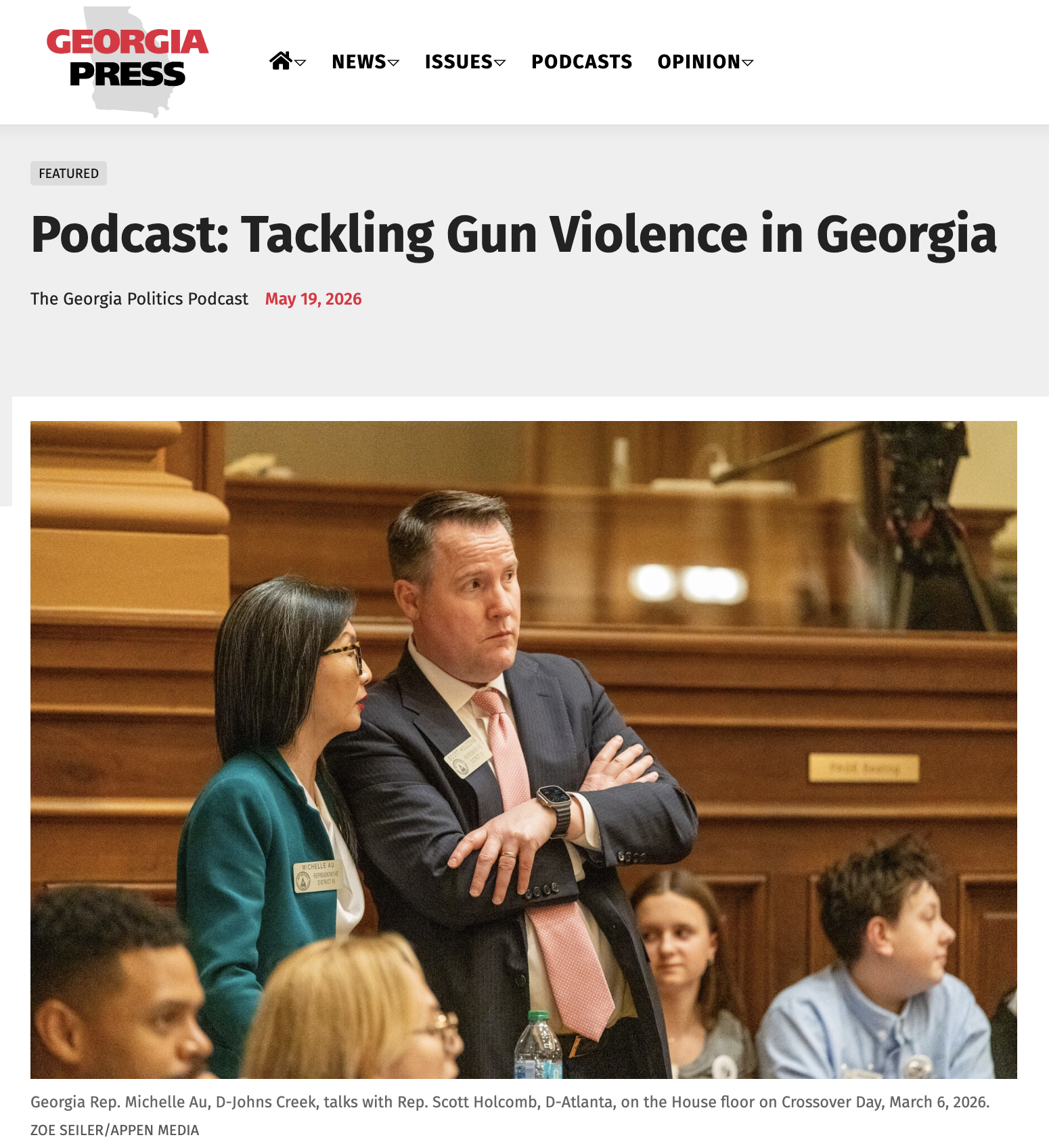
(Click here to listen to the full podcast on Apple, Spotify, or in your browser)
I was pleased to join the Georgia Politics Podcast, and Heather Hallett, Director of Georgia Majority for Gun Safety to discuss our work on tackling gun violence in Georgia.
This podcast was recorded just prior to Crossover Day during the legislative session, a day in which we roundly defeated a bill that would make it easier to buy gun silencers in Georgia. As I noted at the time, it’s quite rare for the majority party to bring a bill to the floor that they are not confident will pass. What this tells me is that minds were changed in the room. Here were my remarks against the bill from the floor of the House.
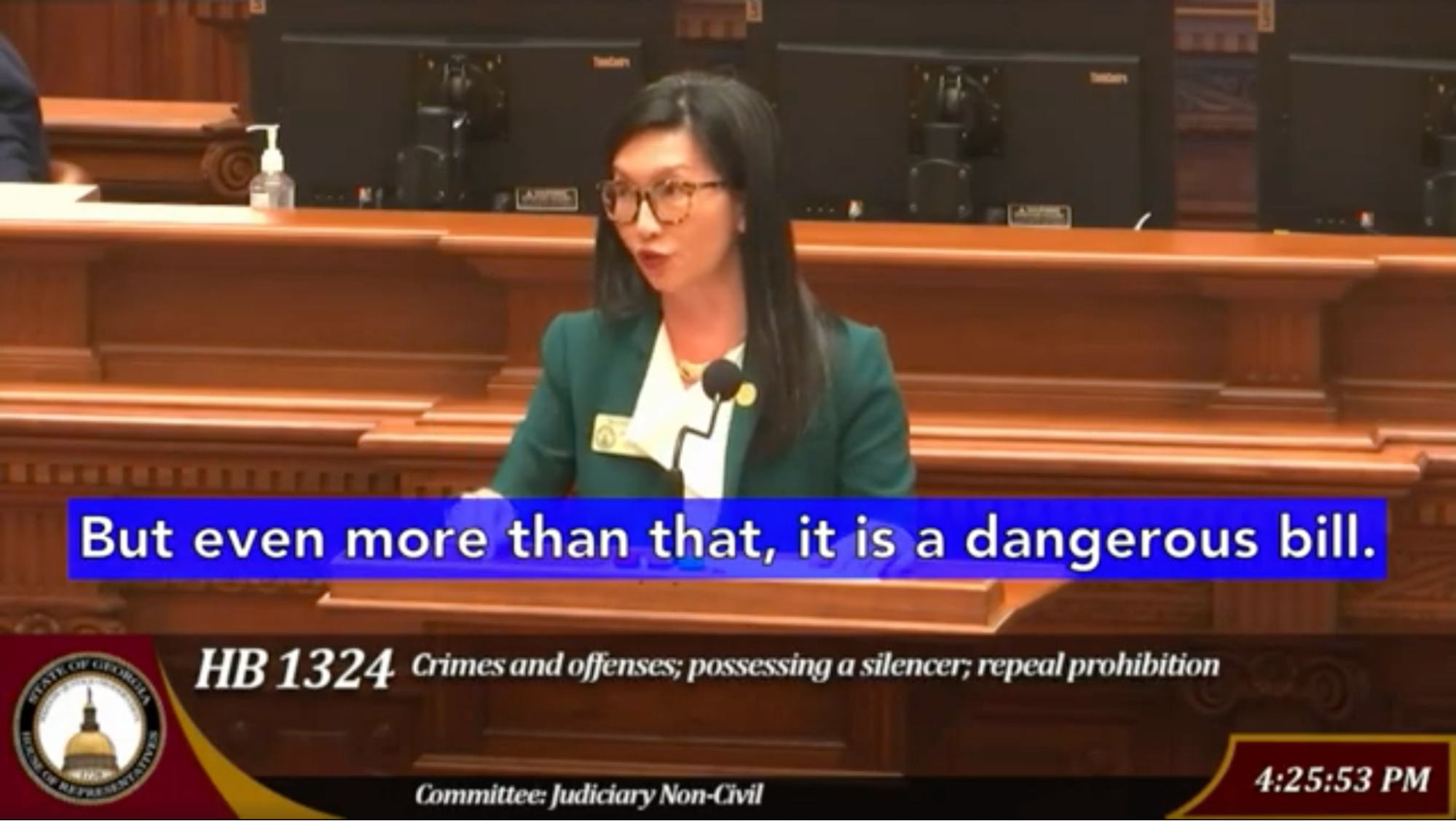
(Click here to watch full remarks)
Thank you to the Georgia Politics Podcast for the conversation, and in particular for highlighting our flagship bill HB 1, the Pediatric Health Safe Storage Act.
National Public Service Award from the American College of Obstetrics and Gynecology (AGOC)
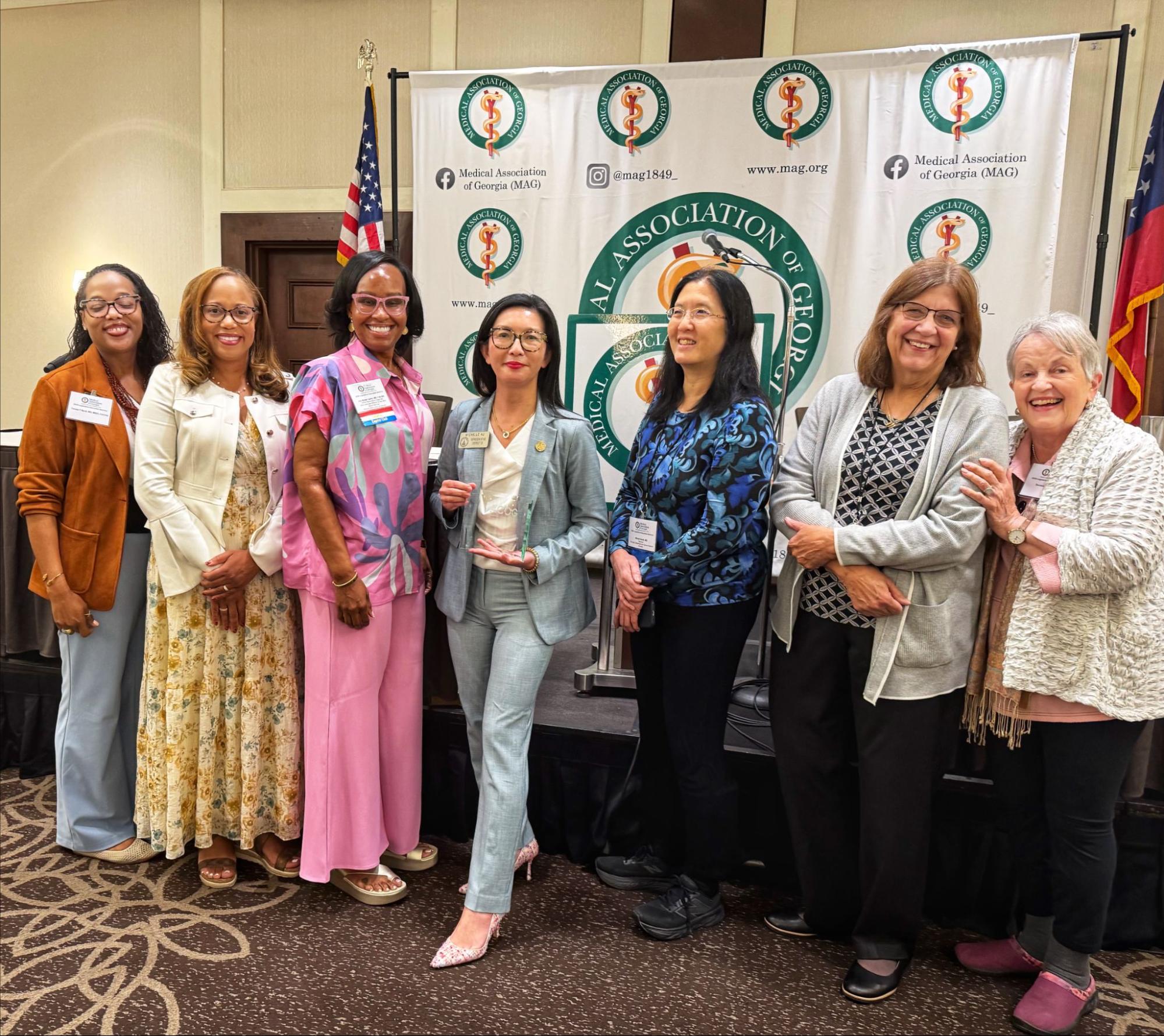
It was truly an honor to receive the National Public Service Award from the American College of Obstetrics and Gynecology.
Georgia has a lot stacked against it when it comes to provision of accessible, safe, quality healthcare. We are one of the few states in the nation that has still refused to expand Medicaid. Nine rural hospitals have closed in Georgia since 2010, and many patients are in healthcare deserts, as far as an hour away from an emergency room or labor and delivery unit.
Further, Georgia has one of the most stringent anti-abortion laws in the nation, banning abortion care at six weeks, before many patients even know they’re pregnant, and which criminalizes doctors for providing care. As one of only four physicians in the Georgia General Assembly, and the only Democratic physician in the entire legislature, I feel that responsibility to our patients acutely, and will continue to fight for the better care they deserve.
The work goes on, and so do we. Thank you for this incredible honor.
Blue Ribbon Study Committee Appointment

(Click here to watch full episode on Last Week Tonight with John Oliver)
I’m honored to be appointed by the Speaker of the House to The Blue-Ribbon Study Committee on Youth Exposure to Kratom and Retail-Available Substances!
Kratom is a poorly regulated substance widely marketed to teens and younger consumers under the vague promises of “lifting mood” and “boosting energy.” It is, however, unsafe and ineffective, with no established clinical benefits and significant safety concerns. In practice, this drug is a stimulant at low doses, has opioid-like effects at higher doses, and can be addictive. Supplements like kratom, and other substances available at retail locations like gas stations, need to be evaluated.
This study committee will evaluate the impact of these products on minors to strengthen protections, reduce access and create healthier outcomes for Georgia’s youth.
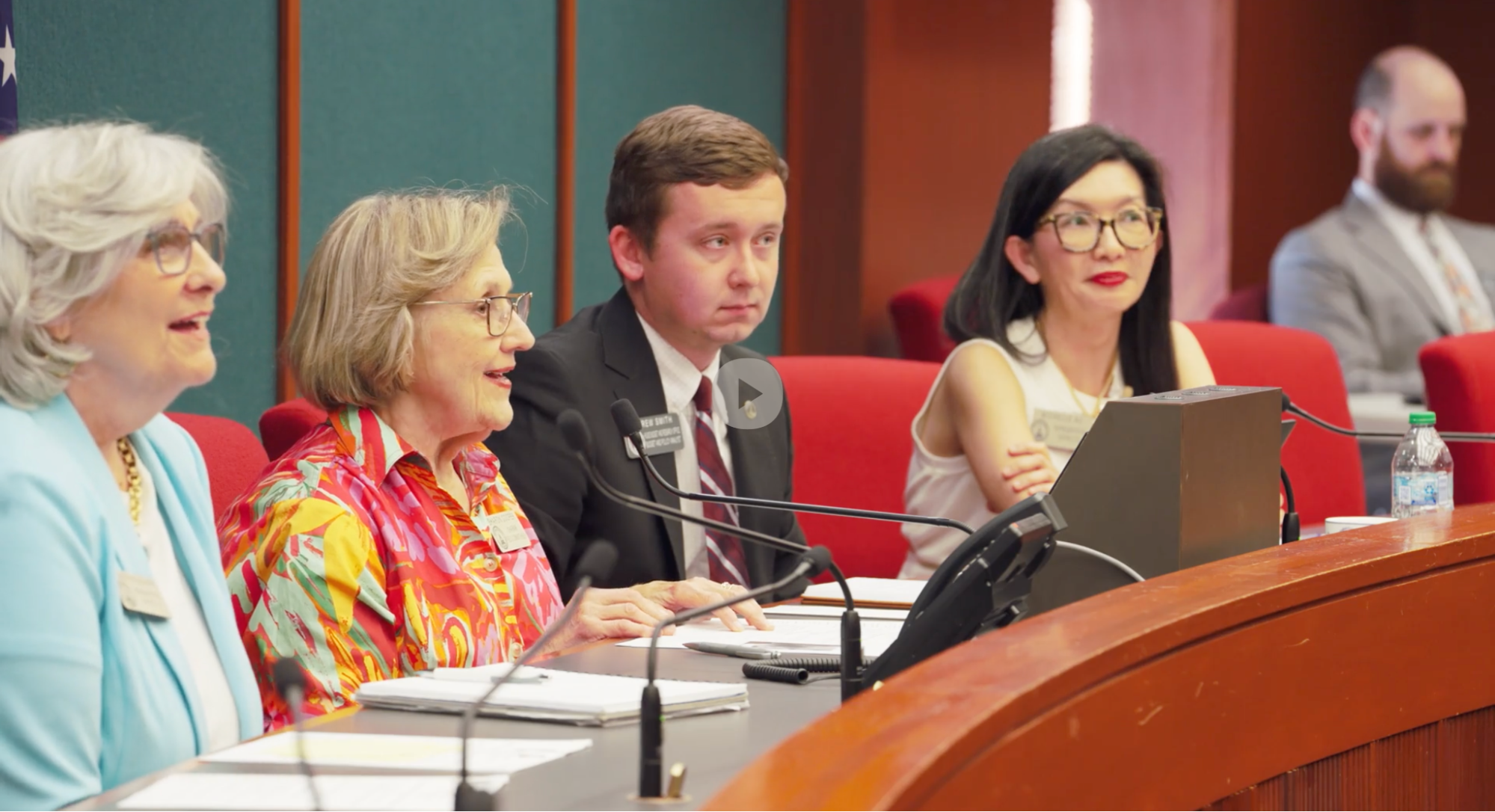
(Click here to watch full podcast episode “Tobacco, Teens, and Legislative Action”
I was proud to serve as Vice Chair of last year’s House Study Committee on the Costs and Effects of Smoking, and look forward to hearing from experts and developing policy proposals so we can best address this growing problem. Thank you to Speaker Burns for this chance to serve.
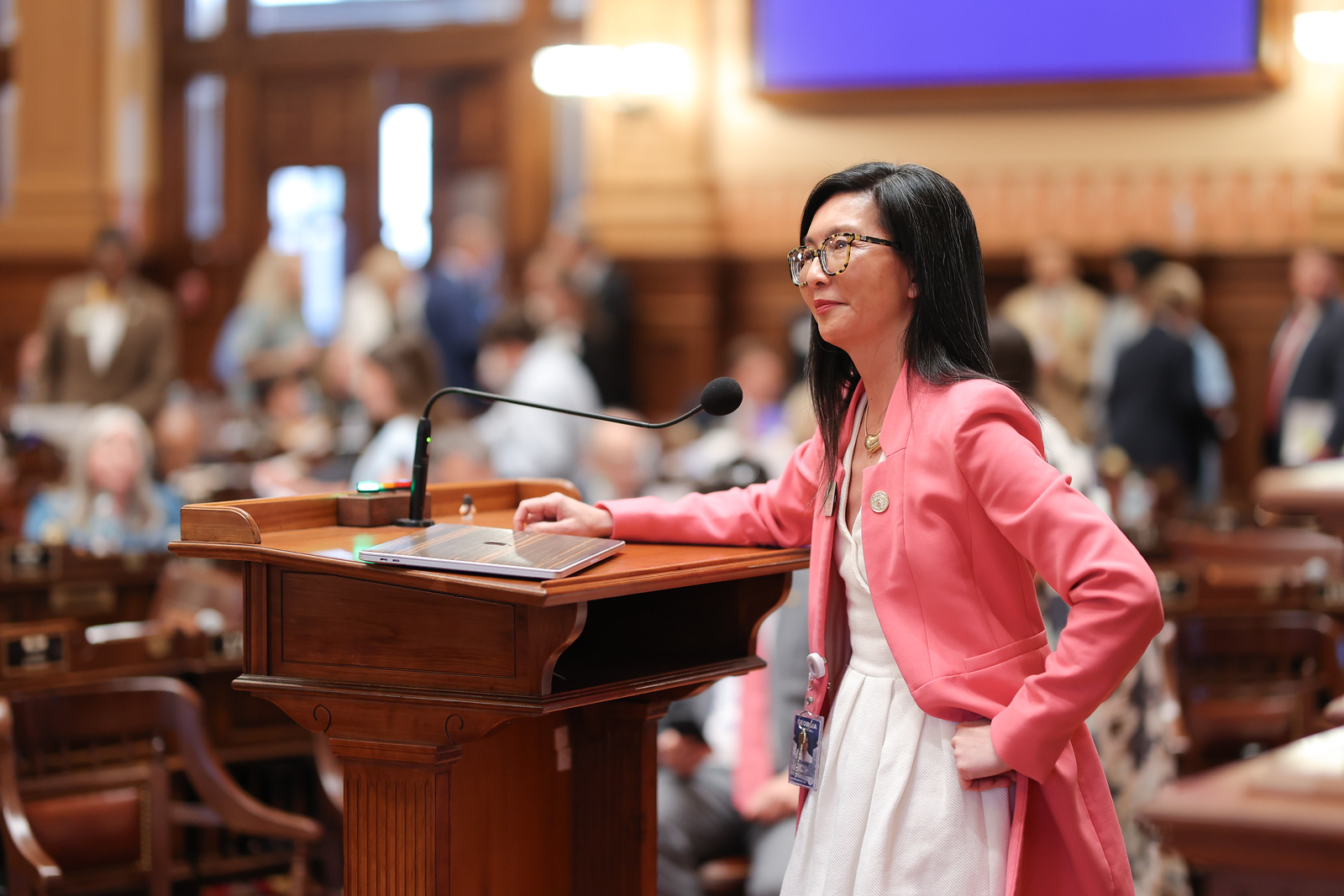
It has never been more important to pay attention to the work of state legislatures. Thank you as ever for your support so that we can keep doing this most important work together.
As always, please do not hesitate to reach out to our office should you need any assistance, or if you have any concerns you’d like me to address on your behalf.
It is my honor to be your voice in the Georgia House of Representatives.
In service,